
Last updated November 17, 2026








Free written scope consultation - allowances, timeline, and change-order rules on paper before a single trade is scheduled
Bathroom Remodeling Troubleshooting: Common Problems and How to Fix Them
Black caulk along a tub seam looks like a cleaning problem. It isn’t. In most of the Huntington Beach bathrooms we open up, that dark line is water that’s already been sitting behind the tile for a season or more, feeding mold in a backer board that no longer does its job. What looks like a twenty-dollar recaulk is sometimes a four-thousand-dollar repair once the wall is open. The pattern holds for most bathroom complaints: cracked grout, tiles that sound hollow, a musty smell that won’t leave, a fan that runs but does nothing. The visible symptom is almost never the actual problem. This guide teaches you how to trace each complaint back to its source before you spend a dollar on a fix that only hides it.
Quick Answer
Most bathroom remodeling problems come from three root causes: movement in the framing or substrate, moisture getting where it shouldn’t, or an installation error that showed up later. Fix the symptom without diagnosing the cause and the same problem returns in a year or two. Before any repair money goes out, test for moisture behind the tile and check whether the substrate is moving.
Styles & brands we work with
- Kitchen remodeling
- Bathroom remodeling
- Home additions & ADU
- Roofing
- Windows & doors
- Driveway & pavers
- Fence
Table of Contents
- The Symptom-to-Cause Diagnostic Chart
- How to Test a Shower or Tub Surround for Hidden Moisture
- Why Grout Cracks and What It’s Telling You
- Lippage, Hollow Tiles, and What They Reveal About Installation
- Efflorescence: The White Powder That Means Water Is Moving
- The Musty Smell That Won’t Leave: Exhaust Fan Failures
- Post-Remodel Electrical Complaints: GFCI Trips and Dead Fans
- Re-Grouting vs. Full Tile Replacement
- Repair or Redo? A Decision Framework
The Symptom-to-Cause Diagnostic Chart
Start here. Before you call anyone or buy a tube of anything, match what you’re seeing to what’s likely happening underneath. This chart comes from the patterns we’ve logged across bathrooms in Huntington Beach, from the older homes near the pier to newer builds out toward the wetlands.
- Cracked grout along a straight line: Usually movement. Either the framing is deflecting underfoot or the substrate wasn’t fastened and prepped correctly. Grout has almost no flexibility, so it cracks where the floor or wall flexes.
- Cracked grout in a spiderweb or map pattern: Often a sign of a concrete slab moving or a failed thinset bond. Different cause, different repair.
- Lippage (one tile edge sitting higher than its neighbor): Improper trowel coverage or thinset that skinned over before the tile went down. The tile isn’t fully supported, which means it’s also not fully bonded.
- White, powdery deposits on grout or tile: Efflorescence. Water is migrating through the substrate and pushing mineral salts to the surface as it evaporates.
- Persistent musty smell with no visible mold: The exhaust fan isn’t moving enough air, or it’s venting into the attic instead of outside. Humidity has nowhere to go.
- Tiles popping loose or sounding hollow when tapped: A bond failure, often from moisture behind the tile or a substrate that moved after installation.
- Black or dark caulk at a tub or shower seam: Water is already behind the wall. The caulk failed first; the mold followed.
None of these are cleaning problems. Every one of them points to something happening under the surface. That’s the whole reason this guide exists: the surface is the last place the problem shows up and the first place people try to fix it.
How to Test a Shower or Tub Surround for Hidden Moisture
You can find out whether water is sitting behind your tile without tearing anything out. We walk homeowners through this before quoting a repair, because it tells us both whether we’re looking at a cosmetic fix or a rebuild.
- The plastic sheet tape test. Tape a square of clear plastic sheeting tightly over a section of grout line or a suspect wall area, sealing all four edges with waterproof tape. Leave it 24 hours. If condensation forms on the inside of the plastic, moisture is coming through from behind, not from the room.
- Use a pin-type moisture meter. These cost under fifty dollars at most hardware stores. Press the pins into the grout lines and, if you can reach it, the backer board at an exposed edge like a valve trim plate. A dry interior wall in Huntington Beach usually reads under 12 to 15 percent. Readings in the 20s or higher mean water is present. Above 25 percent, and you’re opening the wall.
- Check the edges. Pull the escutcheon plate off a shower valve or the trim ring off a tub spout. If you see soft, crumbly backer board or dark staining, moisture has been there a while.
- Look at the base. Any soft spot, flex, or staining at the floor-to-wall junction of a tub or shower pan is a strong signal the pan or the waterproofing behind it has failed.
The salt air along the coast accelerates all of this. Humidity in a Huntington Beach bathroom runs higher than it does twenty miles inland, so a slow leak that might take two years to show up in a drier climate can turn into visible mold in a single season. If your meter reads high, don’t recaulk and hope. That’s the repair that gets made again in eighteen months by someone else.
Why Grout Cracks and What It’s Telling You
Grout is cementitious. It has almost no give. When it cracks, the surface under it moved, and the grout couldn’t follow. That’s the entire story, and it’s why patching cracked grout without addressing the movement underneath never holds.
There are two main reasons a bathroom floor or wall moves:
- Framing deflection. Floor joists flexing under the weight of a tile assembly. The fix is structural, not cosmetic: stiffer framing or a proper underlayment that isolates the tile from the movement.
- Substrate problems. A cement board that wasn’t fastened down tight, a joint that wasn’t taped and bedded, or a tile set directly over plywood without an uncoupling membrane. This is where a product like Schluter’s uncoupling membrane earns its keep: it lets the tile float slightly independent of the floor beneath it, so minor movement doesn’t telegraph straight through the grout.
Spiderweb cracking across a floor usually points to a slab that shifted, common in older Huntington Beach homes built over graded concrete. Straight-line cracking along a seam or where one backer board meets another points to a joint that moved.
The honest answer on grout: if it’s cracking in one place, re-grouting is reasonable. If it’s cracking across the whole floor, the movement is happening everywhere, and re-grouting buys you time, not a fix. In our experience the second pattern comes back within two years.
Lippage, Hollow Tiles, and What They Reveal About Installation
Run your hand flat across your tile floor. If you can feel edges catching, that’s lippage, and it usually means one of two things happened during installation: the trowel wasn’t held at the right angle to leave full ridges of thinset, or the thinset sat too long and skinned over before the tile went down.
Either way, the tile isn’t fully supported underneath. Tap it with the handle of a screwdriver. A solid, flat thud means it’s bonded. A hollow or rattly sound means there’s a void beneath it. A few hollow tiles scattered around a room are normal in most installs. A cluster of them, or a whole row along a wall, is a sign the install went wrong in that area.
Lippage matters for two reasons beyond cosmetics. First, it’s a trip hazard and a place where water pools and sits. Second, an unsupported tile flexes every time someone steps on it, and that flex is what cracks the grout around it and eventually works the tile loose. So lippage and grout cracking are often the same problem wearing two different faces.
When we open up a bathroom with widespread lippage, we also find the waterproofing was never done correctly. A tile set over greenboard with no membrane will fail, whether you can see it yet or not. We recommend a proper bonded waterproofing system on every shower we do, and products like Schluter’s are standard for that in our trade.
Efflorescence: The White Powder That Means Water Is Moving
That chalky white powder that shows up on grout and tile isn’t mold, and it isn’t soap scum. It’s efflorescence: mineral salts carried to the surface by water moving through the substrate behind the tile, left behind when the water evaporates. It’s actually useful, because it tells you exactly where moisture is passing through.
You can wipe it away, and it will come back as long as water is still moving. Cleaning it is the wrong response. Finding the water source is the right one. Common culprits in a Huntington Beach bathroom:
- A shower pan that was never sloped properly, so water pools and works through the mortar bed
- Missing or failed waterproofing behind the tile at a wet wall
- A plumbing leak behind the wall, often small enough that the drywall never shows it, but enough to feed constant migration
- Grout that has lost its sealer and is passing moisture straight through to the substrate
Here’s the test: clean a patch of efflorescence completely and watch it. If it’s back in a week or two, water is still flowing and the source needs to be found. If it doesn’t return, whatever caused it may have been a one-time event, like a recent remodel or a supply line repair that left residual moisture in the assembly. Most of the time it comes back.
The Musty Smell That Won’t Leave: Exhaust Fan Failures
A bathroom with a persistent musty smell almost always has an exhaust problem. Mold needs moisture, and a fan that isn’t moving enough air leaves the moisture from every shower in the room to settle into grout, caulk, and drywall.
There are two common versions of this failure:
- The fan isn’t strong enough. Code requires a fan sized to the room. A small bathroom needs at least 50 CFM; a larger one with a shower needs 80 to 110. Lots of old fans were undersized and nobody updated them when the bathroom was remodeled.
- The fan vents into the attic or a wall cavity instead of outside. This is the one that causes real damage. The fan runs, you hear it, and it’s dumping that humid air into an enclosed attic where it condenses, feeds mold, and rots framing. We’ve seen this on remodels where a previous contractor took a shortcut that saved an hour of ductwork.
To check: go into the attic and follow the duct off the fan housing. If it ends in open space or dumps into the insulation, that’s your problem. It needs to terminate at a roof or wall cap, outside the building envelope. This is one of the specific things we check on any Huntington Beach bathroom remodel before we sign off, because a fan that vents into the attic isn’t a fan, it’s a moisture delivery system.
Post-Remodel Electrical Complaints: GFCI Trips and Dead Fans
Two electrical complaints come up constantly after a remodel, and both have specific causes worth knowing.
GFCI outlets that trip with no apparent reason. The GFCI is doing its job, so the question is what it’s sensing. Common causes:
- Wiring polarity errors. Hot and neutral reversed at the outlet or upstream. The GFCI will trip under normal loads because it’s sensing current imbalance.
- A shared circuit with a motor load. The exhaust fan motor or a hair dryer on the same circuit can cause nuisance trips. Bathroom fans should ideally be on their own circuit.
- Moisture at the outlet. Humid bathroom air getting past a loose cover plate or a missing gasket. Worth checking if trips only happen after showers.
- A failing GFCI. They wear out. A GFCI more than fifteen or twenty years old is a candidate for replacement on its own.
Exhaust fans that hum but don’t move air. Two possible causes. The motor runs but the fan blade has come loose or stripped on its shaft, so it spins without pushing air. Or the duct is pinched, disconnected, or blocked with insulation. Pull the grill and look. If the blade turns when the motor is on, the problem is downstream in the duct. If the blade is loose or stationary, the fan assembly is failing.
We don’t recommend diagnosing electrical inside a wall on your own. A GFCI that keeps tripping needs a licensed electrician, and any bathroom electrical work is something to have done right. We pull the permits and have the inspection signed on every eligible job, and electrical is no exception.
Re-Grouting vs. Full Tile Replacement
Re-grouting is a legitimate fix in specific conditions, and a cosmetic patch in others. Knowing which situation you’re in saves you from paying twice.
Re-grout is the right call when:
- The grout is aged and worn but the tile underneath is solid, with no hollow spots
- Cracking is limited to one small area, and there’s no movement or moisture under the surface
- The installation is otherwise sound and you’re doing maintenance, not repair
Re-grout is a patch over a bigger problem when:
- Tiles are hollow, loose, or lifting. New grout over a broken bond just hides it for a season.
- Efflorescence is present. Water is still moving, and the new grout will pass it just as readily.
- You found high moisture readings with a meter. You’re regrouting the top of a problem that lives underneath.
- Cracking is widespread. The movement is structural, and grout can’t fix structural movement.
The distinction matters. Re-grouting is a few hundred dollars. A new tile assembly with a proper waterproofing layer is several thousand. If you re-grout today and the same problem is back in a year, you’ll spend the re-grout money a second time and then the replacement money on top of it. That’s the version of this we see most often, and it’s avoidable with a moisture meter and five minutes of checking.
Repair or Redo? A Decision Framework
The repair-or-redo question comes down to how many of these are true at once:
- Moisture is present behind the tile. If the meter reads high in more than one spot, the waterproofing has failed somewhere and the fix is behind the wall.
- The problem has been going on more than one season. A single season of water intrusion can sometimes be dried out and repaired. Multiple seasons usually means rot in the framing and backer board replacement.
- Tiles are hollow across a significant area. More than ten or fifteen percent of the floor sounding hollow is a failed install, not a failed tile.
- The exhaust fan was venting incorrectly or wasn’t sized right. That’s a structural moisture problem in the walls and attic above the tile.
- Electrical is unsafe. Repeated GFCI trips or exposed wiring behind the wall is a fix-now item, not a wait-and-see.
If one of the five is true, a targeted repair may be enough. If two or three are true, you’re in patch territory, and the money spent on patches is a down payment on the eventual redo. Three or more, and a clean gut-and-restart is the lower-cost option over ten years. We’ve walked homeowners through this math on plenty of bathrooms in Huntington Beach, and the number that surprises most people is how fast the patches add up. Two repairs at eight hundred dollars each, plus the eventual replacement, is more than doing it right the first time.
When we quote a bathroom remodel, we scope every line and every allowance in writing before work starts. No surprise invoices at the end, because the allowance that isn’t on paper is a surprise waiting for a date. If you’re deciding whether to go full remodel, our Barrett & Sons Construction Huntington Beach home page has the full picture of how we scope a project, and we’ll walk through it with you on a free estimate.
Common Mistakes to Avoid
- Re-caulking over black caulk without testing for moisture. Black caulk at a tub seam means water is already behind the wall. Caulking over it traps the moisture and lets the mold spread. Test first.
- Re-grouting a floor with hollow tiles. New grout over a failed bond is a cover-up. The grout will crack again the first time the tile flexes, and you’ve paid for nothing.
- Ignoring a fan that vents into the attic. In the humid coastal air along Huntington Beach, a fan venting into the attic feeds mold up there year-round. It’s a cheap fix that prevents a much larger one.
- Treating efflorescence as a cleaning problem. The white powder is telling you where water is migrating. Wiping it away without finding the source just means you’ll wipe it away again next month.
- Hiring a contractor who won’t put the scope in writing. Verbal promises on a bathroom remodel evaporate the moment the first unexpected thing shows up behind the wall. Written scope, written allowances, written change orders, or walk away.
- Skipping the permit to save a few hundred dollars. A bathroom remodel done without a permit is the first thing a future buyer’s inspector will flag. The permit inspector works for you, not for the contractor, which is exactly why we pull one on every eligible job.
- Assuming a low bid is a good deal. A bathroom remodel priced below the neighborhood market almost always makes up the difference in allowances that weren’t on the estimate. Look for what’s missing, not what’s on the page.
See the difference
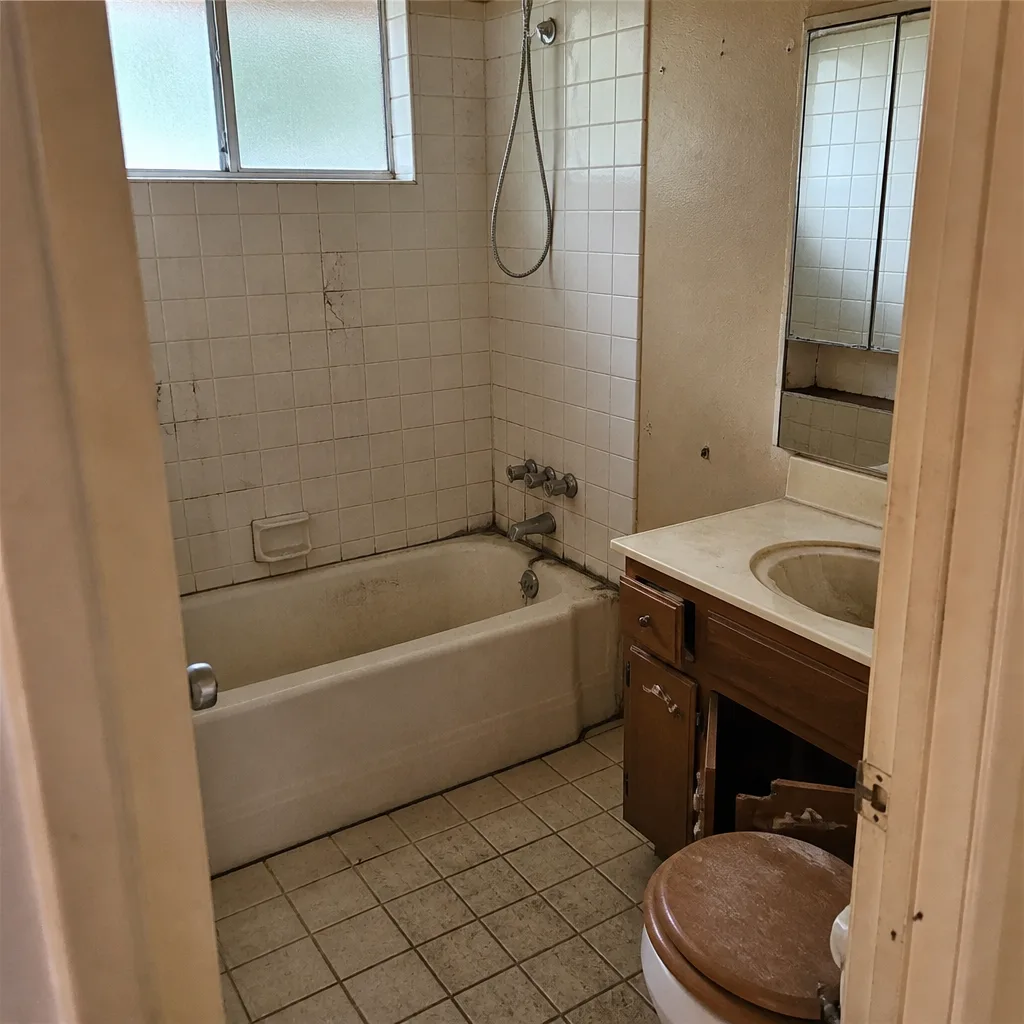 Before
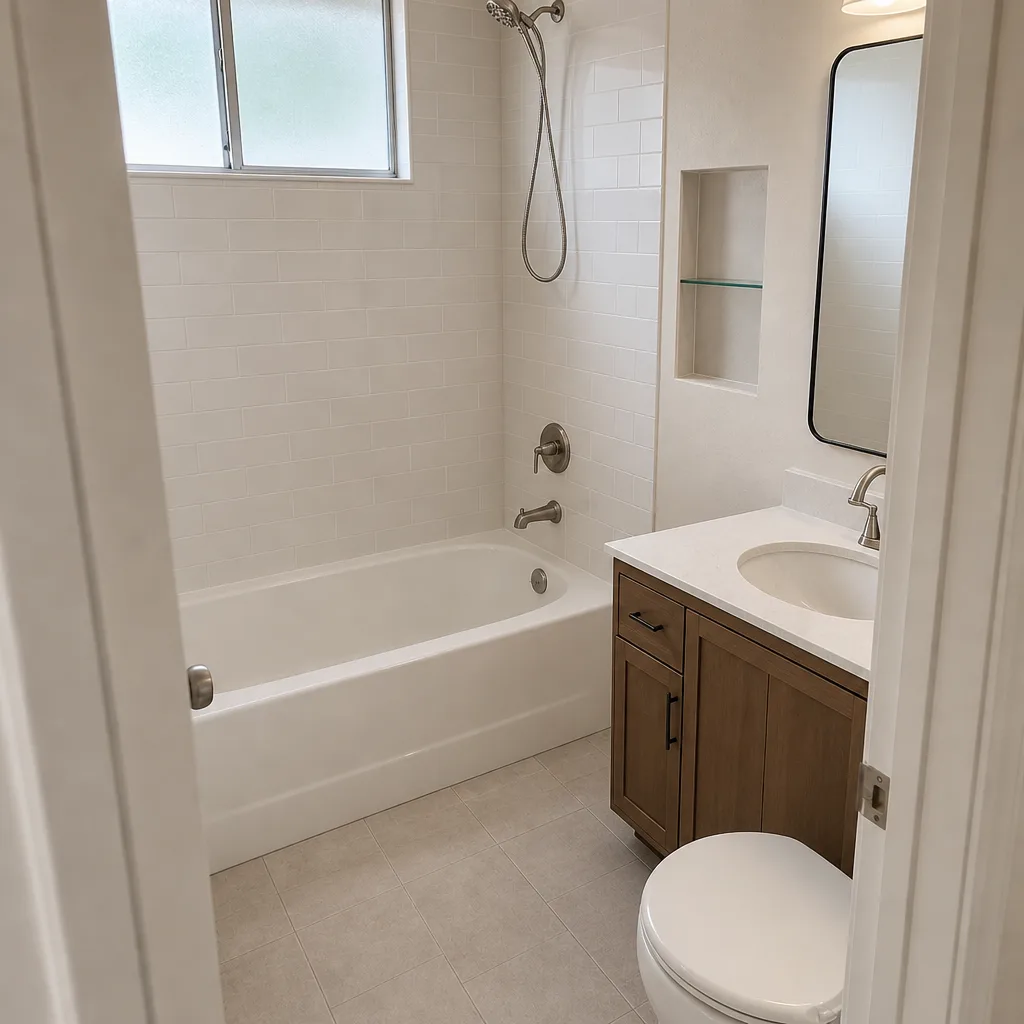 After
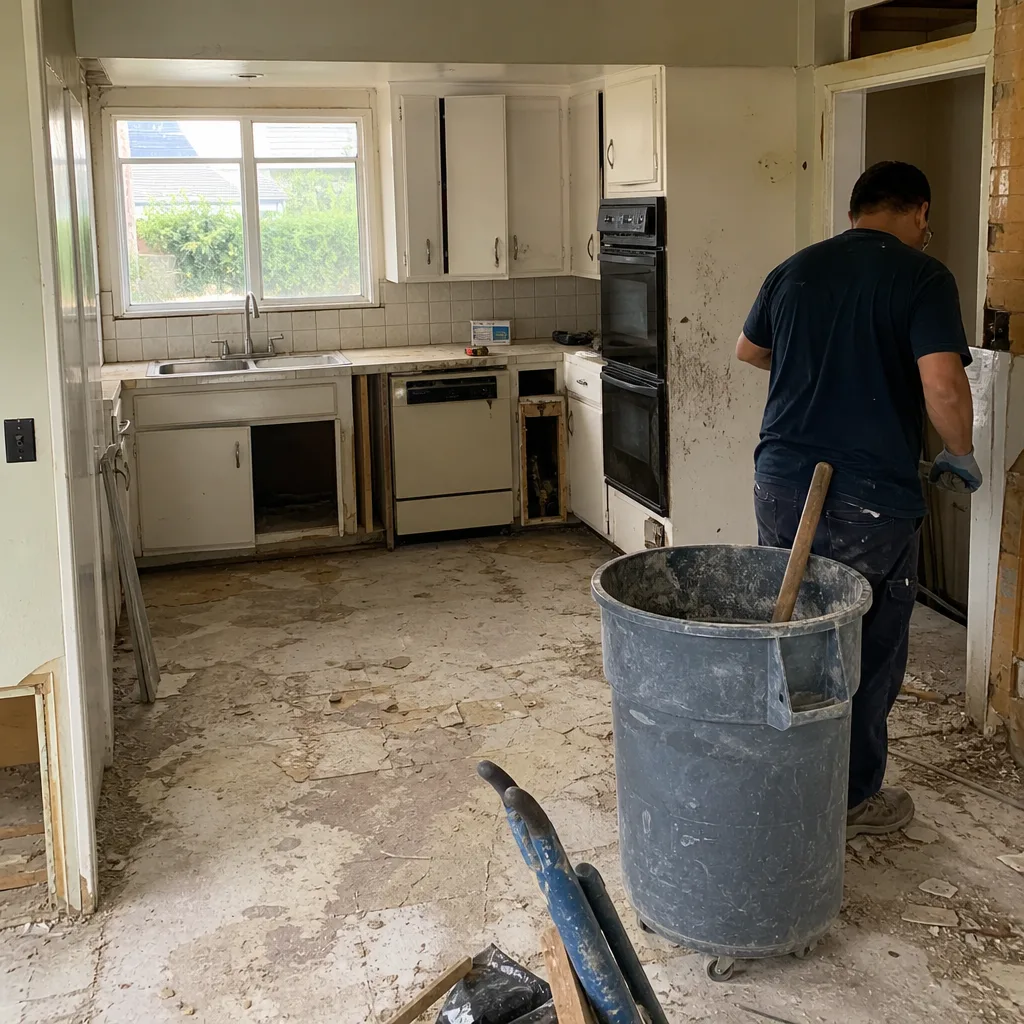 Before
 After
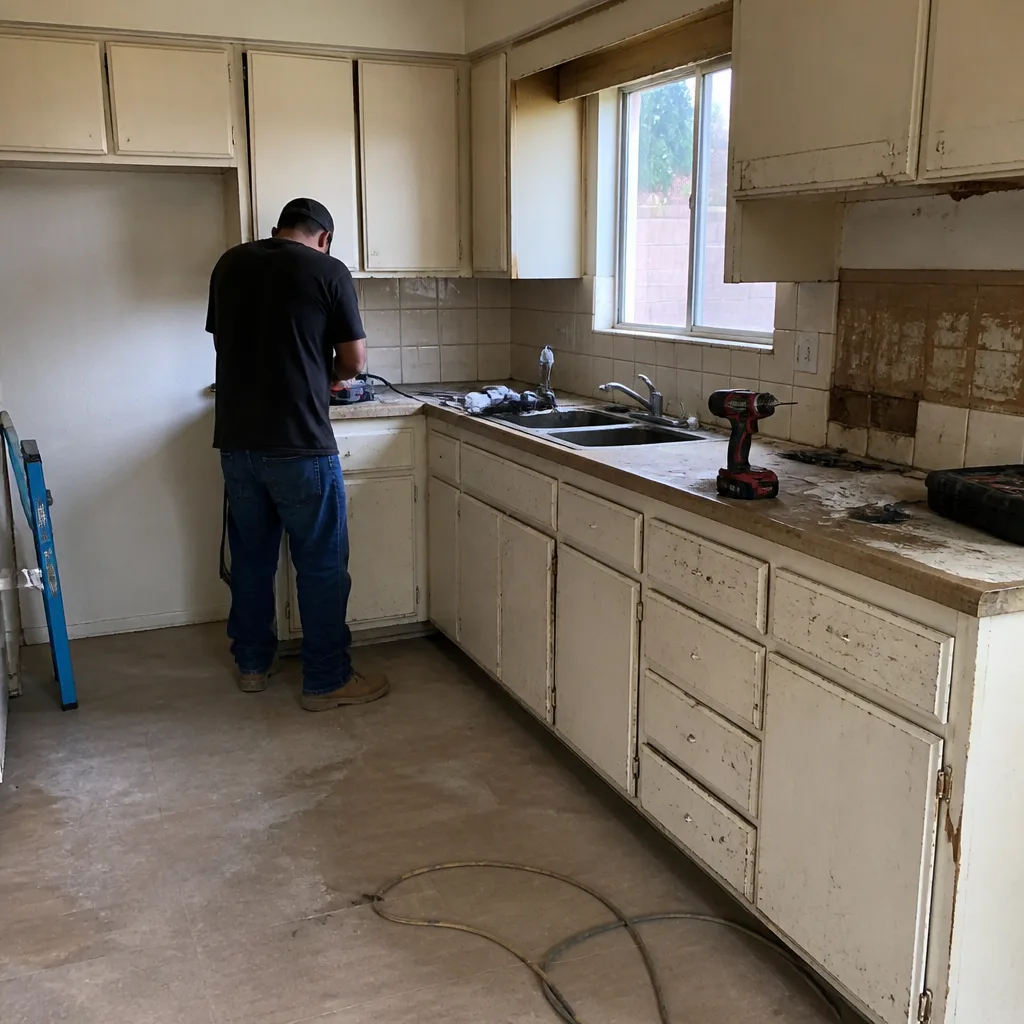 Before
 After
When to Call a Professional
Some of these you can check yourself: the moisture meter test, the plastic sheet test, the fan duct check in the attic. Some of them you shouldn’t touch. Anything involving electrical inside the wall, anything that means opening up a shower assembly, and anything where the moisture readings tell you the waterproofing has failed are all jobs for a licensed contractor who pulls permits and has the inspection signed. Tiles popping loose, widespread hollow sounds, or efflorescence that keeps coming back after a clean are equally clear signals it’s time for a professional diagnosis.
Barrett & Sons Construction Huntington Beach offers free estimates in Huntington Beach. Call (844) 320-2945 to schedule a visit and find out what’s actually happening behind your tile. We’ll bring a moisture meter and tell you the truth about whether you’re looking at a repair or a redo.
Frequently Asked Questions
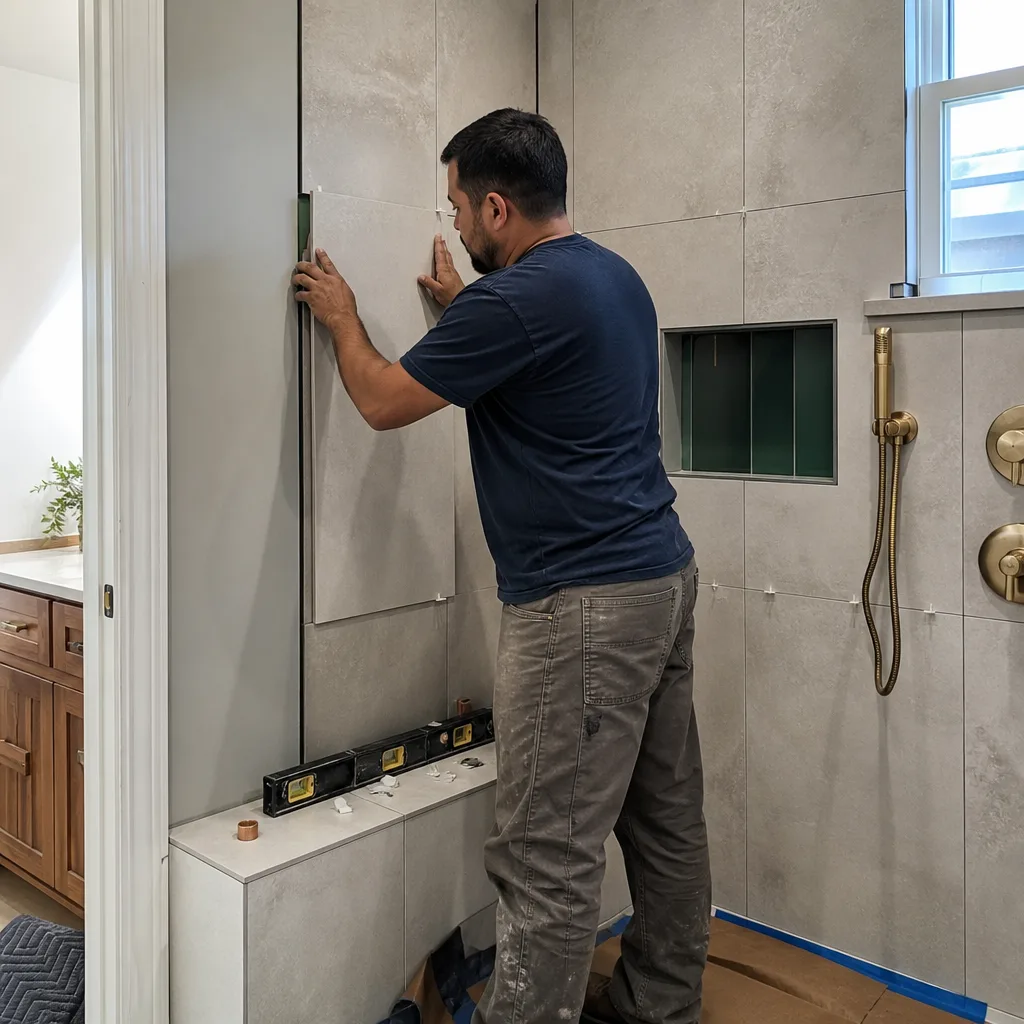
Tap each tile with a screwdriver handle and listen. A flat, solid thud means it’s bonded; a hollow or rattly sound means there’s a void beneath it. If more than ten to fifteen percent of the floor sounds hollow, the installation has failed somewhere and the fix is under the tile, not on top of it. Pair this with a moisture meter reading before you decide on any repair.
Because the moisture is coming from behind the wall, not the surface. Black appearing along a tub or shower seam within weeks of cleaning means water is passing through the failed caulk and feeding mold in the backer board. In Huntington Beach, where salt air and humidity speed mold growth, that can go from a caulk repair to a backer board replacement in a single season once it’s started.
It depends on what’s underneath. Re-grouting is a legitimate maintenance repair when the tile is solid, the moisture readings are normal, and the cracking is limited to one area. It’s a cover-up when tiles are hollow, efflorescence keeps returning, or the meter shows water behind the wall. In those cases the new grout fails within a year or two, and the money spent on it is a down payment on the real repair.
Either the fan isn’t moving enough air for the room size, or the duct is blocked, disconnected, or venting into the attic instead of outside. Pull the grill and check whether the blade turns when the motor runs. Then check the duct. A fan venting into an attic is the more serious version of this problem, because it dumps humid air into the structure itself. Call (844) 320-2945 for a free estimate if you want it looked at.
It comes down to how many failures exist at once. If moisture is behind the tile, the install has failed across the floor, the exhaust fan was venting wrong, or multiple seasons of damage are present, a full redo is usually the cheaper option over ten years. One targeted repair on a mostly sound bathroom is worth doing. Call (844) 320-2945 and we’ll give you an honest read on which situation you’re in.
Yes, for most bathroom remodels that touch plumbing, electrical, or structural work, and definitely for anything that moves a fixture or changes a wall. We pull permits and have inspections signed on every eligible job, and the inspection is a good thing. The permit inspector works for you, not for us. That’s why we like him.
The Bottom Line
Almost every bathroom problem that sends people looking for a contractor starts under the surface. Cracked grout means movement. Black caulk means water. Efflorescence means moisture is migrating. A musty smell means the fan is failing. The visible symptom is a lagging indicator; the real cause is either deflection, moisture, or installation error, and it’s been developing for a season or more before it showed. Find the cause with a moisture meter and a duct check before spending on a repair. Do that in a Huntington Beach bathroom, and you save yourself the second call in eighteen months. And when the diagnosis says it’s time for a professional, call (844) 320-2945 for a free estimate. We’ll scope it in writing, pull the permits, and back the work with our 90-Day Done Right Promise.
Written by the team at Barrett & Sons Construction Huntington Beach.