
Free written scope consultation - allowances, timeline, and change-order rules on paper before a single trade is scheduled
James Hardie Roofing: The Huntington Beach Owner’s Guide
We install and repair James Hardie-compatible roofing systems throughout Huntington Beach, and most roofing jobs here run $8,000 – $20,000 for a full replacement and $400 – $1,800 for repair work. If you already suspect a specific failed component, we can usually inspect, match the part to your existing system, and quote a written line-item price without you committing to a full roof. Most Huntington Beach owners first notice the problem the same way: a ceiling stain that appears after the first real winter rain, granule grit collecting in the gutter, or a ridge line that looks different from the rest of the roof after a close look from the street.
It’s the same call we get all over Huntington Beach. People who bought a roof they trusted, watched it for a few seasons, and now can’t tell whether the failure is a small flash-and-seal fix or the start of a bigger problem. That uncertainty is what this page is built to settle.
Key Takeaways
- James Hardie roofing components and related trim vary enough across product generations that you need a measurement, not a guess, before you order.
- Huntington Beach’s salt air and marine layer are hard on seals, fasteners, and coastal-facing trim in ways that inland-orange-County roofs don’t experience.
- Most single-failure repairs fall in the $400 – $1,800 range; replacements run $8,000 – $20,000 in Huntington Beach.
- Every eligible job we do includes permits pulled and inspections signed. Our technicians have up to 28 years of experience on coastal roofs.
Which James Hardie Models This Applies To
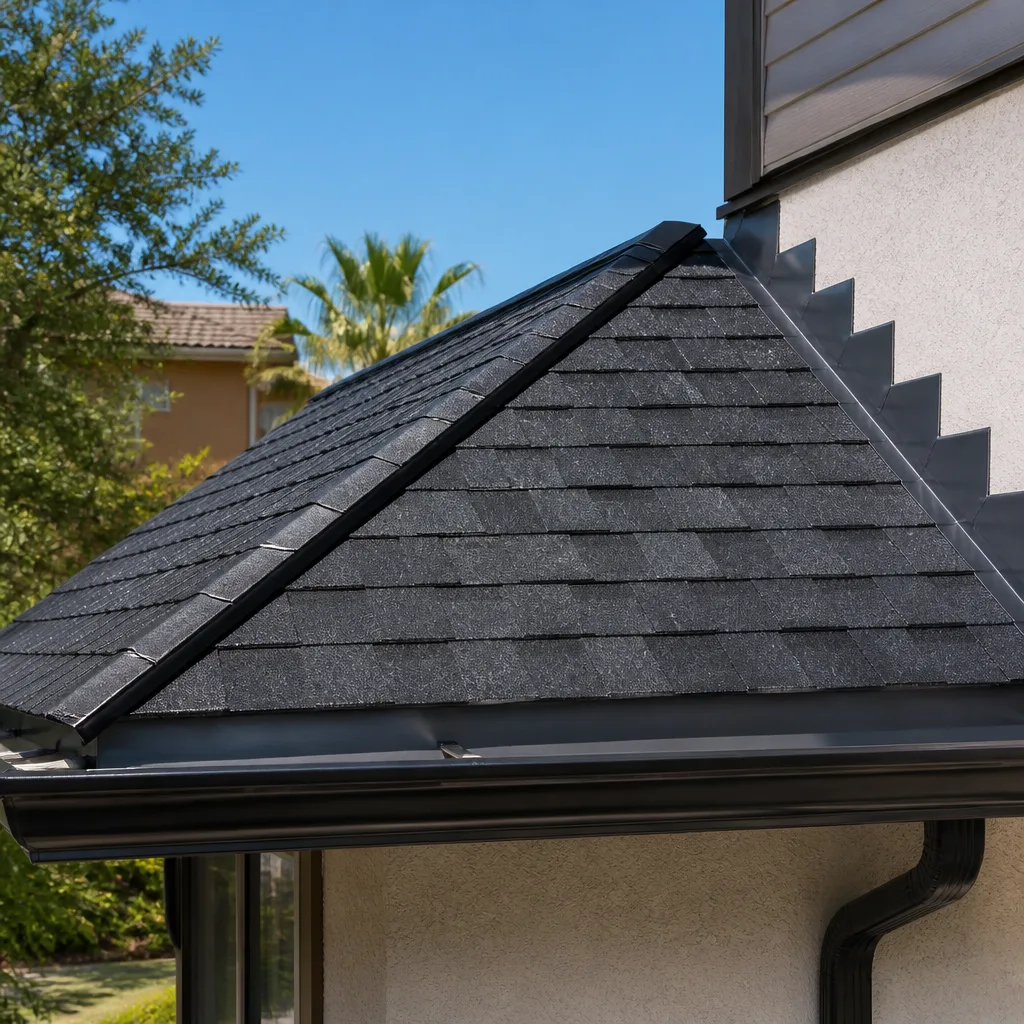
James Hardie roofing is a smaller corner of the James Hardie catalog than siding, so the compatibility question trips up a lot of Huntington Beach owners. The version of the product that was on the market when your house was built may no longer be the version you can walk into a supplier and buy today. The profile, the exposure (how much of each shingle or panel edge faces the weather), and the fastener spec have all been revised over the years.
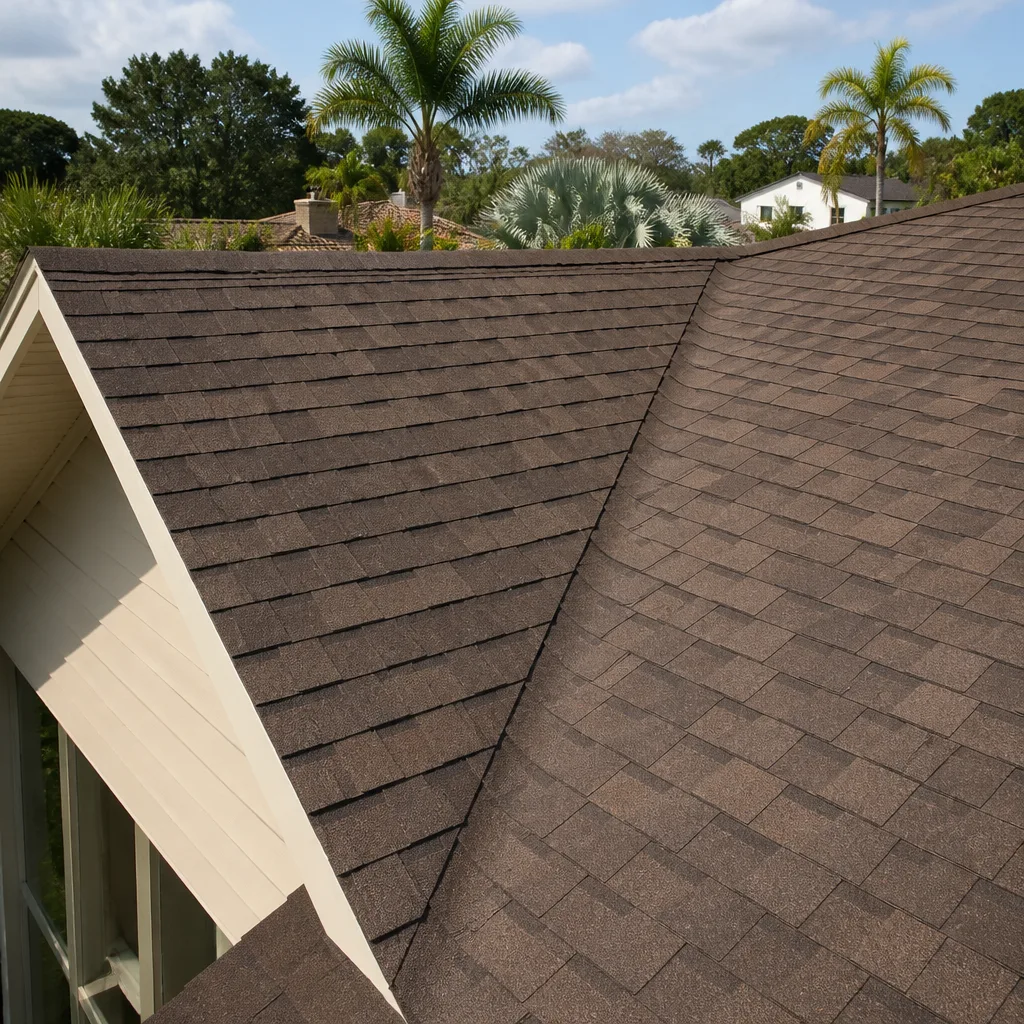
Here’s the practical way to identify what you have before you order. Look for the manufacturer’s name and a part or product code on the underside of the panel at the roofline, inside the attic at the deck, or on the back of a loose trimmed piece. Measure three things: the exposure, the thickness, and the stated coverage. Then match those numbers, not the color, to the current product line. Color can be re-matched; geometry cannot be shimmed without creating a leak path.
This is where the OEM-vs-aftermarket decision actually matters. For the primary roofing panel, a compatible match from the current line is what you want. For the smaller pieces – drip edge, trim, closures – a quality aftermarket equivalent is fine if the gauge and profile match, and it can save real money. What we won’t do is install a mismatched shingle under the belief that “close enough” holds water. It doesn’t, and in a coastal marine layer, it fails faster than inland.
One compatibility gotcha worth knowing: the fastener spec has changed. If your original install used older fasteners and you repair a section with current ones, mixing them in the same field can create a differential-expansion path. Match the fastener to the field, not the shelf.
We also install and service KraftMaid cabinetry, Cambria and Silestone countertops, and full exterior work, so if the roof inspection turns up a related siding or trim problem, we can put the whole scope in writing. One change order, one crew, no surprises.
Styles & brands we work with
- Kitchen remodeling
- Bathroom remodeling
- Home additions & ADU
- Roofing
- Windows & doors
- Driveway & pavers
- Fence
Signs Your James Hardie Roofing Is Failing
These are the five symptoms Huntington Beach owners report most often, and the underlying cause for each.
- Ceiling stains after the first winter rain. Usually a failure at a penetration, valley, or ridge rather than the panel field, and often the first thing an owner sees. A pressurized water test from the roof confirms the source faster than guessing.
- Granule grit in the gutter. Surface wear shedding is normal early on but a steady stream after year fifteen usually means the panel surface is breaking down. The fix depends on whether the chips are localized or spread across the plane.
- Ridge line looks off from the street. A ridge that appears wavy, lifted, or mismatched against the rest of the field is often a fastener or flashing detail that’s failing. It’s easy to spot from the curb and easy to dismiss until it leaks.
- Coastal-facing panels look different. Huntington Beach roofs oriented to the ocean take salt spray on a different schedule than inland-facing planes. If one side looks aged out and the other doesn’t, expect the cause to be atmospheric, not structural.
- Loose trim or trim discoloration at the eave. Trimmed pieces can pull, cup, or discolor as caulk and sealant break down. Usually a small repair if caught before it admits water.
Replacement Cost & What’s Included
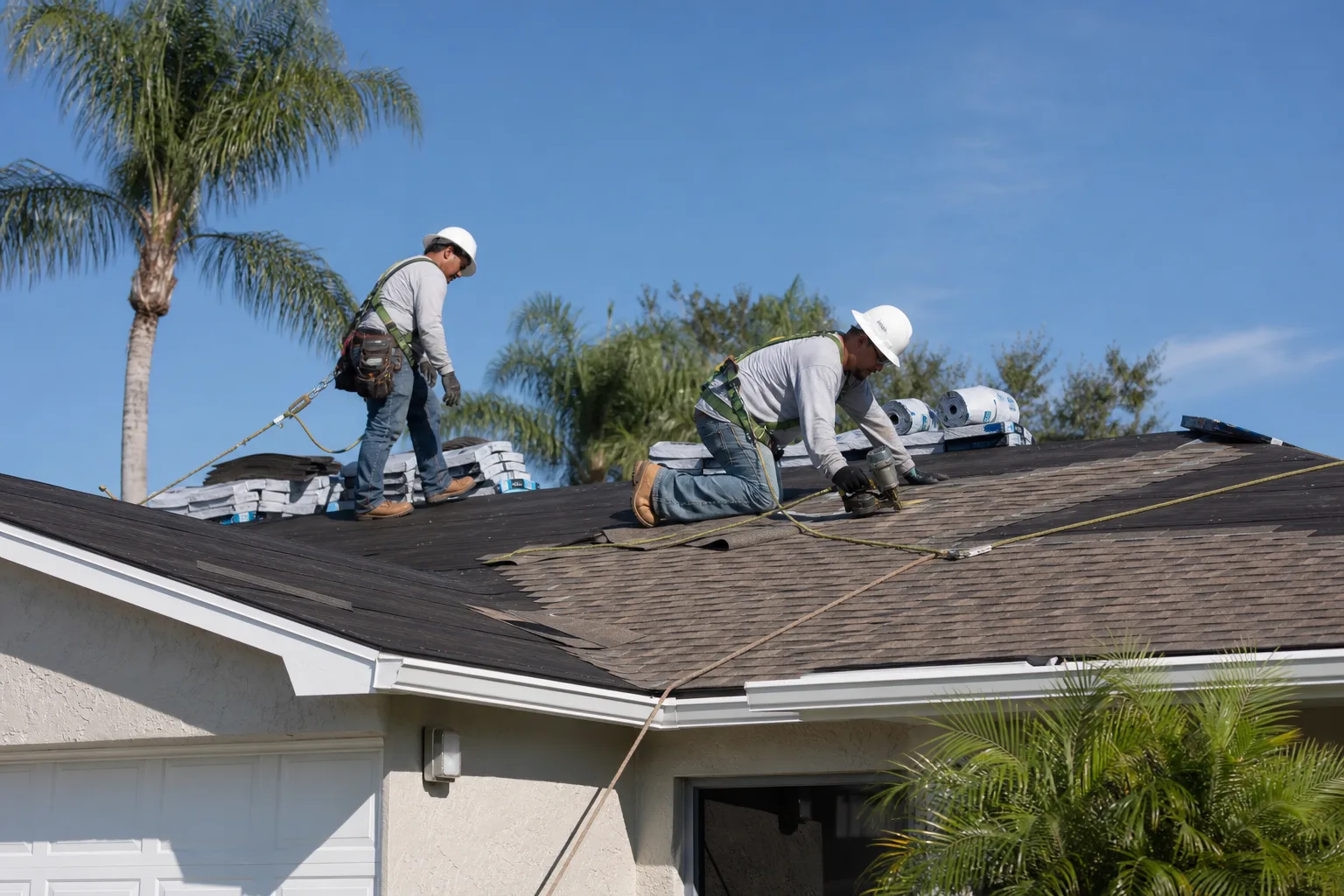
For a Huntington Beach roof, replacement runs $8,000 – $20,000 installed. What drives the range: roof size, pitch, how many planes and valleys, how much of the deck has to be replaced, and the specific profile you match back to. Coastal-facing repairs sometimes cost more than inland-equivalent ones because the sealants, fasteners, and prep work needed to hold up to marine air are more exacting.
Repair work is the more common outcome: $400 – $1,800 installed for a typical single-failure repair. Tile roofs, which we also handle in Huntington Beach, run $600 – $2,500 for repair work. Metal roof installation is a separate scope and starts at $15,000, going up to $40,000 depending on profile and home size.
Here’s how we quote. You get a written line-item estimate that separates parts from labor, so you can see what the panel or trim costs versus what the installation costs. Every scope change during the job arrives as a written change order before any work proceeds, which means the price you agreed to is the price you see. No allowance left off paper. Every eligible job includes permits pulled and inspections signed, and every job we complete is backed by our 90-Day Done Right Promise: if something isn’t right, one call brings Tom back to fix it.
See the difference
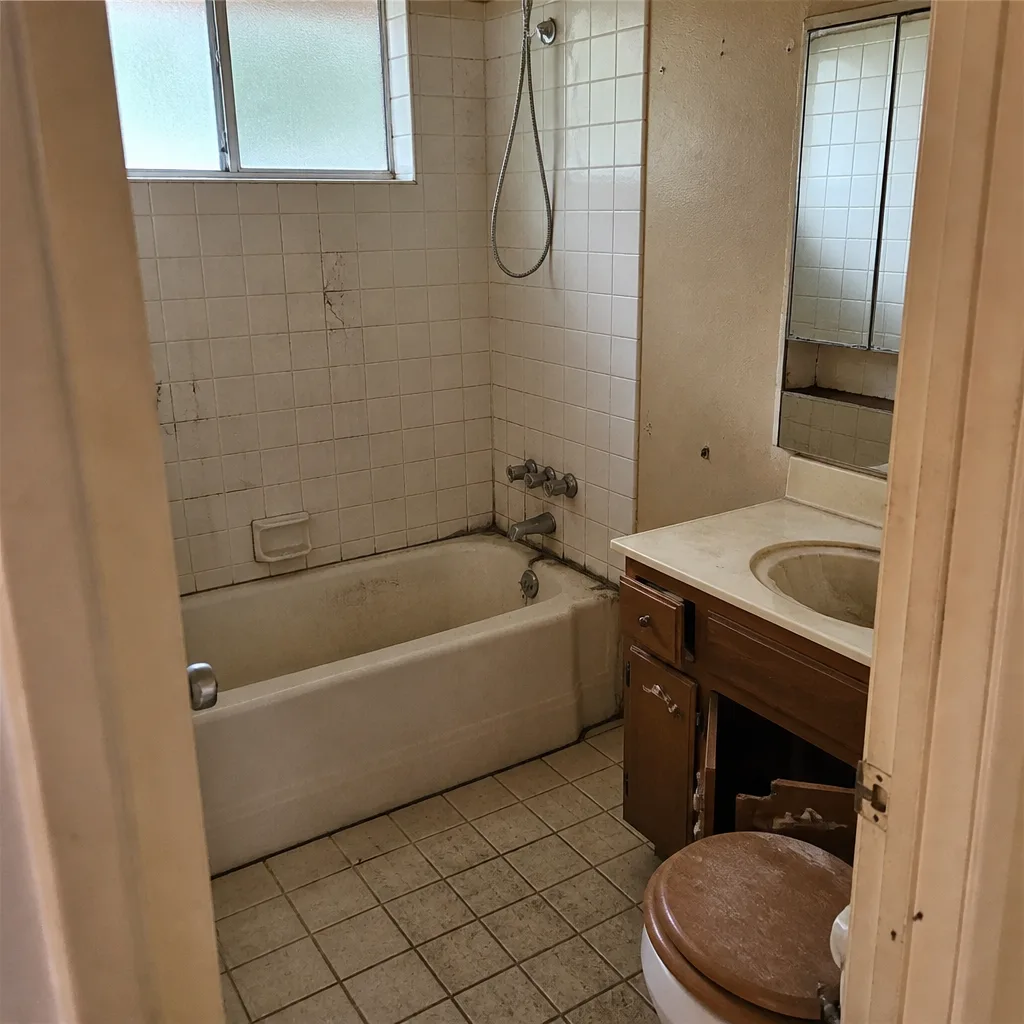 Before
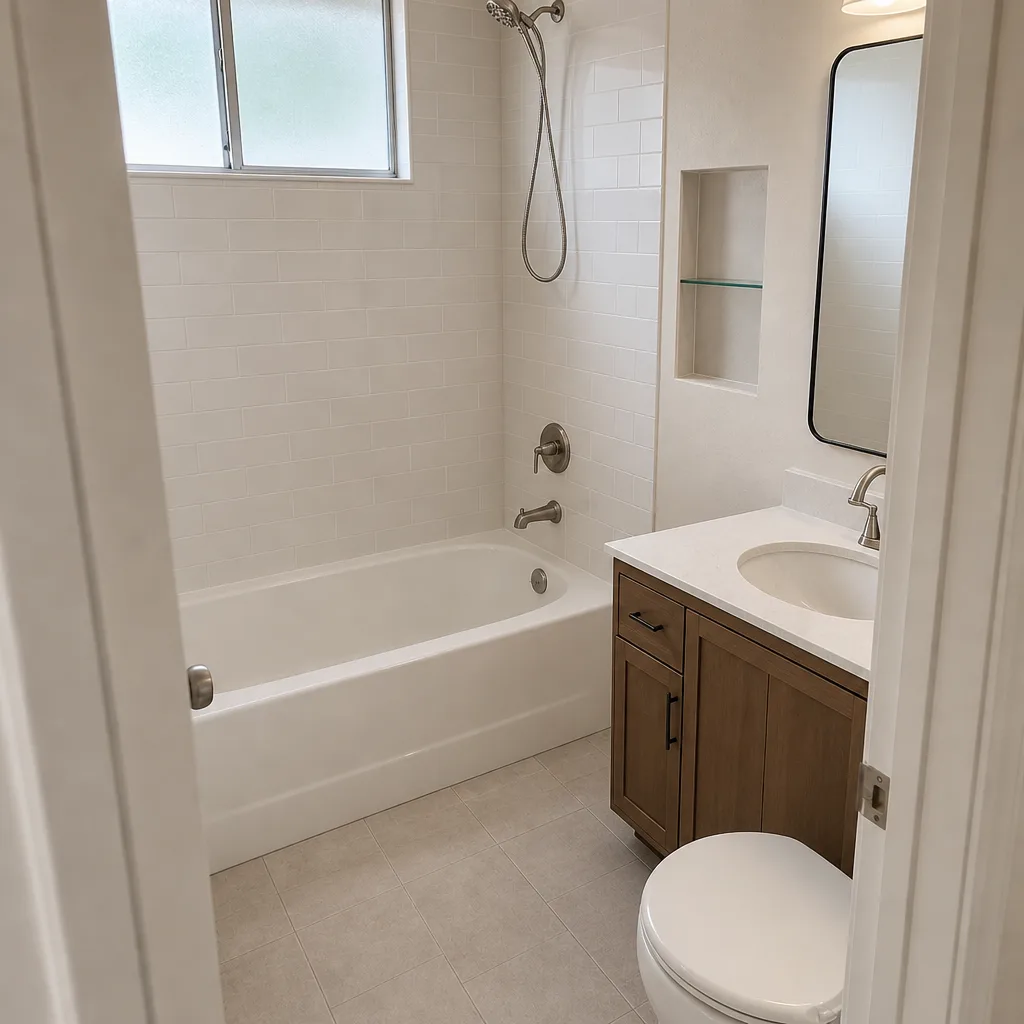 After
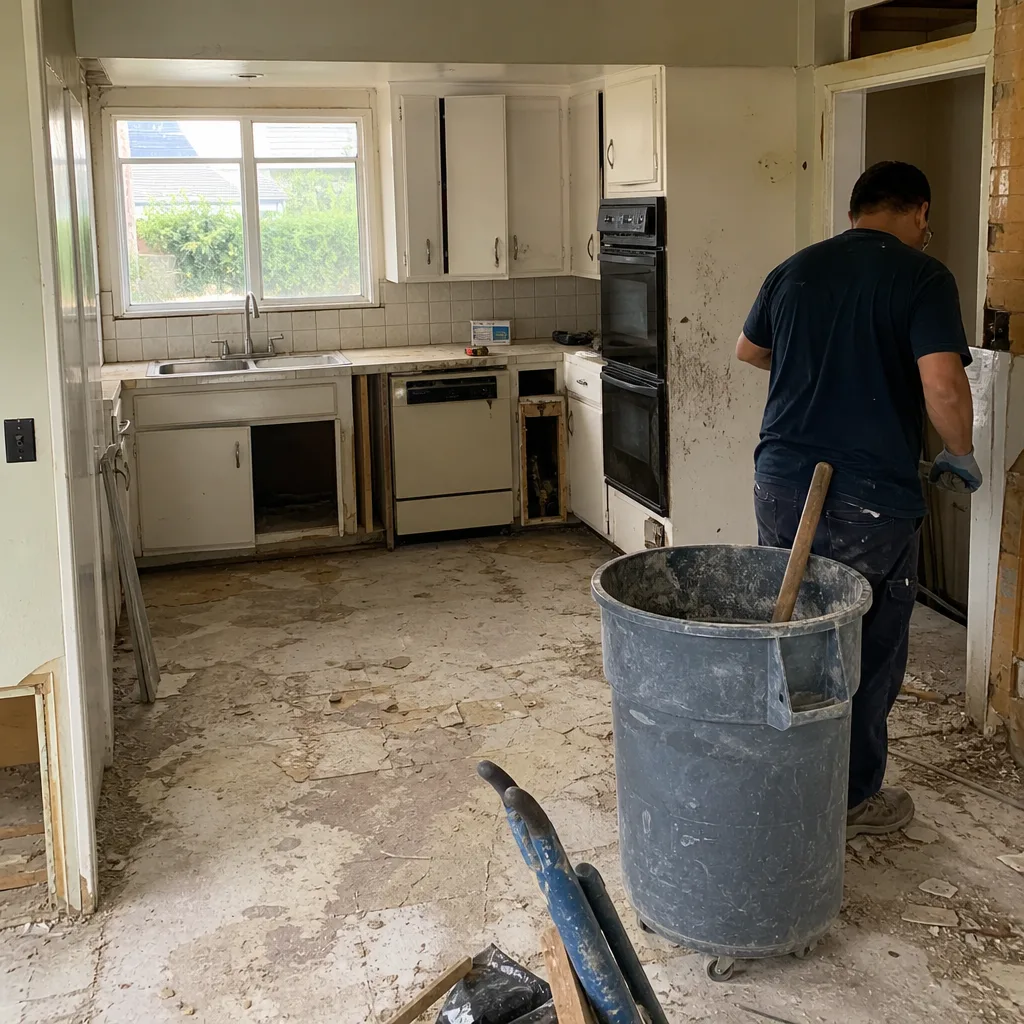 Before
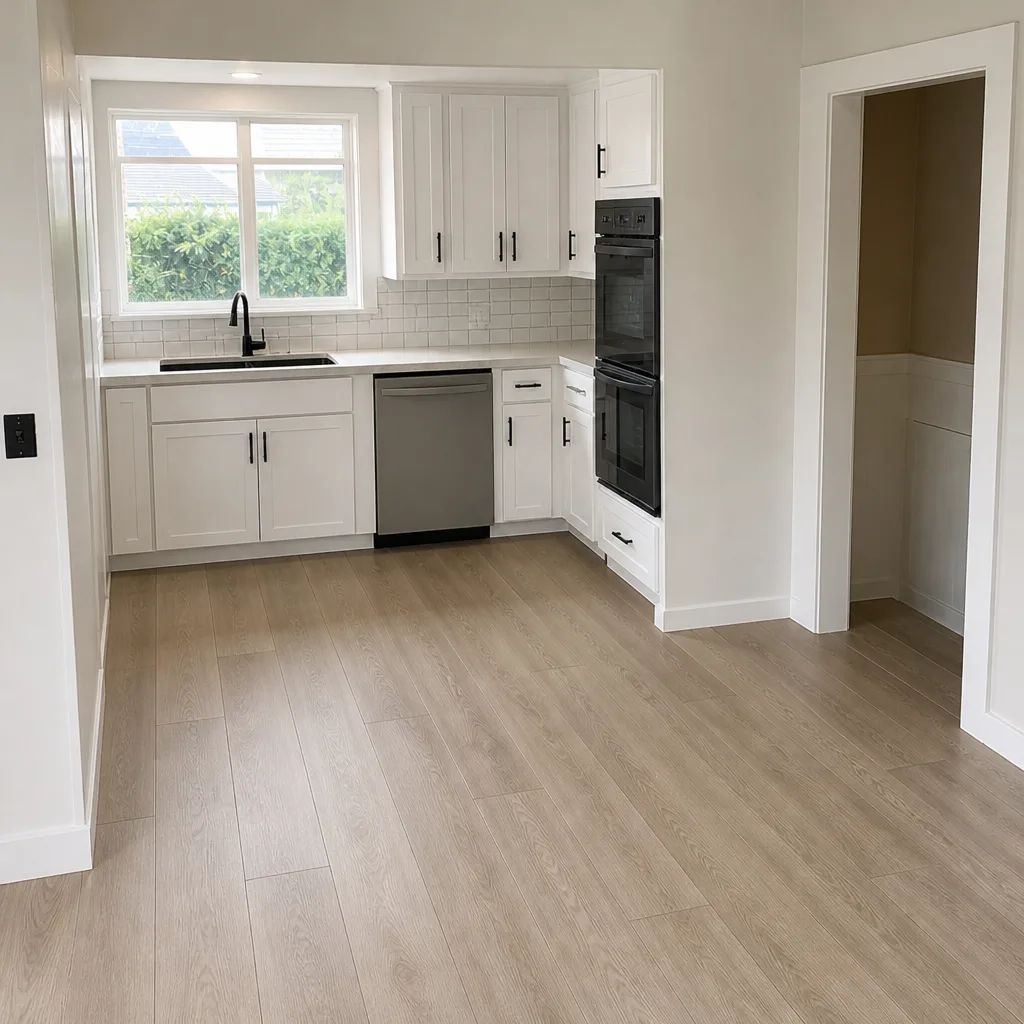 After
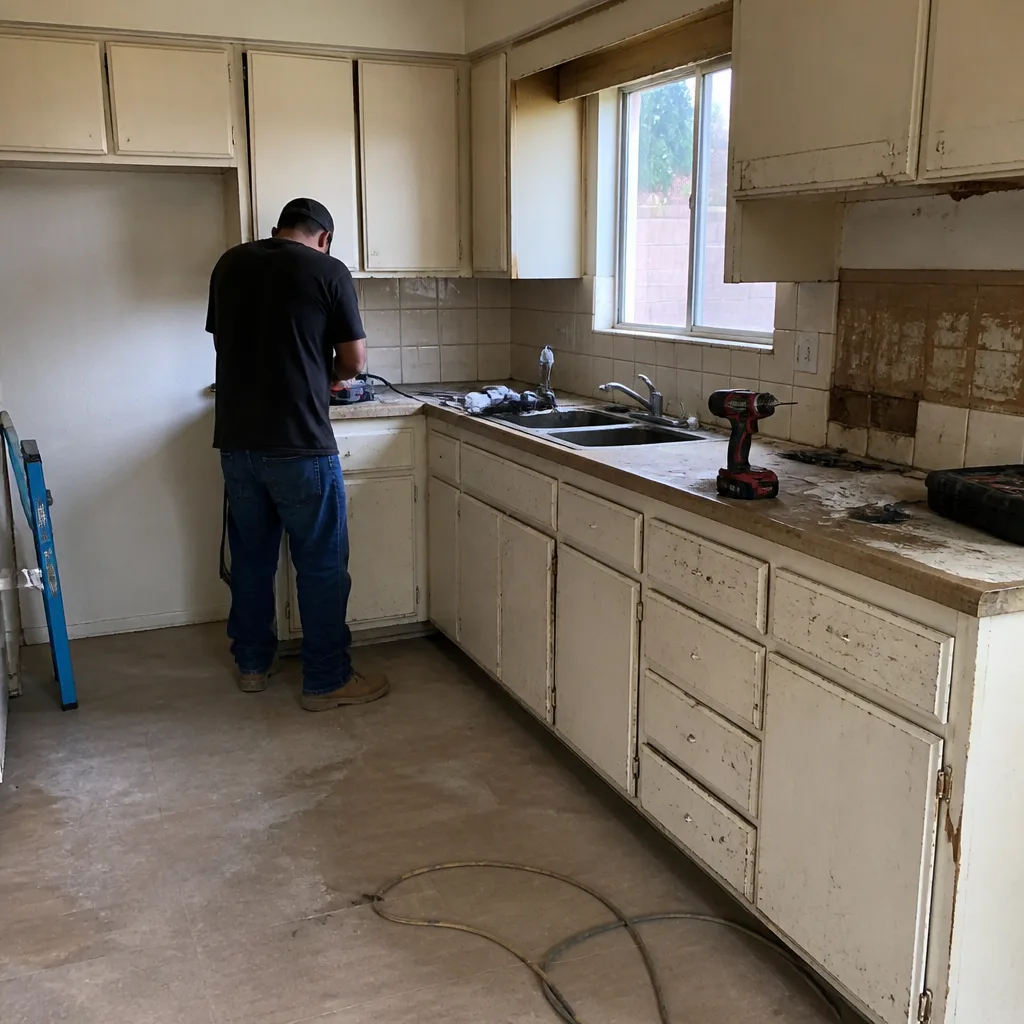 Before
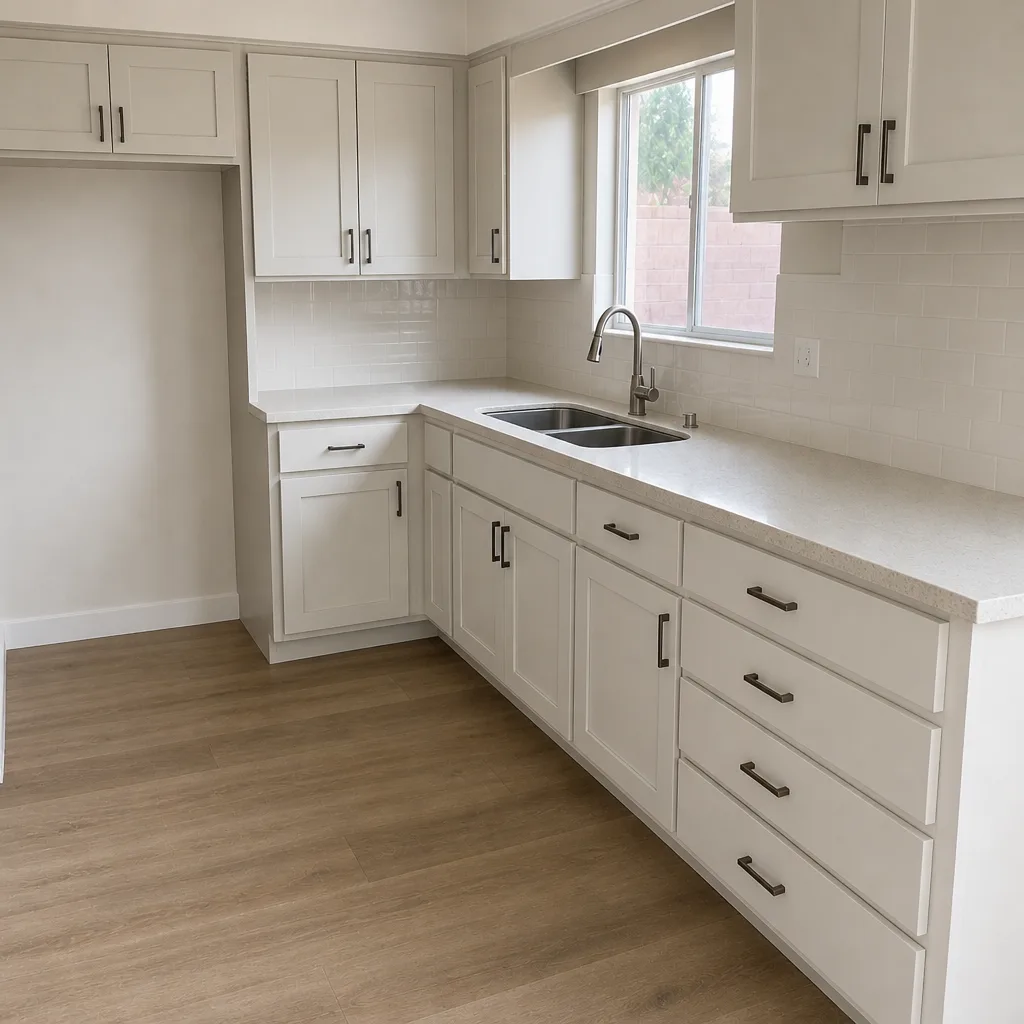 After
DIY or Call Us?
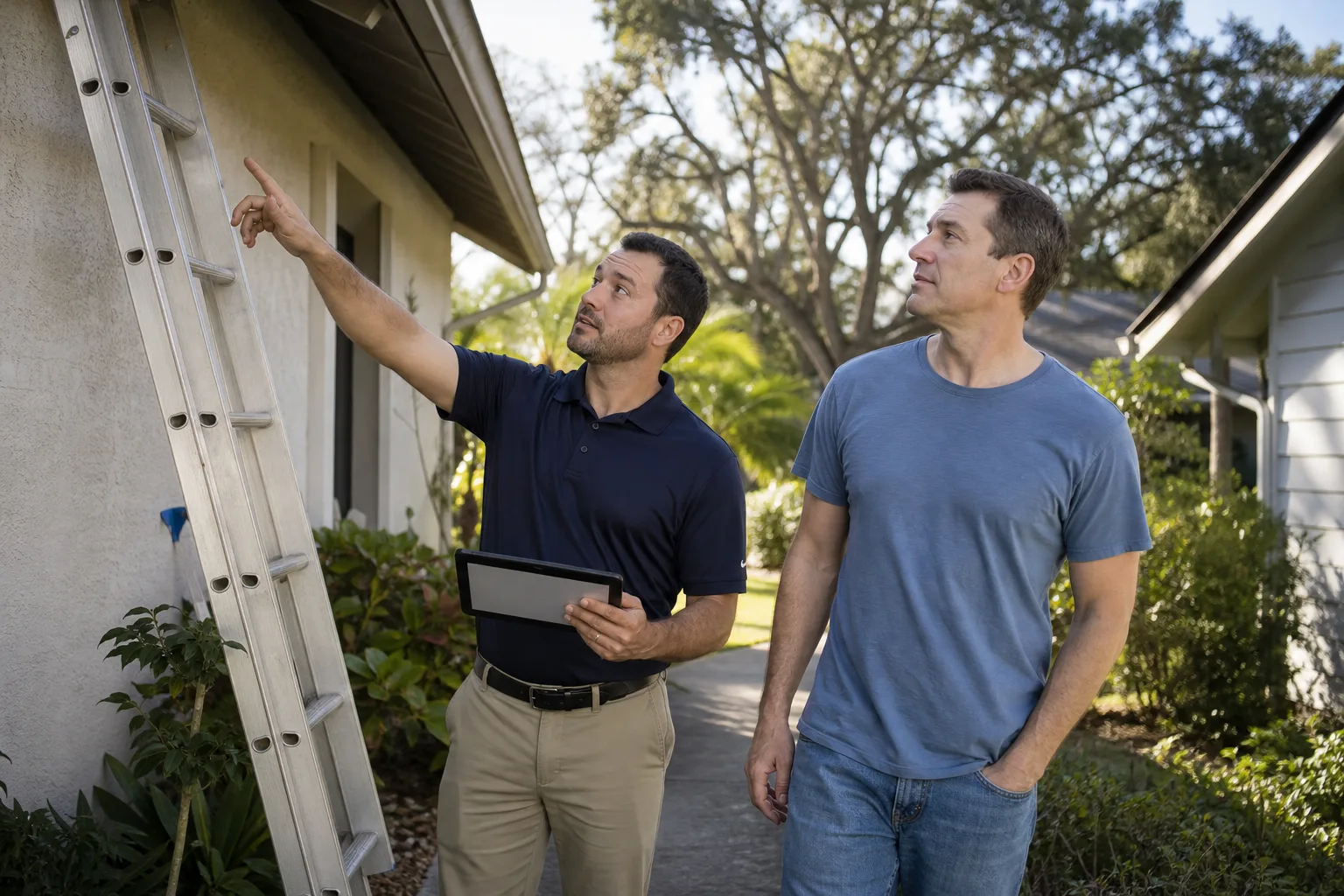
Some of this you can check safely. Walk the perimeter at ground level. Look at the gutter for grit after a storm. Eyeball the ridge for waviness. Photograph anything that looks off and hold onto it – those photos are genuinely useful when we inspect.
What we’d strongly discourage is roof access for anyone not a trained technician. Huntington Beach roofs are a fall hazard even when the pitch looks gentle, and standing on a coastal-facing plane after moisture combines with weathered panels is a real risk, not a theoretical one. The other DIY trap is ordering the wrong part. A mismatched shingle, wrong fastener, or wrong trim is not a small mistake – it’s a leak path you paid to create. If you’re not going to measure, match, and order exactly, don’t climb.
Call (844) 320-2945 and we’ll inspect. No trip charge inside the county, and a free second opinion on any written estimate you already have.
FAQs
Manufacturer-rated lifespan is typically measured in decades, but along the Huntington Beach coast, salt spray and the marine layer will typically shorten the number of years a given panel will go before needing repair or localized replacement. Coastal-facing planes age faster than inland-facing ones on the same roof. Inspect every few years, especially after wet winters.
Often, yes. Most single-failure repairs – a bad penetration, a damaged trim piece, a localized chip – run $400 – $1,800 and hold up fine. Whether repair is the right call vs. a partial replacement depends on whether the failure is isolated or the whole plane is breaking down. Call (844) 320-2945 for a free inspection and we’ll tell you honestly which path is cheaper long-term.
A single-failure repair usually finishes in a day or a half-day; a full replacement takes several days depending on roof size and pitch. We give you the schedule in writing on your estimate so you can plan around it. Call (844) 320-2945 to get a firm timeline for your roof.
We match the current James Hardie product line to your measured exposure, thickness, and coverage, and we order from a supplier we can document. We don’t stock parts locally, and we don’t pretend to have your exact panel on a truck waiting. What we do is measure it correctly, order the right match, and show you the spec before we install it. Call (844) 320-2945 to schedule an inspection.
Ready to price the job?
Call Barrett & Sons Construction Huntington Beach at (844) 320-2945 for a free estimate on your James Hardie roofing repair or replacement. We’re an independent local contractor, not affiliated with the James Hardie company itself, and the owner’s name, address, and license number are published because you should look them up before you sign anything. Standing offers you can count on: $40 off any repair over $200, a free second opinion on any written estimate, no trip charge inside the county, and a permanent 10% Senior & Veteran discount. A live person answers the phone 24 hours a day, 7 days a week.
Written by the team at Barrett & Sons Construction Huntington Beach, serving Huntington Beach and nearby areas.