Last updated November 17, 2026





Free written scope consultation - allowances, timeline, and change-order rules on paper before a single trade is scheduled
Construction Emergency Preparedness Guide for Huntington Beach Homes
Most Huntington Beach homeowners have a plan for the earthquake itself. Far fewer have a plan for the week after. The gap between the two is where money quietly disappears. Insurance adjusters we’ve worked alongside will tell you the same thing: the homeowners who document damage correctly in the first four hours, before anyone touches a tarp or swings a hammer, are the ones whose claims get paid without a fight. The ones who “clean up first and figure out the paperwork later” are the ones calling us six months down the road with a denied claim and a hole in their ceiling. This guide covers the construction-specific emergencies that actually hit homes in Huntington Beach, and exactly what to do in the first 24 hours.
Quick Answer
When a storm, seismic event, or fire damages your Huntington Beach home, document everything before you repair anything: photograph each damaged area with a wide shot, a mid shot, and a close-up with something for scale, write a dated description, and call your insurer’s claims line before you call a mitigation crew. Emergency tarping or board-up is fine and usually necessary, but structural repair should wait until an adjuster has seen the damage or your carrier has approved the scope in writing.
Styles & brands we work with
- Kitchen remodeling
- Bathroom remodeling
- Home additions & ADU
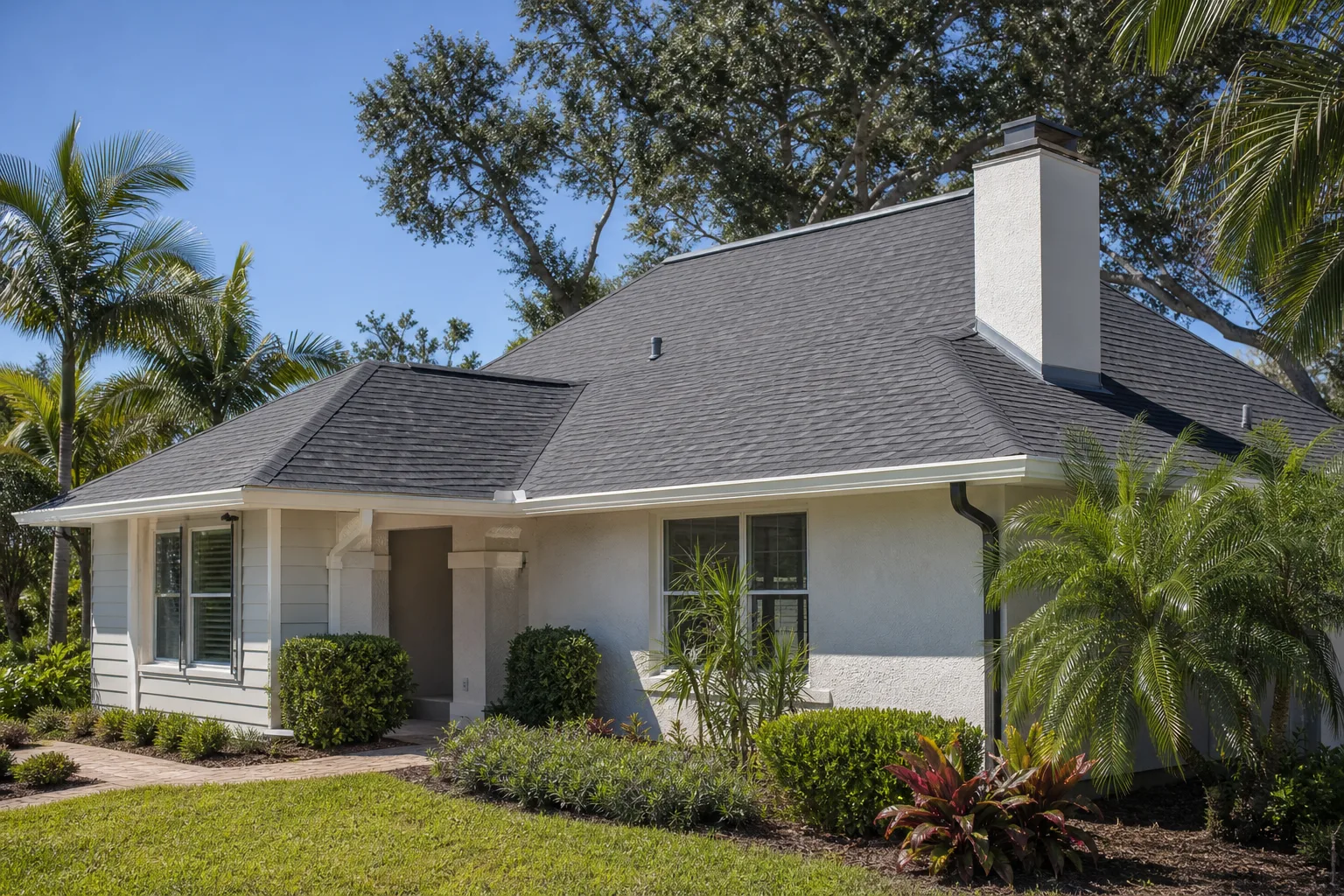
- Roofing
- Windows & doors
- Driveway & pavers
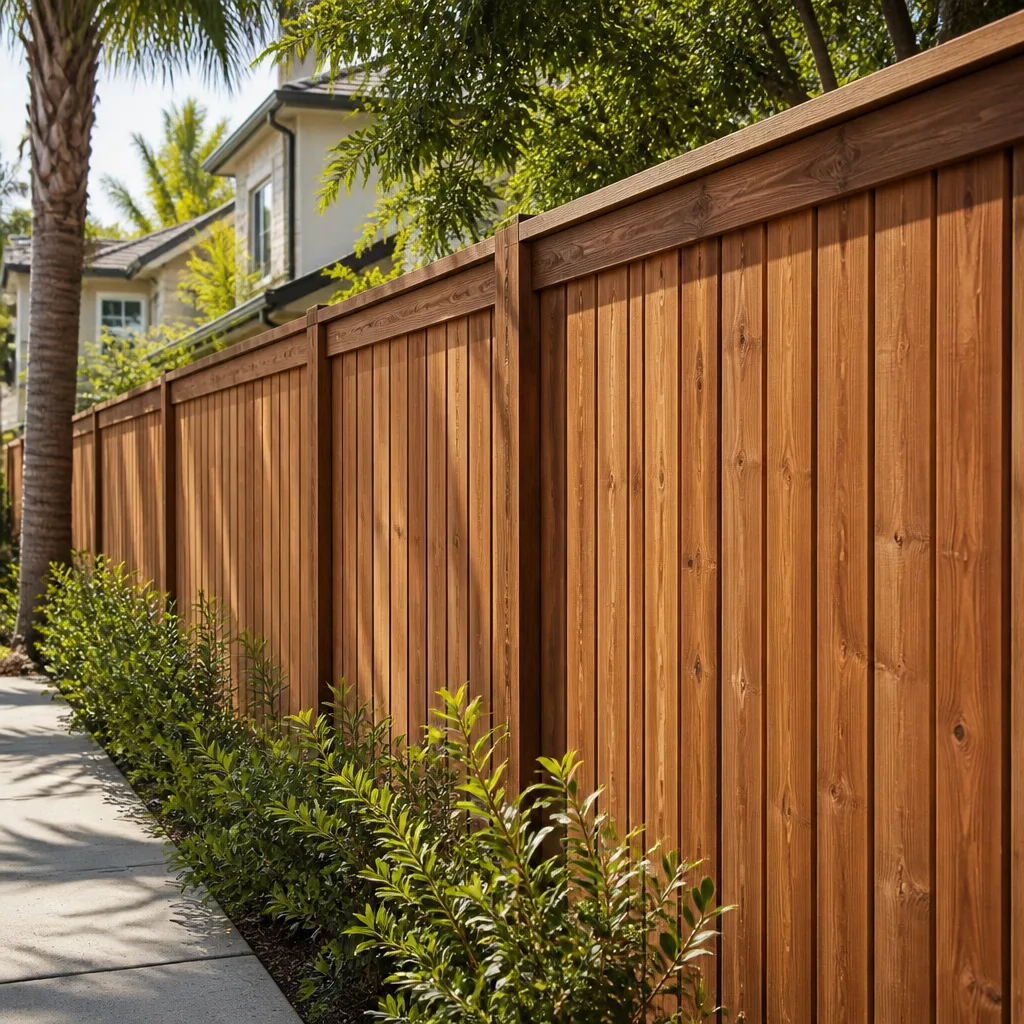
- Fence
Table of Contents
- The First 24 Hours: A Step-by-Step Protocol
- Roof Breach and Water Intrusion After a January Storm
- Foundation Movement and Cracking: When It’s Serious
- Post-Fire Structural Assessment: What Comes First
- How to Document Damage So Adjusters Accept It
- Mitigation vs. Repair: Why the Difference Matters
- How to Spot Storm-Chasers Before the Storm Hits
- What to Have Ready Before an Emergency
The First 24 Hours: A Step-by-Step Protocol
Every construction emergency in Huntington Beach follows the same clock. The first day is about stopping further damage and building a record, not about fixing anything. Here’s the sequence we walk homeowners through when they call us in the middle of it.
- Make it safe. If there’s a gas smell, a sagging ceiling, or exposed wiring, get everyone out and call the utility and the fire department. Don’t go poking around in an attic with a flashlight if the roof structure is compromised.
- Photograph before you touch. Wide shot of the room, mid shot of the damaged area, close-up with a coin, ruler, or your hand for scale. Timestamp everything. Your phone does this automatically, but check that it’s on.
- Write it down. A dated, handwritten note describing what you saw, when you saw it, and what the weather was doing is surprisingly powerful documentation. Adjusters read these.
- Call your insurer’s claims line. Get a claim number and the name of the adjuster assigned. Ask specifically whether tarping or board-up is pre-approved.
- Stop the water. Tarping a breached roof or shutting off a supply line is mitigation, and most policies expect you to act. Keep every receipt.
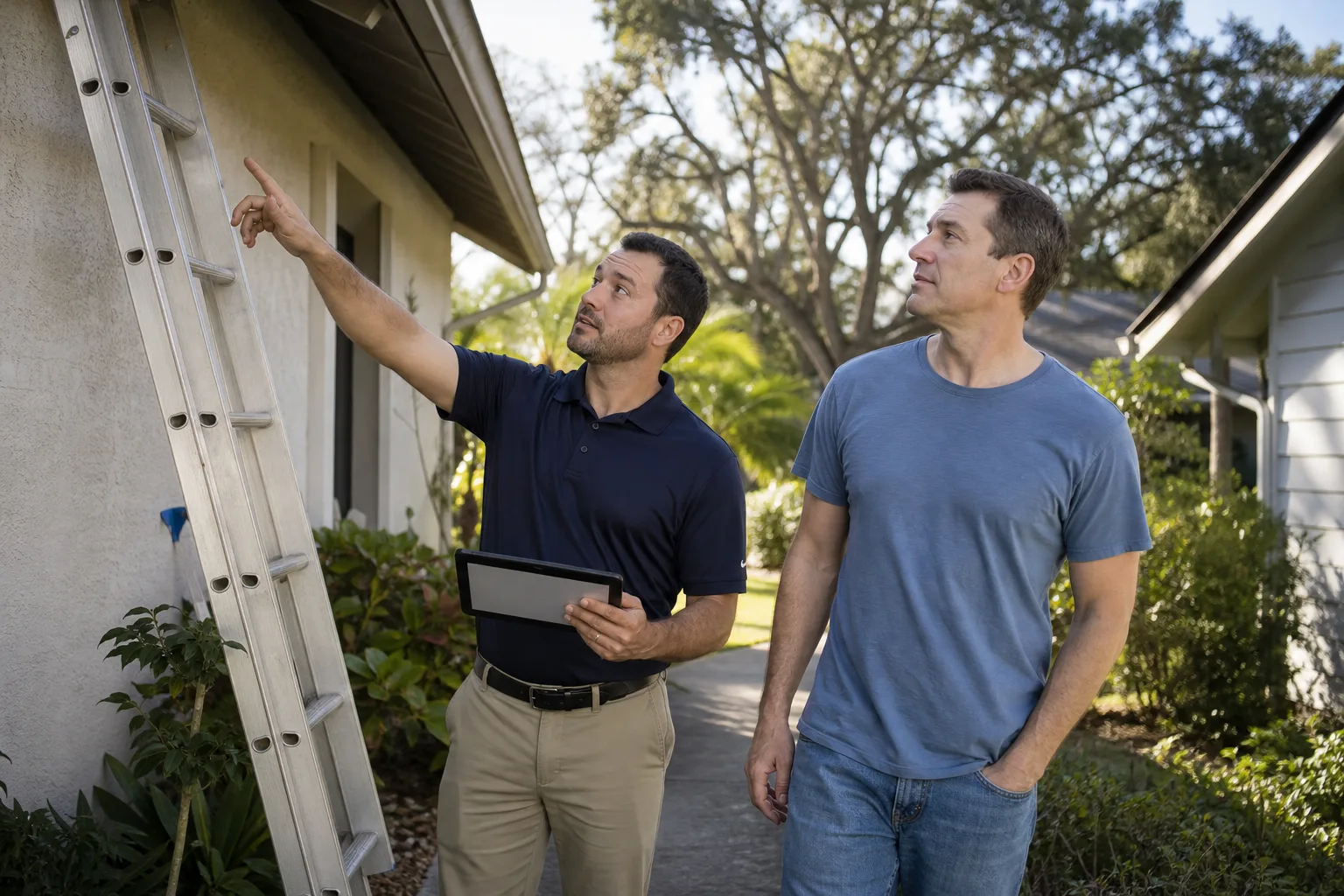
- Call a licensed contractor for a written assessment. Not a repair quote yet – an assessment. You want a professional’s written description of the damage to sit alongside your own notes.
In our experience, homeowners who run this sequence in order spend far less time fighting their carrier and far more time getting their house back. The order matters more than the speed.
Roof Breach and Water Intrusion After a January Storm
Huntington Beach gets most of its rain in a handful of storms between December and March, and those storms are getting punchier. A single breached shingle field or a failed flashing detail around a skylight can push water into your attic insulation, down a wall cavity, and into the ceiling drywall below within a day. The visible stain on your ceiling is usually the last thing to show up, not the first sign.
What to check after a storm rolls through:
- Attic sheathing for dark staining, sagging, or daylight showing through
- Ceiling and wall stains, especially near chimneys, skylights, and valleys
- Gutters pulling away or overflowing at downspouts, which pushes water against the fascia
- Peeling paint or soft spots on exterior trim on the windward side of the house
- Insulation that looks matted or compressed when it should be fluffy
If you find active intrusion, get it tarped. But here’s the part most people miss: don’t let anyone start ripping out drywall or replacing shingles before the adjuster has seen it. A roof replacement is a five-figure job, and insurance can deny a claim if the damage was altered before inspection. If your roof does need replacement, that’s a planned job, and it’s worth understanding how Barrett & Sons Construction Huntington Beach home handles the assessment and permitting side of it. We’ve seen plenty of roofs in Huntington Beach that only needed a section repair and flashing work – not a full tear-off – and we’ll tell you which one you’re looking at in writing.
Foundation Movement and Cracking: When It’s Serious
Not every crack is a crisis. Hairline cracks in drywall, especially at corners of doorways and windows, are normal in a house that’s been sitting on Southern California soil for decades. But after a seismic event, some cracks deserve a professional eye within 24 hours and some can wait for a scheduled inspection. Here’s how to tell the difference.
Call for an emergency assessment same day if you see:
- Stair-step cracking in exterior brick or block, wider than a quarter inch
- Doors or windows that suddenly won’t close, or that rack and stick where they never did before
- Separation between the foundation and the sill plate, or visible gaps at the base of walls
- Sloping floors that have gotten noticeably worse in a short window
- Any crack you can slip a coin into
Cosmetic cracks in interior drywall, on the other hand, can wait for a normal appointment. The important distinction is whether the movement is active or settled – a licensed contractor can usually tell within an hour of walking the property. Foundation work is serious structural work, and we don’t recommend homeowners attempt any assessment that involves crawling under the house or probing the slab themselves. Call a professional.
Post-Fire Structural Assessment: What Comes First
Wildfire in Huntington Beach usually means smoke and ash more than flame front, but the structural concerns are real. A fire that gets into an attic or a wall cavity can compromise framing in ways that aren’t visible from the street, and a fire that stays outside can still warp window frames, melt flashing, and char structural members just beneath the siding.
The order of operations after any fire event:
- Wait for the fire department to release the structure. Don’t enter until they’ve cleared it.
- Don’t run your own electrical or gas. Have the utility verify the meter and lines before anything is turned back on.
- Get a structural assessment in writing. A licensed contractor or structural engineer should confirm whether framing, roof structure, and load-bearing walls are sound before you reoccupy.
- Photograph everything before cleanup. Ash and char patterns tell the adjuster and the structural engineer where the heat actually went.
If the assessment comes back saying part of the structure needs rebuilding, that’s a planned project, not an emergency fix. Windows and doors are often the first thing to get replaced after a fire, and it’s worth looking at James Hardie siding and quality window lines when you get to that stage. For structural additions or rebuilds, our team handles Home Additions & ADU in Huntington Beach with permits and inspections at every step.
How to Document Damage So Adjusters Accept It
This is the section homeowners thank us for the most. An adjuster’s job is to settle a claim based on evidence, and the quality of your evidence determines how smoothly that settlement goes. Here’s the documentation sequence that adjusters actually accept.
The photo sequence. For each damaged area, take three photographs:
- Wide shot: the entire room or elevation, so the adjuster knows where in the house they’re looking
- Mid shot: the damaged area with surrounding context, so they can see what caused what
- Close-up: the specifics, with something for scale (a tape measure, a coin, your hand)
The written record. For each damage item, note the date and time you observed it, what the weather was doing, what the damage looked like, and whether it was pre-existing. Shoot a short video walking through the whole space – adjusters love video because it captures scale and relationship in a way stills can’t.
What not to photograph or write. Don’t speculate about cause on the record. “I think the roof failed because it’s old” can hurt your claim. “Water entered through the ceiling above the west bedroom during the storm” is what you want.
What not to repair. Do not repair, replace, or throw away damaged materials before the adjuster visits unless it’s unsafe. Bag up damaged items and label them. Keep every receipt for tarps, fans, dehumidifiers, and anything else you buy to mitigate.
Mitigation vs. Repair: Why the Difference Matters
Mitigation is action taken to prevent further damage: tarping a breached roof, boarding up a broken window, extracting standing water, running fans and dehumidifiers. Repair is restoration of the building to its pre-loss condition. Most insurance policies expect you to mitigate immediately and to have the repair scope approved before work starts.
Why this matters in practice:
- If you mitigate quickly, you’re protected. If you don’t, your carrier can reduce the payout on the theory that additional damage was preventable.
- If you repair before the adjuster sees it, you may lose the ability to prove the original damage scope. What was a $6,000 repair can get denied entirely.
- Mitigation receipts are usually reimbursable. Keep them all in a folder – paper and digital.
The safest path after any weather event in Huntington Beach is: mitigate today, document today, and let the repair scope wait for the adjuster’s visit. A written change order and clear scope on the repair side is just as important as the documentation on the claim side, since it’s how you avoid a bill that looks nothing like the one quoted on the phone.
How to Spot Storm-Chasers Before the Storm Hits
Every major weather event in Huntington Beach brings a wave of out-of-area trucks with magnetic signs and phone numbers that route to call centers hundreds of miles away. They knock on doors in flooded neighborhoods offering same-day repairs and insurance help. Some are legitimate; many are gone before the warranty matters.
How to tell the difference:
- Ask for the license number and look it up on the state licensing board’s website yourself. Don’t take a business card as proof.
- Ask for a physical address you can drive to. A P.O. box is a red flag.
- Ask if they’ll pull the permit. Storm-chasers often promise permits aren’t needed for “emergency” work, and it’s rarely true.
- Ask for the written scope and change-order policy before any work begins. If they can’t produce one, walk away.
- Ask who’s on the crew that will actually show up. Background-checked, uniformed employees with a company name is a good sign. Day laborers with no connection to the company is not.
The best defense is choosing your contractor before the emergency, when you have time to verify. That’s exactly what we mean when we say look up the license number yourself. If you’re in Huntington Beach and you want a fence replaced before the next Santa Ana wind event instead of after, see our Fence Installation in Huntington Beach page – it’s the same reasoning.
What to Have Ready Before an Emergency
The single biggest predictor of who handles the next storm well is preparation done in the calm months. Here’s what we tell Huntington Beach homeowners to keep in a single folder and on their phones.
- Contractor contacts: your licensed roofer, plumber, electrician, and general contractor, saved in your phone and printed
- Insurance packet: policy number, claims line, adjuster contact, and a copy of your coverage summary
- Permit history: your home’s permit records, available from the city, showing previous work and inspections – useful for any structural claim
- Materials and appliance inventory: brand, model, and purchase year for appliances, HVAC, water heater, and major finishes. James Hardie siding, KraftMaid cabinets, Cambria counters – write down what you have, so a replacement claim is accurate.
- Pre-loss photos: walk through every room once a year and shoot video. This proves the pre-damage condition, which is exactly what the adjuster needs.
- Emergency supplies: tarps, plywood, a cordless drill, a hand-crank radio, and a battery backup for your phone
If you’ve been putting off a driveway project that would improve drainage or a Driveway & Pavers in Huntington Beach installation that would keep stormwater away from your foundation, doing it in a dry month is about ten times easier than doing it after a storm. It’s also part of the same preparedness mindset.
Common Mistakes to Avoid
- Repairing before documenting. The single most expensive mistake we see. Once materials are torn out or thrown away, proving the loss becomes dramatically harder.
- Hiring the first door-knocker with a magnetic sign. Storm-chasers in Huntington Beach tend to show up within 48 hours and disappear within a season. Verify a license before any work begins.
- Letting a contractor tell you permits aren’t needed. They almost always are, especially for roofing and structural work, and the inspector works for you, not for the contractor.
- Misunderstanding what your policy will cover. Flood damage from rising water is typically excluded; water intrusion from a breached roof is often covered. Know which one you’re dealing with before you start.
- Skipping the pre-loss photo inventory. Without it, you can’t prove what your house looked like before. Take the video walkthrough every year.
- Failing to keep mitigation receipts. Tarp and fan rentals are usually reimbursable, but only if you have the paper trail.
- Not verifying a foundation crack in person. What looks like a cosmetic crack from a distance may be active movement. Get a licensed assessment before you assume it’s fine.
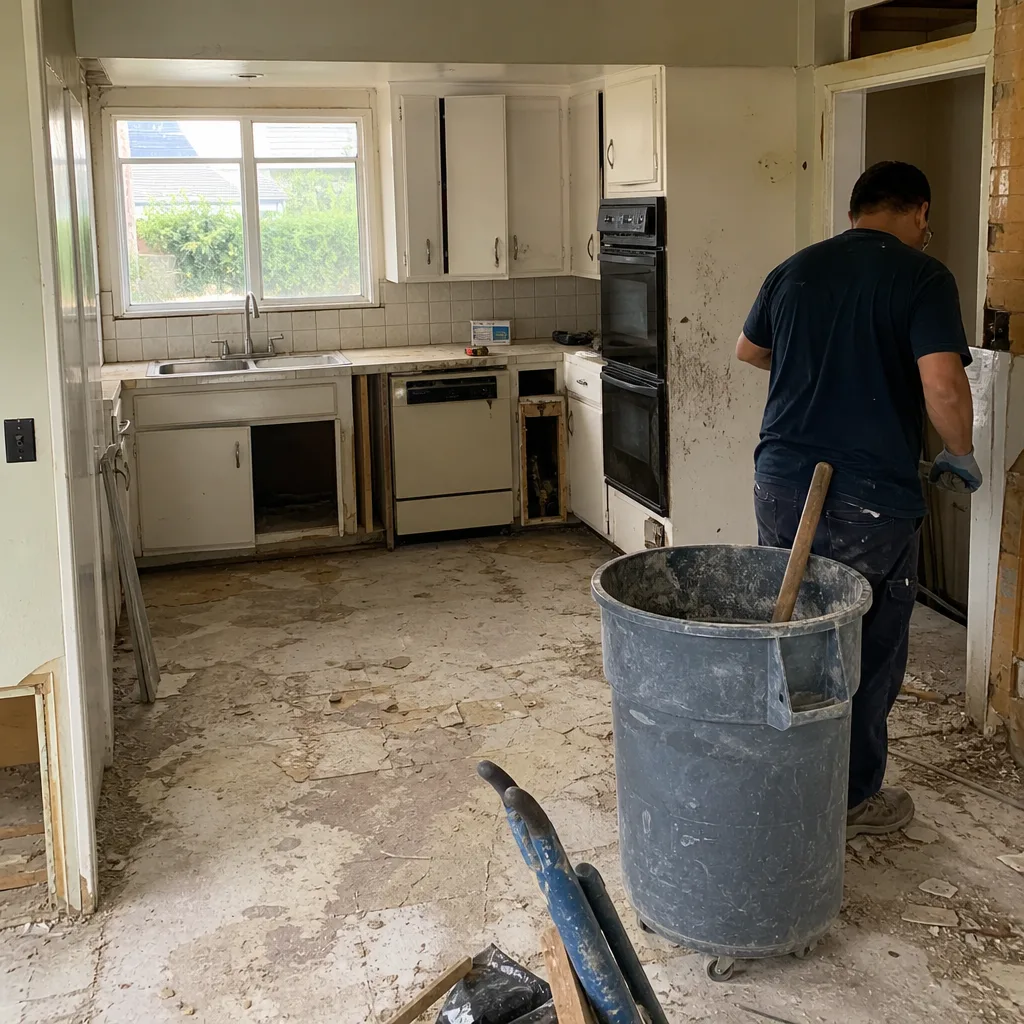
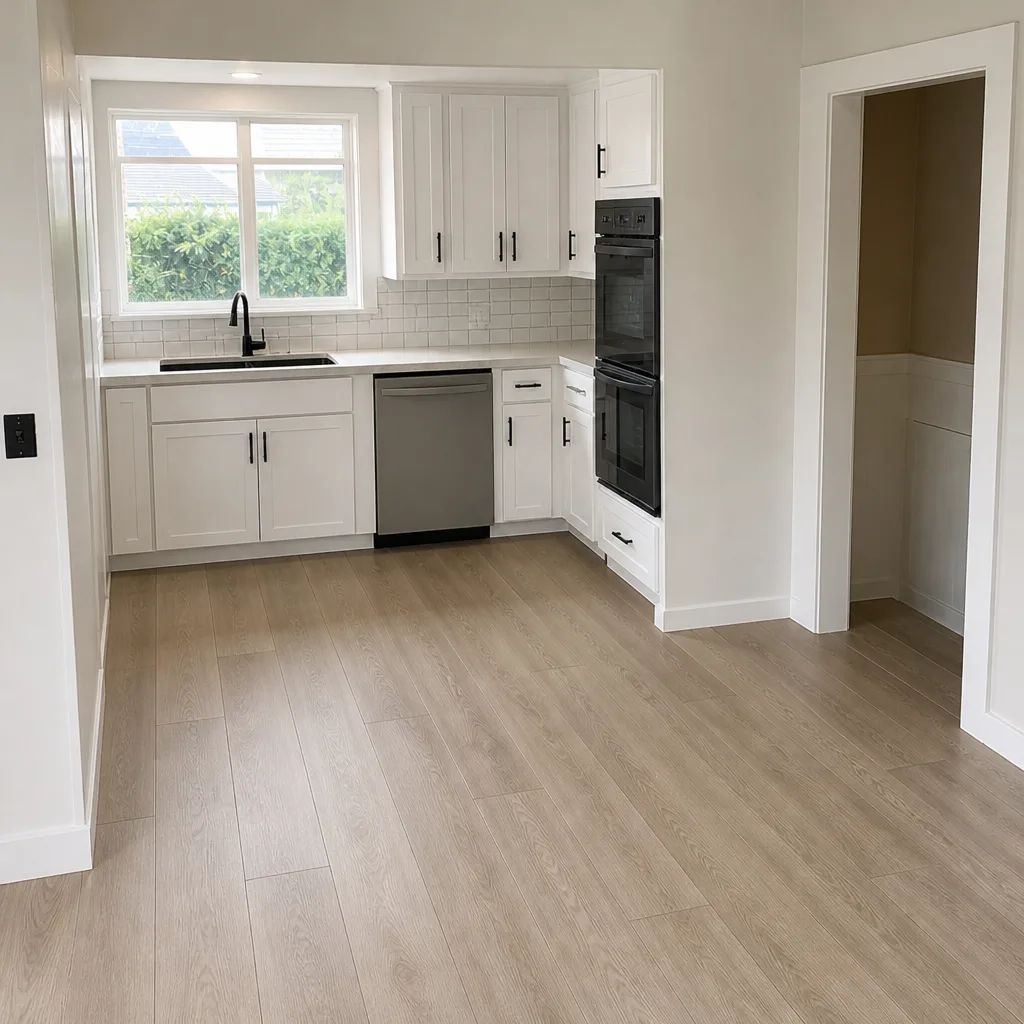
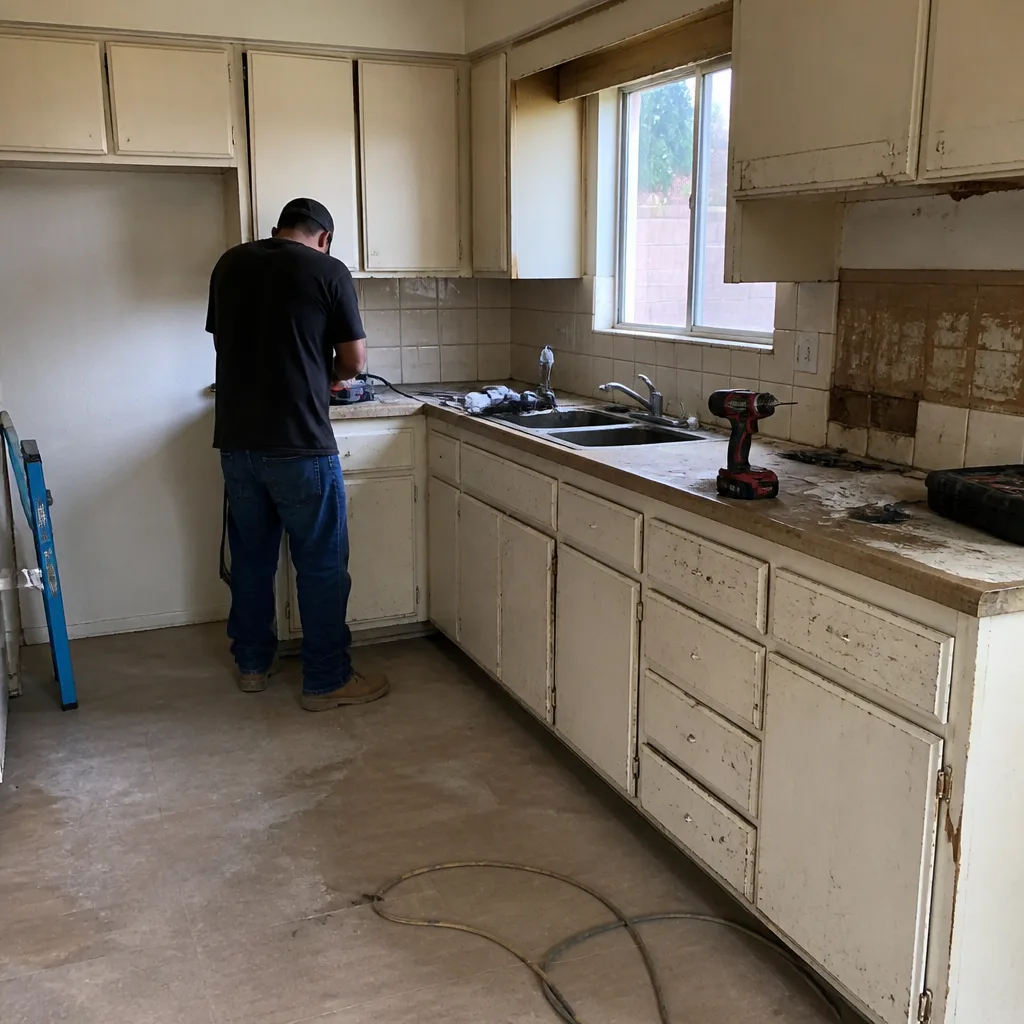
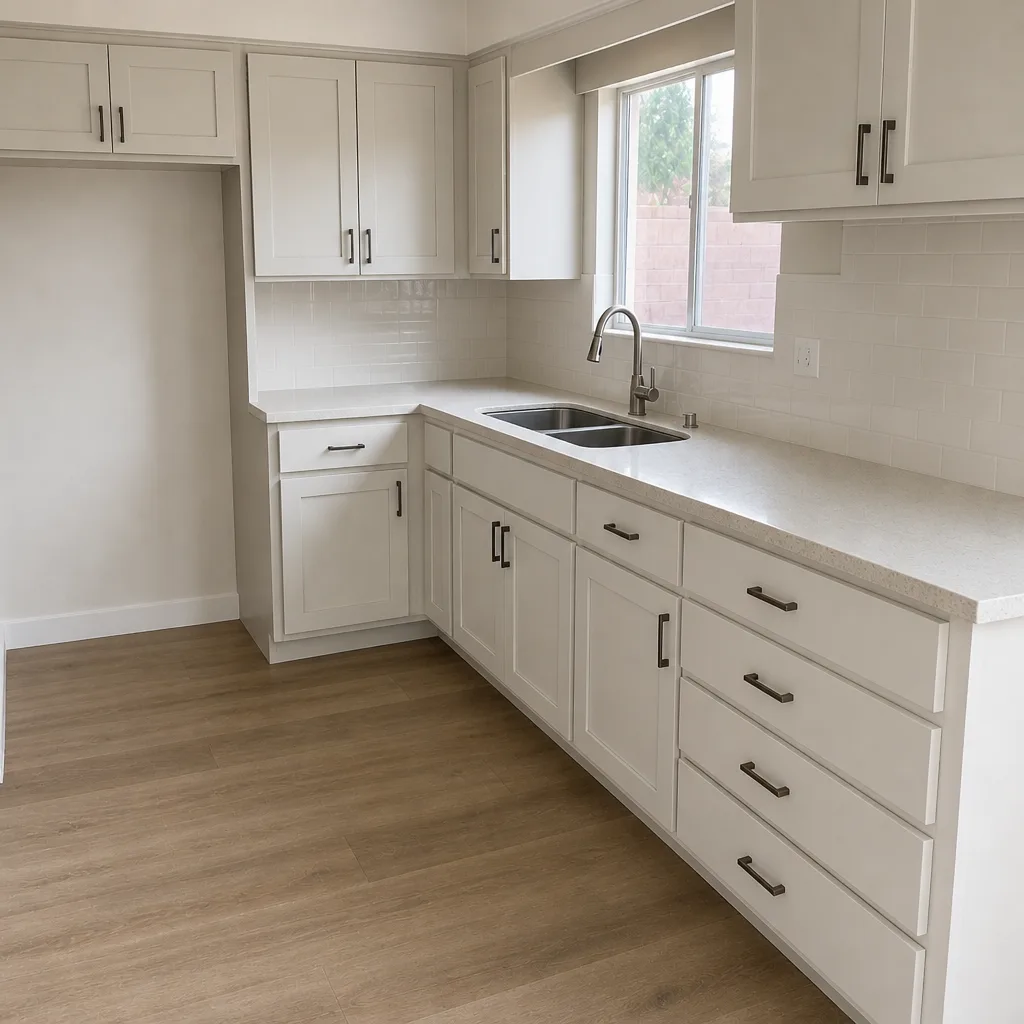
See the difference
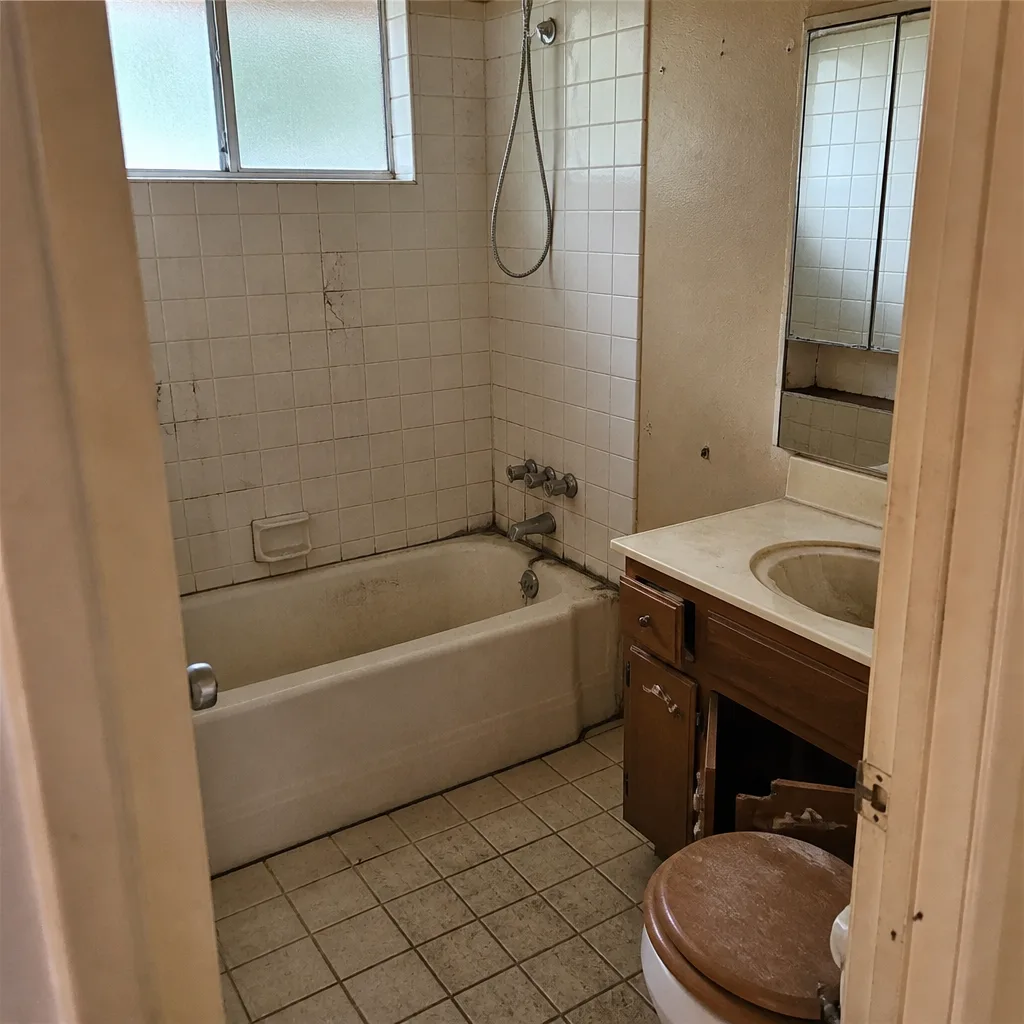 Before
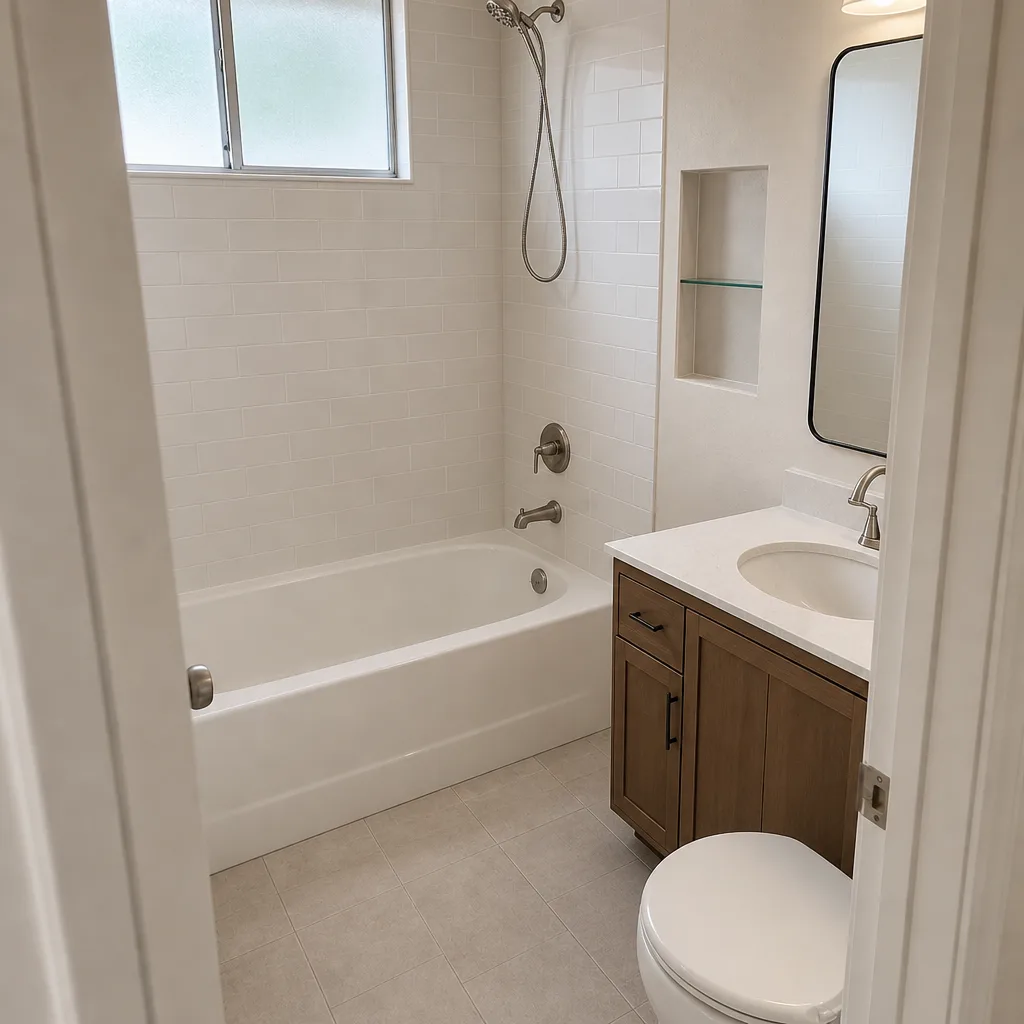 After
 Before
 After
 Before
 After
When to Call a Professional
Call a licensed contractor when the roof has been breached and needs tarping, when water intrusion is active, when structural cracking is wider than a quarter inch, when doors and windows suddenly stop closing properly after a seismic event, or when a fire has touched any part of the home’s structure. Call immediately if you smell gas or see sagging framing. Cosmetic issues and settled cracks can wait for a scheduled appointment during business hours. For anything in the first category, don’t go it alone – roofs, gas lines, and structural repairs are genuinely dangerous work, and we don’t recommend homeowners attempt any assessment that involves getting on a roof or cutting into a wall.
If you want a written, no-pressure assessment of what’s actually damaged before you make a single call to your carrier, Barrett & Sons Construction Huntington Beach offers free estimates in Huntington Beach – call (844) 320-2945. We can put our findings in writing so you have documentation on your side from the first day.
Frequently Asked Questions

Photograph each damaged area three ways – wide, mid, and close-up with a scale object – before any tarping or cleanup, then write a dated description of what you saw and call your insurer’s claims line for a claim number. Don’t repair anything beyond emergency tarping until the adjuster has seen it. Call (844) 320-2945 if you want a licensed contractor’s written assessment to pair with your own photos.
Typical emergency tarping runs somewhere between $350 and $900 depending on roof pitch, square footage, and access. The purpose is to stop further intrusion and get documentation time, not to fix the roof. The actual repair scope gets priced after the adjuster has seen the damage and a licensed contractor has written a line-item scope. Call (844) 320-2945 for a free estimate on the mitigation and the repair scope.
Wider than a quarter inch, stair-step cracking in brick or block, doors and windows suddenly sticking, or visible separation between the foundation and the sill plate are all signs to call for a same-day assessment. Hairline cracks in drywall are usually cosmetic and can wait for a scheduled inspection. Get a licensed professional’s eyes on anything you’re unsure about – foundation work isn’t a DIY category.
Usually yes, if the breach came from a covered event like a windstorm. Rising floodwater from the street is a separate coverage, typically through the federal flood program, and it’s often excluded from a standard homeowners policy. Read your policy summary or call your adjuster before you assume which coverage applies. If you want a licensed contractor to put damage findings in writing for your claim, call (844) 320-2945.
Look up the contractor’s license number on the state licensing board’s website yourself, ask for a physical address you can drive past, and ask whether they’ll pull the permit for the work. A legitimate contractor will give you a written scope and a written change-order policy before starting. Door-knockers who can’t produce any of that, or who claim permits aren’t needed for the job, should be walked away from without further conversation.
Keep your insurer’s claims line and your policy number, contacts for your licensed roofer, plumber, and contractor, your home’s permit history, a materials and appliance inventory, and a yearly pre-loss photo video walkthrough of every room. Add tarps, plywood, and a cordless drill to the garage. When a real emergency hits, being able to hand someone clear documentation is worth more than any amount of scrambling.
The Bottom Line
The construction emergencies that hit Huntington Beach homes – roof breaches in a January storm, foundation movement after a seismic event, post-fire structural concerns – are survivable. The claims that come with them are often where the real damage happens, and documentation in the first four hours is the single biggest lever you control. Mitigate, photograph, write it down, call your carrier, then call a licensed contractor for a written assessment before any repair begins. Verify a contractor’s license before you need them, not after. The homeowners who come through a storm in the best shape are the ones who had a folder ready and a name to call.
If you want a team that walks through the damage with you, explains what you’re looking at in plain English, and puts every finding in writing – then call Barrett & Sons Construction Huntington Beach at (844) 320-2945 for a free estimate. We’ll bring the same approach to the emergency assessment as we do to every planned project: scope in writing, permits pulled, and a phone that a real person answers.
Written by the team at Barrett & Sons Construction Huntington Beach.