Last updated November 17, 2026

Free written scope consultation - allowances, timeline, and change-order rules on paper before a single trade is scheduled
DIY vs Professional Bathroom Remodeling: What’s Safe to Do Yourself
Painting your bathroom? Go for it. Moving a drain six inches? That’s a permit, a licensed plumber, and a city inspection – and skipping any one of those three can kill a home sale years later. That’s the line most DIY guides never draw, and it’s the one that matters most. The real question in a bathroom remodel isn’t “can I do this?” It’s “what happens to the stuff behind the wall if I get it wrong?” In Huntington Beach, where older homes near downtown and along the coast often carry original plumbing from the 1950s and 60s, that question decides whether you save a few thousand dollars or hand a buyer a $12,000 problem. This guide shows you where the safe DIY line sits, which work California requires a licensed trade to touch, and how to run your own project without gambling your home’s value.
Quick Answer
Demo, painting, hardware swaps, and installing a vanity against existing plumbing are genuinely safe to do yourself. Anything that touches water lines, drain lines, gas, or the electrical panel behind the wall requires a licensed trade and a permit in California. The dividing line is simple: if a mistake gets wet, burns, or fails an inspection at resale, hire it out.
Styles & brands we work with
- Kitchen remodeling
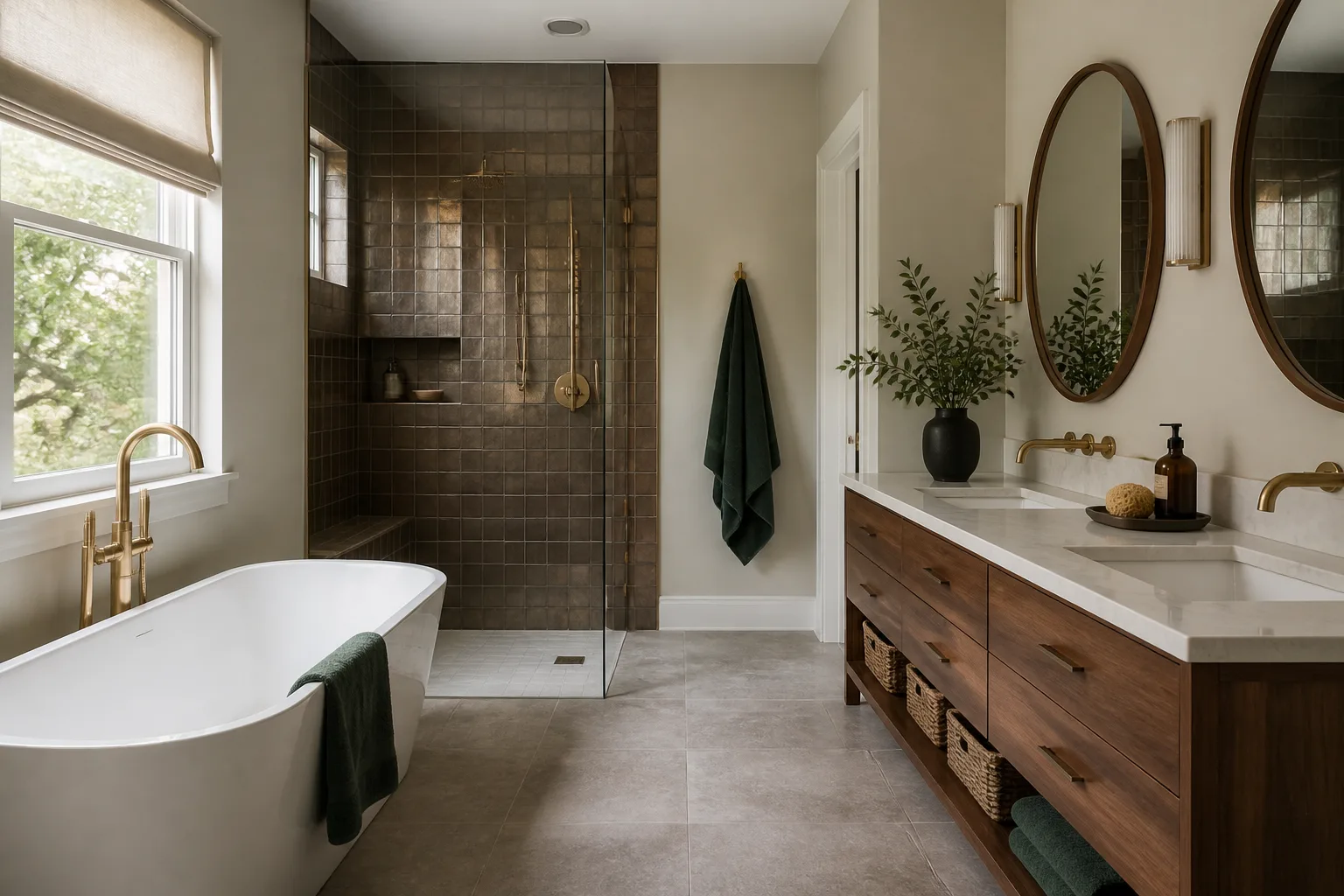
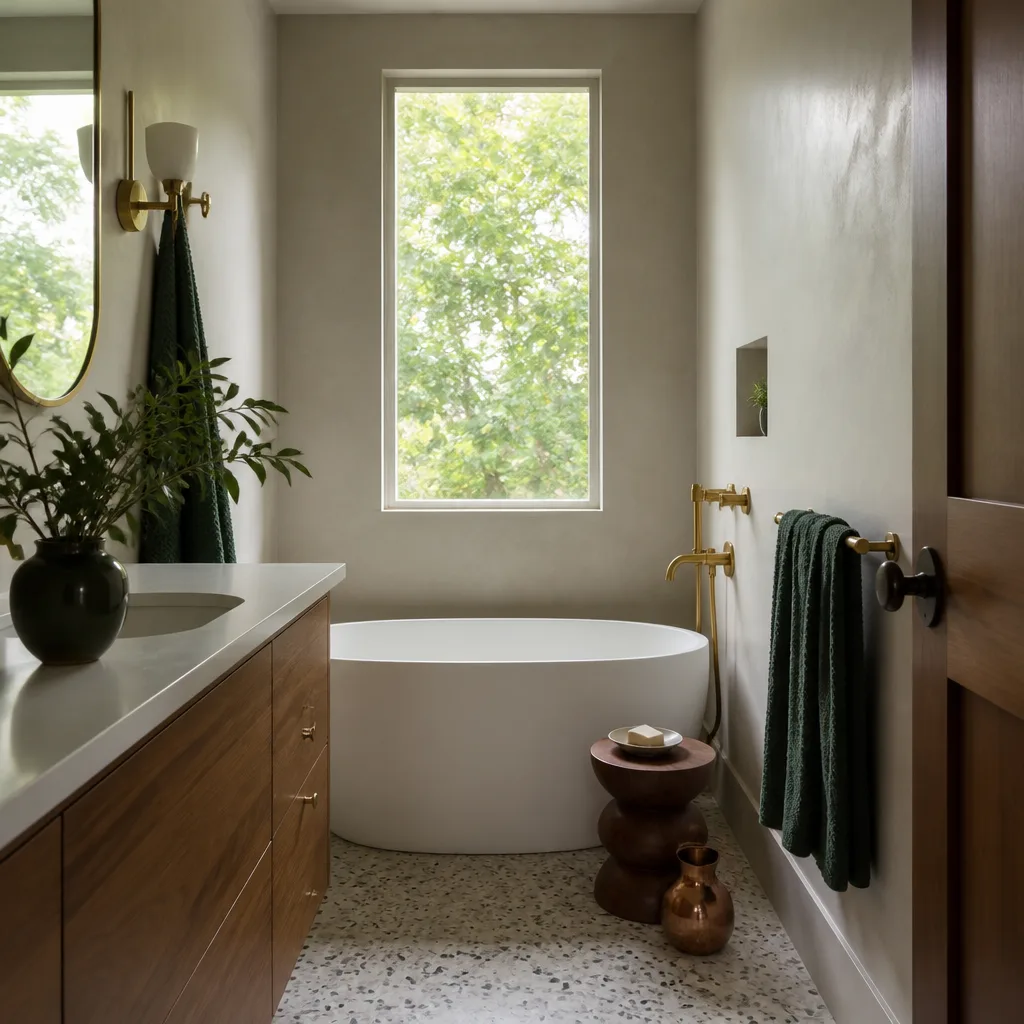
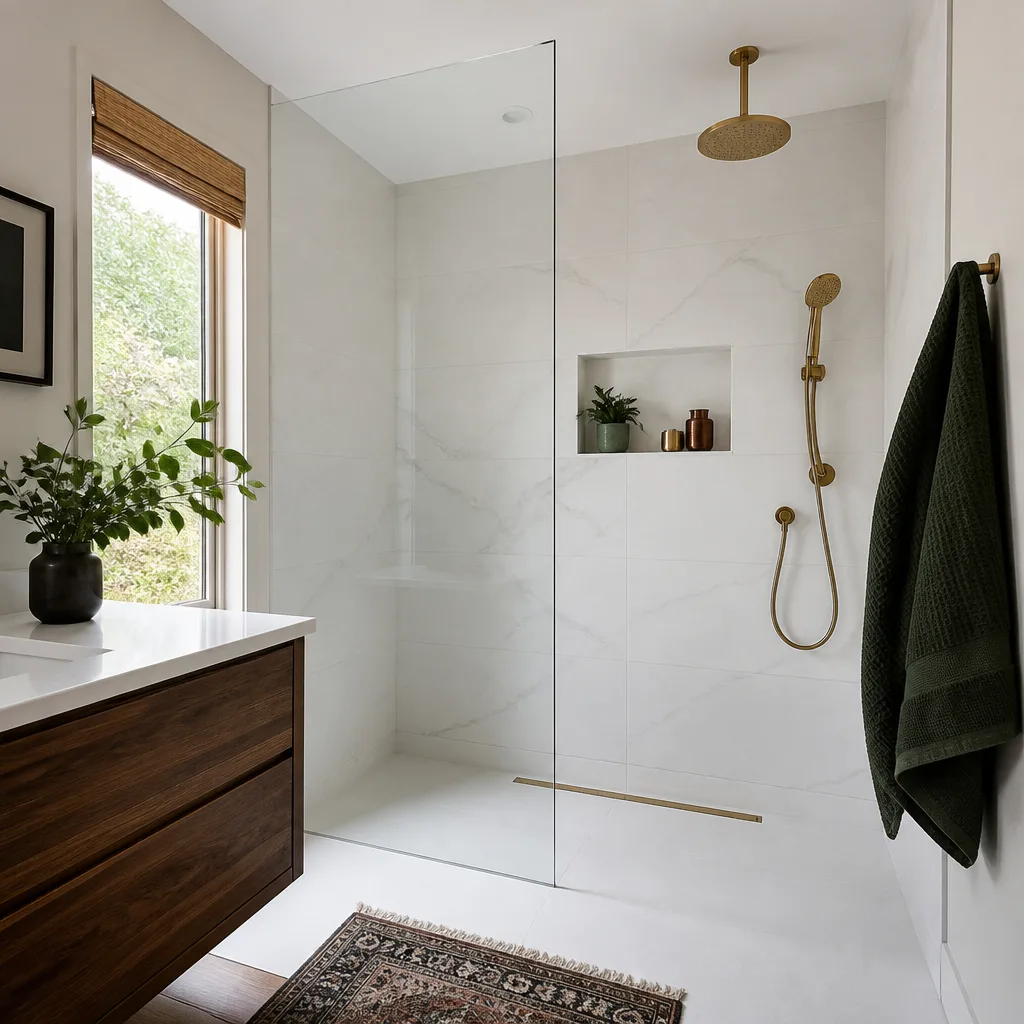
- Bathroom remodeling
- Home additions & ADU
- Roofing
- Windows & doors
- Driveway & pavers
- Fence
Table of Contents
- The Line That Actually Matters: What Fails Behind the Wall
- What’s Genuinely Safe to DIY in a Bathroom Remodel
- What Requires a Licensed Trade in California
- Why Unpermitted Bathroom Work Surfaces at Escrow
- The Hidden Cost Math: When DIY Tile Costs More Than Hiring Out
- How to Be a Smart Owner-Manager of Your Own Project
- Questions That Verify a Contractor Pulls Permits
- When to Call a Professional
- Frequently Asked Questions
Before we get into the specifics: if you’re weighing a bathroom remodel against other projects on your list this year, our guide to Home Additions & ADU in Huntington Beach covers how bathroom scope changes when you’re adding square footage rather than refreshing an existing room. Same permit logic, bigger stakes.
The Line That Actually Matters: What Fails Behind the Wall
Most DIY advice focuses on skill. Can you cut tile straight? Can you set a toilet without rocking? Can you caulk a tub surround cleanly? Those are real skills, and some homeowners have them. But skill isn’t the dividing line. Failure mode is. A crooked tile line is a cosmetic mistake. A slow drain leak behind a tiled wall is a structural one. The two look similar on the surface and cost wildly different amounts to fix.
Think about what’s actually behind the wall of a Huntington Beach bathroom:
- Supply lines under pressure. A pinhole leak in a soldered joint doesn’t announce itself. It drips into the subfloor and stud cavity for months, feeding mold and softening framing.
- Drain lines and the wax ring seal. A toilet set slightly off-level leaks at the flange. That leak rots the subfloor and, on a second-story bath, stains the ceiling below.
- Waterproofing membrane. Shower pans fail at the corners and curb. That failure is invisible until a ceiling shows a brown ring or a floor feels spongy.
- GFCI protection and grounding. Bathroom receptacles near water require protection California code enforces hard. A missing or improvised GFCI is a shock risk, and an inspector will flag it.
Here’s the math we’ve seen play out more than once: a homeowner saves $1,800 by doing their own shower pan, then pays $9,000 to $12,000 for mold remediation, subfloor replacement, and a redo – plus the original shower materials, all wasted. In Huntington Beach’s humid coastal air, moisture behind a wall doesn’t dry out fast. It sits. The mold remediation cost isn’t hypothetical; it’s the predictable result of a waterproofing layer done by someone who hadn’t done it before.
That’s the real decision framework. Ask, “If this fails, what’s the remediation cost?” If the answer is a weekend of touch-up, go for it. If it’s four figures and a demolition permit, that’s trade work.
What’s Genuinely Safe to DIY in a Bathroom Remodel
We’re not going to tell you to hand the whole job to a contractor if you’re handy and want to save money. There’s real money in doing parts of a bathroom remodel yourself, and we respect a homeowner who knows their limits. Here’s the work that’s safe, honestly worth your time, and won’t come back to bite you at resale.
Demo and haul-away
Removing old tile, a dated vanity, a toilet, or a shower surround is genuinely DIY-safe, with two exceptions: never remove drywall in a wall you haven’t confirmed is non-load-bearing, and never demo anything until the water is shut off and the drain is capped. Twenty minutes of careful pulling beats an hour of crowbar work, mainly because it saves you the drywall repair afterward.
Painting
Bathroom paint is the single best DIY value in the room. Use a mold-resistant bath paint rated for high humidity – Huntington Beach coastal air holds moisture, and a $45 gallon beats a $200 repaint two years out. This is the classic first DIY project for a reason.
Hardware swaps and fixtures
Faucets that connect to existing supply and drain lines (not new ones), showerheads, towel bars, mirror and medicine cabinet replacement, light fixture swaps where the wiring already exists and is correctly rated for a bathroom – all reasonable. The moment a swap means running new wire to a new location or cutting a new supply line, stop and call a licensed electrician or plumber.
Vanity replacement against existing plumbing
If the new vanity lines up with the existing drain and supply rough-in, a confident homeowner can set it. If it needs the drain moved, that’s a plumber with a permit – not a flexible coupling and a hope.
Tile setting (with a real caveat)
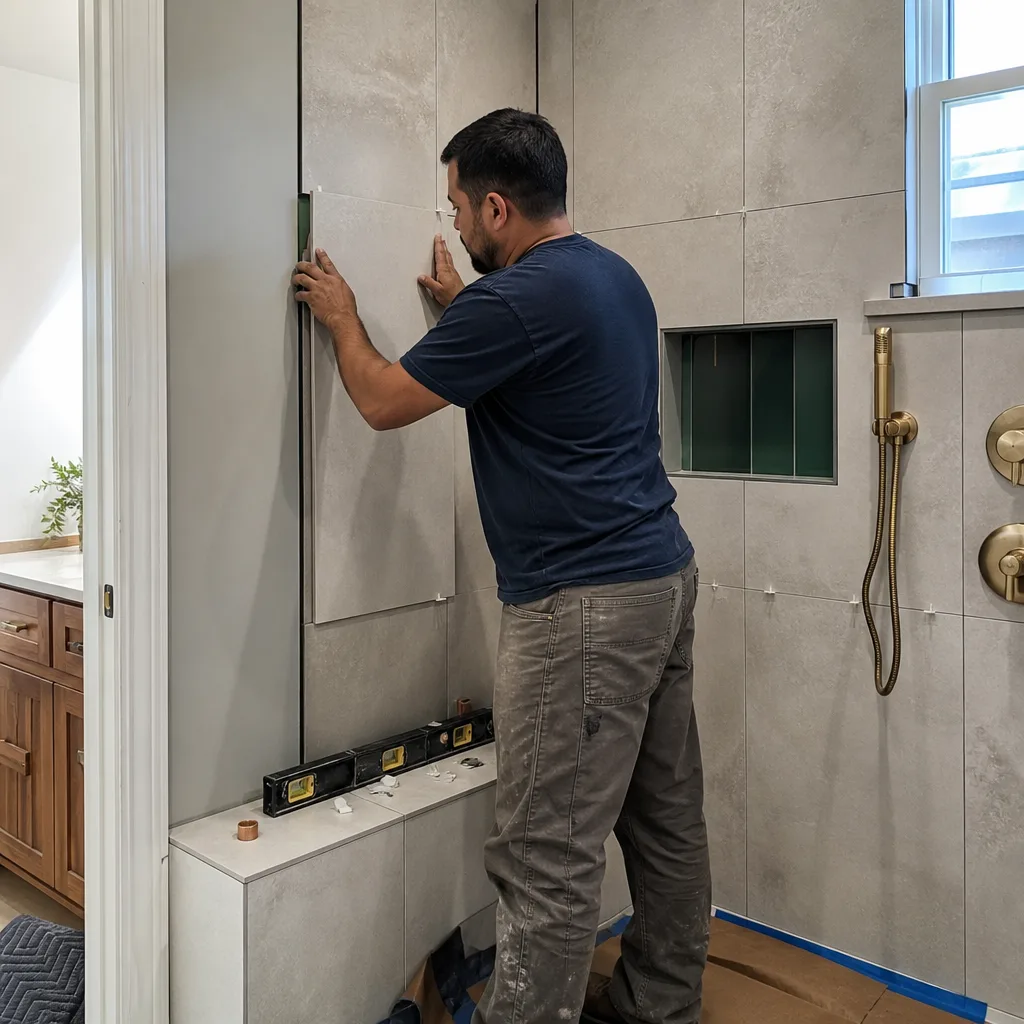
Wall tile and floor tile are the gray zone. Setting tile itself is a skill you can learn from YouTube and master on a garage floor before you try a bathroom. But shower pans, wet-area waterproofing, and any floor that carries a slope to a linear drain are not beginner projects. We’ve diagnosed too many “I did my own tile” showers that leaked within two years to pretend otherwise.
The honest rule of thumb: dry area tile, yes. Wet area waterproofing, no.
What Requires a Licensed Trade in California
California is more specific than most states about what requires a licensed contractor, and the rules aren’t casual suggestions. Here’s the list that matters for a bathroom remodel, along with why each item is enforced:
- Any change to plumbing rough-in. Moving a drain, a supply line, a toilet flange, or adding a shower valve to an existing wall requires a licensed plumber and a plumbing permit. California inspects the rough-in before the wall closes.
- Any new or relocated electrical circuit. Adding a GFCI receptacle, relocating a light or exhaust fan, installing a heated floor, or upgrading the existing panel for the load requires a licensed electrician and an electrical permit.
- Anything involving gas. If you’re swapping a tub for a gas-heated floor or adding a gas line for a new fixture, that’s a gas permit and a licensed trade. There’s no version of gas work that’s a homeowner job.
- Structural changes. Removing a wall, altering a header, changing a window width, or converting a tub alcove into a tile-in shower with a curb change all require a structural evaluation and a building permit.
- Waterproofing in wet areas. Shower pans and wet-area membranes require inspection in most Huntington Beach jurisdictions as part of the plumbing and building permit. This is the one that surprises DIY homeowners most.
- Ventilation. A bathroom exhaust fan must vent to the exterior, not into the attic. California code is explicit. A fan venting into an attic creates a moisture problem that shows up in the next room.
If you’re unsure whether a project requires a permit, the Orange County building department will answer the phone. So will we. Our team pulls permits and signs inspections on every eligible job because the last contractor most customers used told them permits were optional – and they weren’t. If you’re thinking about windows or doors while you’re at it, our guide to Barrett & Sons Construction Huntington Beach home covers the wider renovation landscape in the area.
Why Unpermitted Bathroom Work Surfaces at Escrow
This is the part most DIY guides skip, and it’s the part that costs Huntington Beach homeowners most. Unpermitted work often passes quietly for ten or fifteen years. Then a buyer’s home inspector catches the missing permit flag at the county, or the appraiser notes the shower isn’t in the original scope, and escrow stalls. Here’s what happens next:
- The buyer’s agent requests proof of permit. The seller provides nothing, because there isn’t one.
- The buyer’s lender will not fund the loan until the unpermitted work is either re-permitted, removed, or documented in a way that satisfies underwriting. In practice, that means a licensed contractor, a corrective plan, and a building inspection.
- The corrective permit requires opening walls to expose the work. You can’t inspect a shower pan valve without seeing it. That means tile comes off, drywall comes off, and the cost is now bigger than the original project.
- Fees add up. Double permit fees for work done without a permit are common in Orange County, plus the inspection and correction cost.
Even if you never plan to sell, unpermitted work changes your insurance story. If a supply line you moved and didn’t permit fails and floods the ceiling below, your carrier is entitled to ask about the permit. If there is no permit, they may deny the water damage portion. The homeowner carries the liability, not the contractor who helped, because there’s no paper trail.
If your project is opening walls and adding real square footage, not just refreshing a bathroom, the permit stakes go up again. Our page on Home Additions & ADU in Huntington Beach covers that process directly.
The Hidden Cost Math: When DIY Tile Costs More Than Hiring Out
Here’s the argument we hear most often: “A tile setter wants $4,000 for the shower. I can do it for $400 in materials.” The math looks right on the first line. It rarely is on the last line. Here’s a realistic cost breakdown for a mid-sized Huntington Beach bathroom shower, comparing DIY and hired work. Numbers vary by material selection, room size, and what’s underneath the tile already:
- Hired tile setter, wet area (30 sq ft shower, including waterproofing): $3,800 – $6,500
- DIY attempt with no prior experience: $400 – $900 in materials, plus tools ($600+ for a wet saw if you don’t rent)
- Cost to redo a failed DIY shower: the DIY materials again, plus $800 – $2,000 in tear-out, plus new materials ($400 – $900), plus the hired setter’s rate, plus a drywall and framing repair if the leak ran long enough
- Mold remediation, Huntington Beach coastal humidity: $3,000 – $12,000 depending on the spread
- Subfloor replacement, one bath: $1,500 – $3,500
Put another way: the cost of doing the shower right the first time is the low end of that list. The cost of doing it wrong and fixing it is the high end, plus the time. We’ve walked in on more than one “we tried it ourselves” project where the honest math was that the homeowner spent $9,500 total on a $4,500 shower. That’s the hidden cost of DIY in a wet area. It’s not the failed project; it’s the second project on top of it.
Where DIY saves real money without that risk: painting, demo, fitting fixtures, hauling debris, and prep. That’s often $2,000 to $4,000 off the labor line for a full bath remodel, and it’s real money.
How to Be a Smart Owner-Manager of Your Own Project
Owning the project and swinging the hammer are different jobs. You can meaningfully reduce your bathroom remodel cost without touching trade work by running the project well. Here’s how that looks in practice:
- Do the demo and clean-up yourself. We quote demo separately when we can, and a homeowner who takes that on saves real money, plus dumpster rental and haul-away. It’s also the most satisfying part of the job.
- Source your own finishes if you enjoy it. Tile, vanity, fixtures, and paint all come with real cost variation. You’ll spend more hours than a contractor would, but you’ll own every choice. We install KraftMaid cabinetry in kitchens, but we’re just as happy to install materials a homeowner selected. Premium brands work the same way regardless of who picked them.
- Handle the schedule. Bathrooms are sequenced tight: demo, rough-in inspection, waterproofing inspection, tile, cabinet, plumbing trim, electrical trim, paint. A homeowner who keeps the trades lined up cuts a four-week schedule down to three.
- Do the painting and trim at the end. No trade conflict, no permit requirement, and it’s the work you’ll notice every morning.
- Stay out of the wall cavity. Watching the plumber work isn’t the same as doing the plumber’s work. If you’re paying for a licensed trade, let them own their scope in writing.
The one thing we’d ask any owner-manager to do: get the whole scope in writing, including allowances, before work starts. An allowance that isn’t on paper is a surprise waiting for a date. That’s as true for a homeowner running their own job as it is for a contractor quoting one.
Questions That Verify a Contractor Pulls Permits
Ask every contractor you interview these four questions before you sign anything:
- “Will the permit be pulled in your company’s name, before work starts?” Correct answer: yes, and the permit number is on the contract or the signed scope. Wrong answer: “you don’t need one for this,” or “we’ll do it after.”
- “What’s the license number, and can I look it up?” Correct answer: yes, and it matches the name on the contract. Tom Barrett publishes his name, address, and license number for exactly this reason. Look it up before you sign.
- “What change order process do you use?” Correct answer: written, signed, and dated before any work proceeds. Wrong answer: “we’ll work it out at the end.”
- “Who’s on-site during the job, and are they background-checked?” Correct answer: named crew lead, background-checked, on the job. Wrong answer: an out-of-state dispatcher, an unfamiliar truck, or a crew that changes every week.
We’re not the right answer for every homeowner, but we’re easy to verify. Every scope, allowance, and price change in our quotes arrives as a written change order. Every eligible job includes permits pulled and inspections signed. And every completed job is backed by our 90-Day Done Right Promise – in writing, on every contract, not tucked into fine print. If it’s not done right, one call brings Tom back out to make it right. That’s the standard. If another contractor won’t put theirs on paper, keep asking.
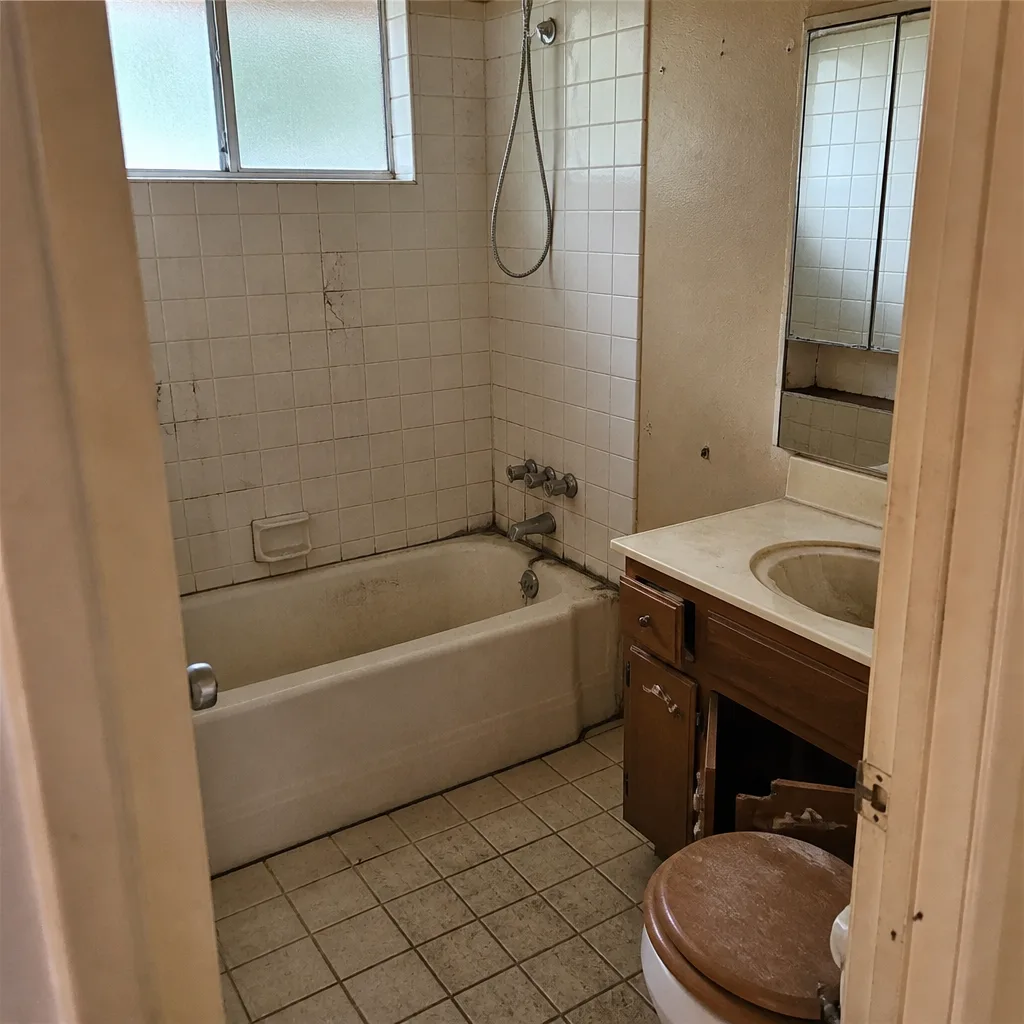
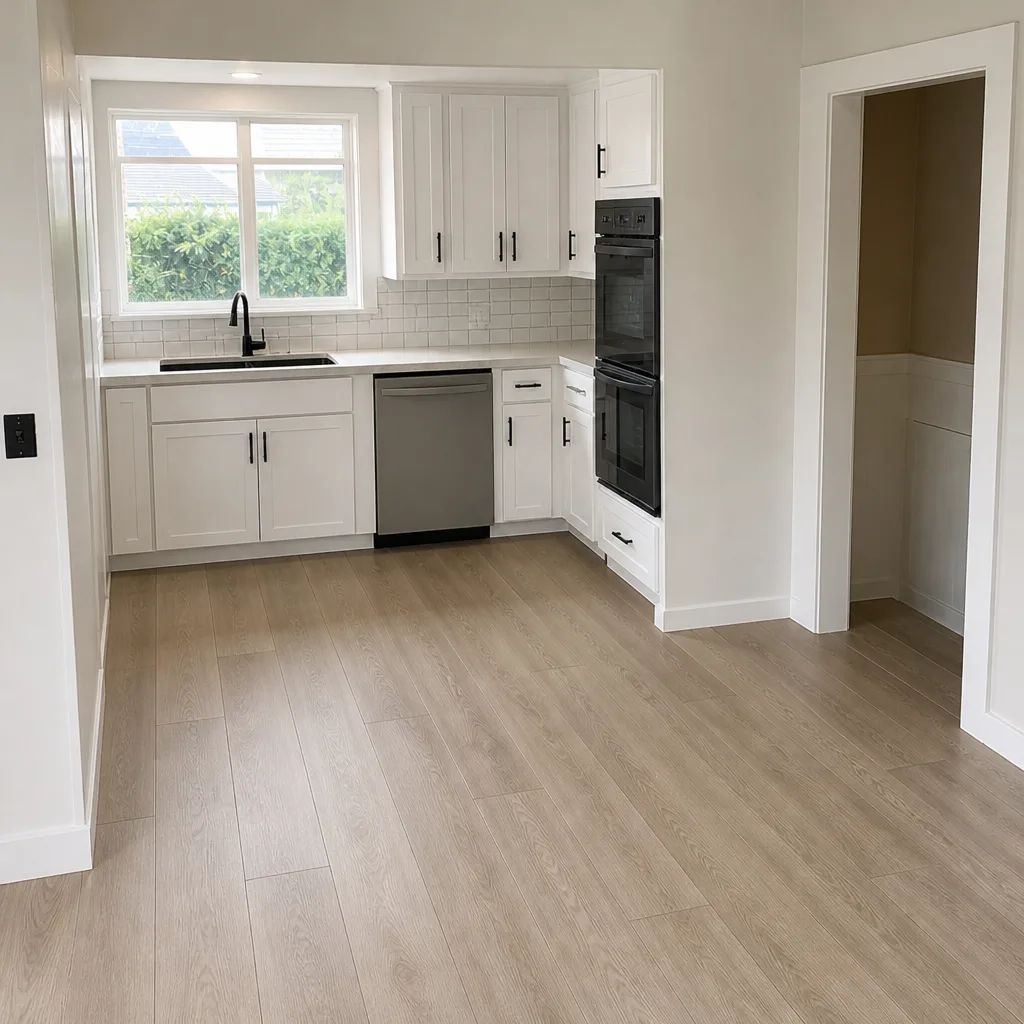
See the difference
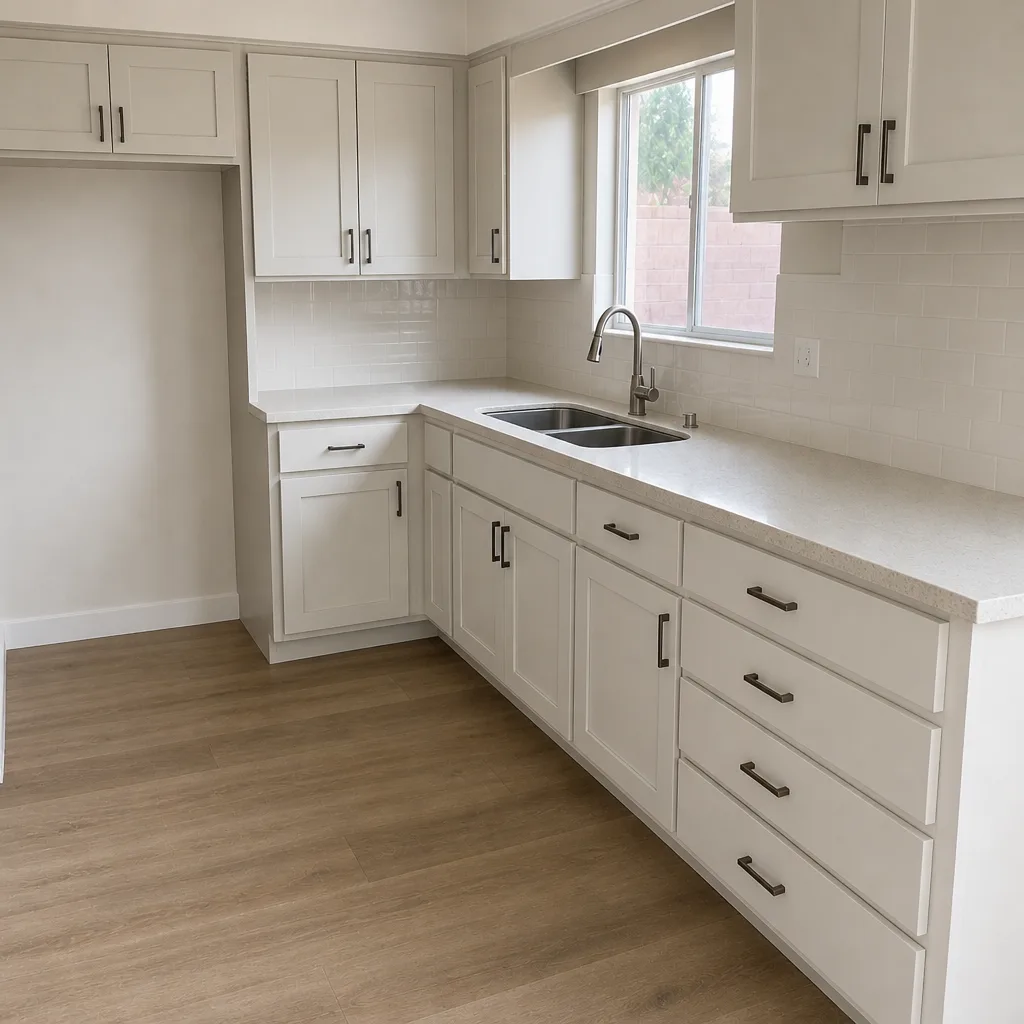
 Before
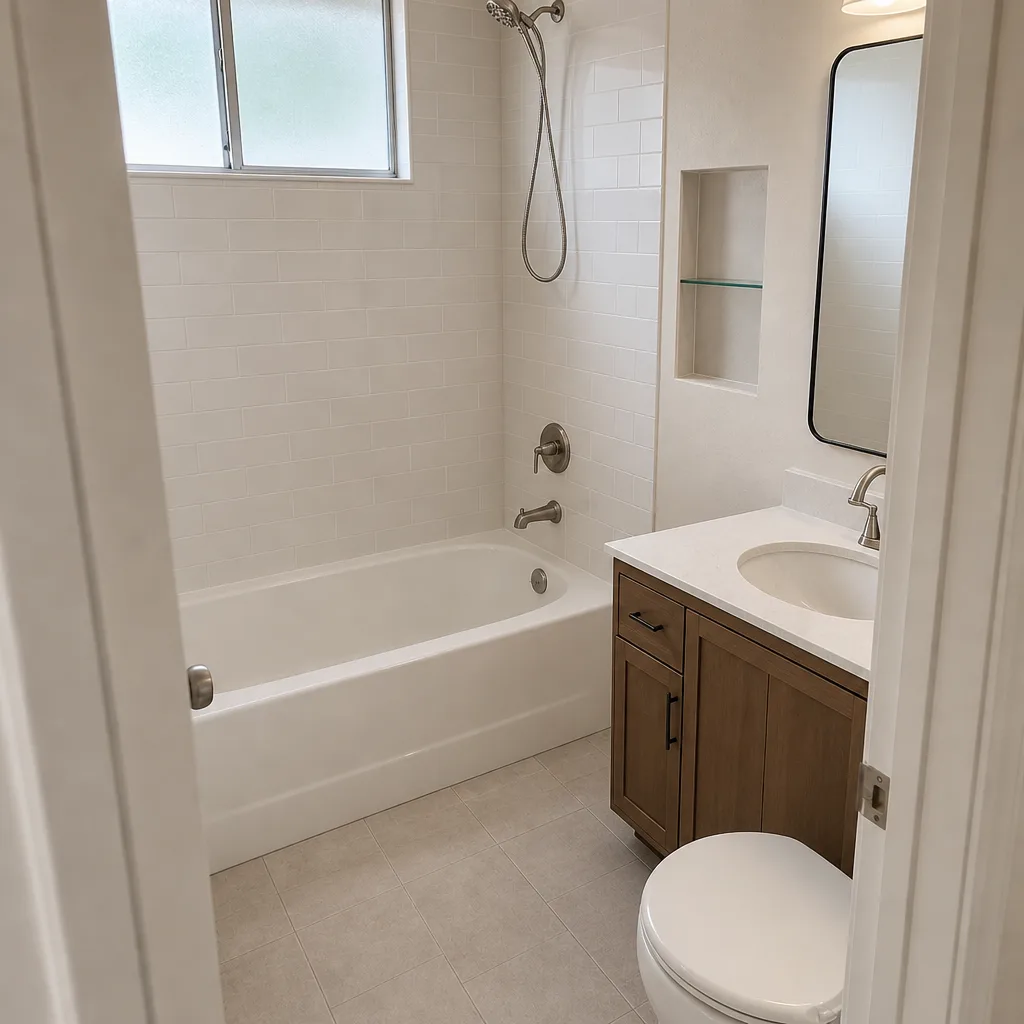 After
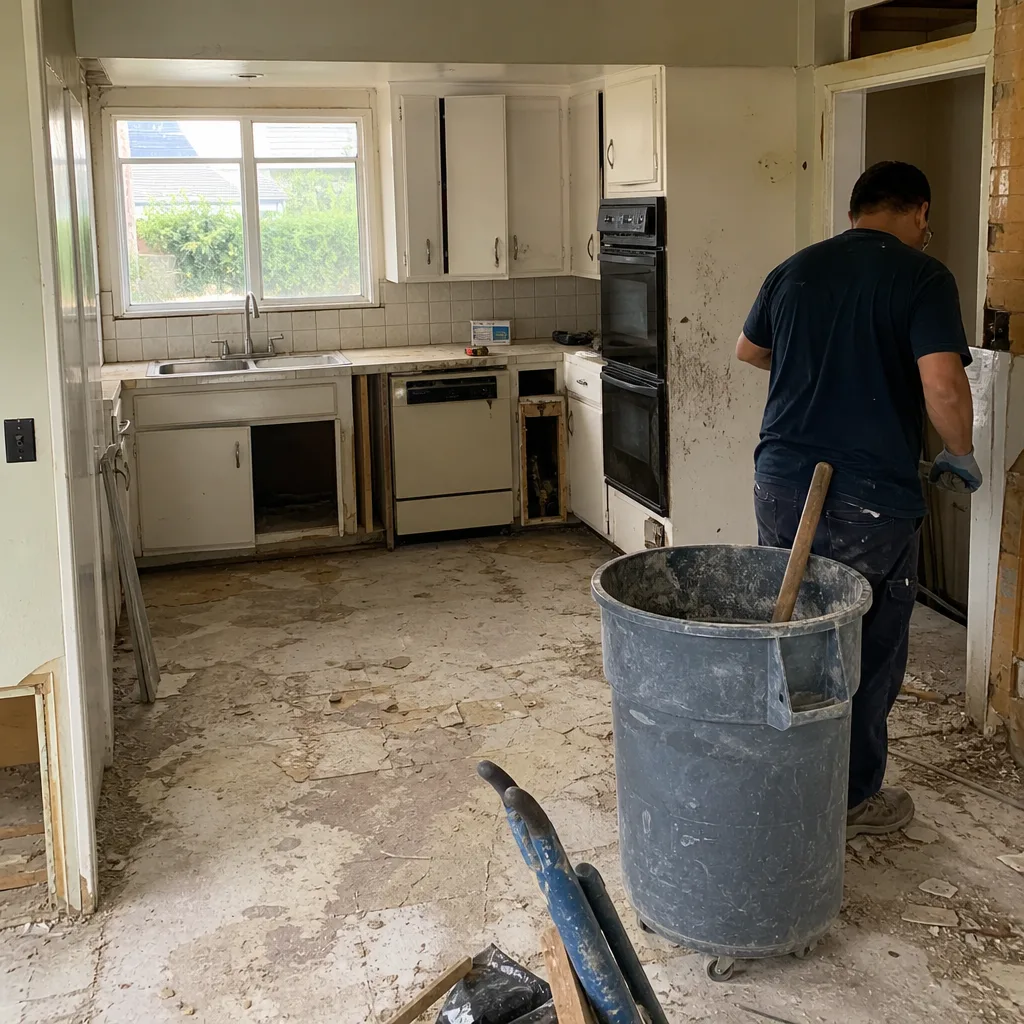 Before
 After
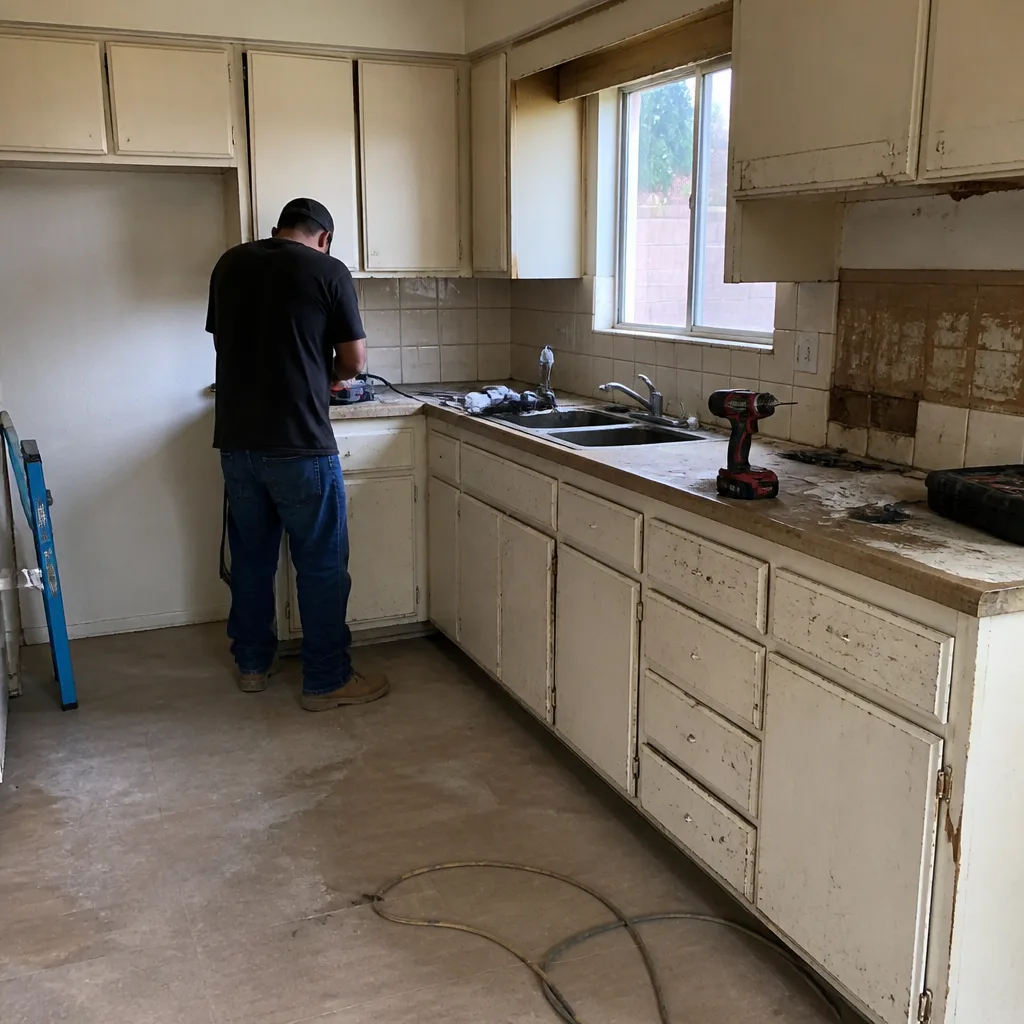 Before
 After
Common Mistakes to Avoid
- Starting demo before permits are pulled. Opening a wall before the inspection is scheduled means your plumber’s rough-in sits exposed for days and the inspector can’t sign the rough-in and waterproofing stages cleanly. Pull the permit first, always.
- Treating waterproofing like painting. Shower pans and wet-area membranes are the highest-risk item in a bathroom. There’s no “we’ll touch it up if it leaks.”
- Drilling the tile line into a wall without checking for studs and pipes. Pipes and wire are not where you think they are, especially in a 1960s Huntington Beach home where a previous owner may have altered the layout.
- Venting the exhaust fan into the attic. The classic mistake. It vents humidity into the attic, hits the coastal cold air, condenses, and rots the roofing structure. Vent to the exterior, per California code.
- Hiring a tile setter who “knows a guy” for the plumbing. The trade chain matters. If your tile setter subs the plumbing to an unlicensed helper, your permit inspection likely fails and you’re paying twice.
- Believing the phone quote. The number on the phone is a guess. The written scope with allowances is the number. Not every contractor on your street is honest about the difference.
- Skipping the final inspection because the work “looks fine.” Final inspection is what your future buyer’s lender will look for at escrow. It costs nothing extra to schedule and it’s the difference between a clean sale and a stalled one.
If your project extends outside the bath – new patio, hardscape, or driveway to match – our Driveway & Pavers in Huntington Beach guide covers materials like Techo-Bloc and Unilock if you’re planning to coordinate finishes across the property.
When to Call a Professional
Call a licensed contractor the moment your project touches any of these: moving a drain or supply line, adding or relocating electrical in a wet area, adding gas, opening or altering a structural wall, waterproofing a shower pan, or anything you’re unsure requires a permit. Those are not close calls, and they’re not a place where “I watched a few videos” is a plan.
Barrett & Sons Construction Huntington Beach offers free estimates in Huntington Beach – call (844) 320-2945. We pull permits and sign inspections on every eligible job, issue every price change as a written change order before work happens, and back every completed job with our 90-Day Done Right Promise. If you’re not sure whether your project needs a permit, we’ll tell you straight – even if the answer is “you can handle that one yourself.”
Frequently Asked Questions
Only for cosmetic work: paint, hardware swaps, tile on dry areas over existing waterproofing, and non-structural demo. Any change to plumbing, electrical, gas, structural framing, or wet-area waterproofing requires a permit in California and a licensed trade in most cases. Unpermitted work can stall a home sale and change your insurance coverage.
Shower-to-tub conversions and tub-to-tile-shower conversions top the list, because they involve both plumbing rough-in and wet-area waterproofing inspections. When a buyer’s inspector flags the missing permit, the corrective process means opening walls, re-permitting, and paying double permit fees. Call (844) 320-2945 if you want a free second opinion on any written estimate you’re holding – we’ll look it over before you sign.
Realistically, $2,000 to $4,000 on a full bath remodel by doing demo, prep, painting, trim, and final clean-up yourself. Labor for wet-area tile and trade work is where the real cost lives, and that’s also where DIY failure is most expensive. The savings only make sense if the work you take on is the work you can actually finish to a licensed standard.
Not if the scope is in writing and the contractor uses written change orders. Any legitimate change – a discovered supply line, a decision to upgrade tile mid-project, a hidden subfloor issue – should arrive as a signed change order before the work proceeds. An allowance that isn’t on paper is a surprise waiting for a date.
Yes, on every eligible job, and inspections get signed. The permit inspector works for you, not for us – that’s why we like him. If a contractor tells you a bathroom remodel doesn’t need a permit, get a second opinion before you sign.
Call us, and don’t feel bad about it. Stopping at the rough-in stage costs a fraction of what it costs to fix a failed waterproofing or a leaking drain. Our free second opinion on any written estimate also covers projects you’ve already started – we’ll tell you honestly what needs to be redone and what can stay. Estimates are free, and a call is a call: (844) 320-2945.
The Bottom Line
DIY the paint, the demo, the hardware, and the finish work – that’s real money saved and real satisfaction earned. Do not DIY the plumbing rough-in, the electrical, the gas, the structural changes, or the shower pan waterproofing. Those are the projects where a mistake stops being a weekend and starts being a four-figure remediation, plus an escrow headache years later. Get the scope in writing, ask the permit question before you sign, and verify the license number. That’s the entire discipline. Everything else is a matter of which parts you enjoy enough to keep for yourself. If you want a straight answer on your own project, our crews are on the road in Huntington Beach most days – and the free estimate is exactly that: free.
Written by the team at Barrett & Sons Construction Huntington Beach.
Have questions about your bathroom project or any other renovation on the list? Call Barrett & Sons Construction Huntington Beach at (844) 320-2945 for a free estimate. A live person answers the phone 24 hours a day, 7 days a week – no voicemail, no out-of-state call center. We’ll give you a straight answer on what’s safe to tackle yourself, what needs a licensed trade, and what the job will actually cost. Proudly serving local communities for over 29 years, owner-operated from day one.