Last updated November 17, 2026


Free written scope consultation - allowances, timeline, and change-order rules on paper before a single trade is scheduled
Home Additions & ADU Warning Signs Every Homeowner Should Know
If a contractor tells you they can design, permit, and build your Huntington Beach ADU in under four months, they’re either skipping the Coastal Commission review you may legally need, or they already have a permit pulled from a previous project they plan to reuse. Both put you at serious risk. We’ve watched more than one homeowner in Huntington Beach discover, two years after framing, that the “minor” addition was never signed off by a city inspector. This guide walks through the warning signs that actually matter: how to spot undersized beams before drywall hides them, what to demand in a contract before the first draw, and why the finish work is almost never where bad builders fail you.
Quick Answer
The biggest warning signs of a problem addition or ADU contractor are: a “design-build in 90 days” promise that ignores real plan-check timelines, permits pulled in their name instead of yours, draw payments tied to calendar dates rather than inspection milestones, and structural shortcuts like undersized beams or skipped waterproofing hidden behind finished walls. A legitimate contractor gives you a written permit-responsibility clause, written change orders before any scope shift, and a plain-language warranty. Anything less is a warning.
Styles & brands we work with
- Kitchen remodeling
- Bathroom remodeling
- Home additions & ADU
- Roofing
- Windows & doors
- Driveway & pavers
- Fence
Table of Contents
- Why the “Design-Build in 90 Days” Promise Doesn’t Hold Up in Huntington Beach
- Pulled in Your Name vs. Theirs: The Permit Question That Decides Your Liability
- Structural Warning Signs You Can Spot During Framing
- The Payment Schedule That Tells You Everything
- What a Real ADU or Addition Contract Must Include
- Coastal Commission, Zoning, and the Local Approval Steps Nobody Skips
- The Hidden Failures Behind the Finish Work
- How to Verify a Contractor Before You Sign
Why the “Design-Build in 90 Days” Promise Doesn’t Hold Up in Huntington Beach
We’ve done the math on this, and the math doesn’t work. A standard ADU or home addition in Huntington Beach needs site survey, architectural drafting, structural engineering, and a permit submittal before a single tractor hits your dirt. From there you’re at the mercy of plan check. A clean submittal can move through the city in roughly six to ten weeks; anything with a correction cycle, a neighbor letter, or an overlay district question stretches past that. Add a Coastal Commission development permit for properties in the coastal zone, and you can add meaningful months. The build itself takes four to seven months for a typical granny flat, longer for a two-story addition. Nobody doing this correctly finishes in 90 days.
So what does a contractor mean when they claim it? Ask, and you’ll usually hear one of three answers:
- They’re planning to build without a permit and hope nobody notices. (The city notices at final inspection. Or the neighbor’s fence line calls it in.)
- They’re treating a previous project’s pulled permit as a template and plan to pay the fees once you’re already committed.
- They’re using a standard plan set licensed by the state (the “pre-approved ADU” route) that genuinely speeds plan check but still doesn’t skip site-specific engineering or local utility signoffs.
The third option is legitimate and can actually save time in Huntington Beach. The first two are how homeowners end up with an unpermitted ADU they can’t insure, refinance, or legally rent. For a closer look at how a realistic timeline runs, see our Home Additions & ADU in Huntington Beach page.
Pulled in Your Name vs. Theirs: The Permit Question That Decides Your Liability
Here’s the part most people get wrong. When a contractor pulls a permit under their own license, and the job runs into trouble, the property owner is still the one who owns the outcome. The permit is attached to your address, not the contractor’s. If a sub-contractor disappears, if the framing fails inspection, if the project stops mid-construction because the builder runs out of cash, the inspection record and the remediation cost land on your title. That’s why we say the permit inspector works for you, not for us. Every inspection is a free quality check on work that’s about to be covered up.
Here’s what a homeowner should verify before work starts:
- Who is the permit applicant of record? Legitimate general contractors pull under their own bond and license with the property owner named. The name on the permit should be a company you can call in two years.
- Is the license active and in good standing? Look up the license number directly on the state licensing board’s website. A real contractor publishes it. If they won’t hand it to you in writing, that’s the answer.
- Is the contractor insured and bonded? Ask for certificates. If the certificate comes from a carrier you can’t find, don’t sign anything.
- Have inspections been signed off at each phase? Foundation before framing. Framing before insulation. Insulation before drywall. Every one of those should have a green tag at the property.
On a proper job, that record is your best protection if there’s ever a dispute. On an improper job, it’s the reason the resale falls apart eight years later.
Structural Warning Signs You Can Spot During Framing
Framing is the one phase where you actually have eyes on the bones. For about two weeks after the lumber goes up and before sheathing and drywall cover everything, you can walk the site with the plans rolled under your arm and spot the shortcuts that would otherwise cost you tens of thousands to discover. We tell every client the same thing: get out and look, and take photos.
Walk the site and check these specifically:
- Beam sizes vs. span. Plans have a joist and beam schedule. If the beam carrying a 16-foot span across your new kitchen looks noticeably thinner than the same beam on the plan, that’s a signal. Ask for the engineered drawings and check.
- Post-to-footing connection. Posts holding up a beam should land on a proper concrete footing, not sitting on patio slab or a paver base. A 4×4 on a naked slab with drywall over it is a red flag you’ll never see again in three days.
- Hardware where new meets old. Your new addition’s roof framing has to be tied into the existing structure with engineered metal connectors (hurricane ties, straps, hangers). Nailed-in-place where the plans specify a connector is the kind of thing a good inspector catches – and a bad contractor is counting on this one being skipped.
- Sheathing nailing pattern. Nails at the wrong spacing or missing the studs is a structural failure waiting for a big Santa Ana wind event. It fails quietly for years.
- Holes and notches in the wrong places. Plumbers and electricians will cut through a floor joist to run pipe. There are rules about where they can cut. Big notches in the middle of a span are the kind of thing that shows up in a settlement problem later.
If something looks off, ask the framing inspector on the next scheduled walk-through. That’s the whole point of the permit: the city does the free check.
The Payment Schedule That Tells You Everything
This is the single most underrated warning sign. Legitimate addition contractors collect draws tied to inspection milestones. Payment when foundation passes. Payment when framing passes. Payment when rough-in passes. Payment when drywall is finished. Payment at final. A contractor who wants 40% up front, before any work starts, has reversed the risk onto you. You’re funding their next job, and if they walk, you’re out the money with a torn-up backyard.
Here’s a realistic structure for a Huntington Beach addition or ADU:
- Deposit at signing: typically 10-15% to cover mobilization and initial materials ordering. Anything much above that and you’re on thin ice.
- Foundation complete and inspected: 10-20%.
- Framing and roof dried in, inspected: 20-25%.
- Rough trades signed off (plumbing, electrical, HVAC): 15-20%.
- Drywall and finishing: 15-20%.
- Final inspection, punch list complete, certificate of occupancy issued: the balance, held in reserve.
Notice that the largest single draw isn’t the first one. Notice that the last draw doesn’t release until the city has signed off. If your contractor’s schedule doesn’t line up with that, ask why in writing. Then ask again. An allowance that isn’t on paper is a surprise waiting for a date; a draw tied to a calendar date instead of an inspection milestone is the same problem dressed differently.
What a Real ADU or Addition Contract Must Include
We’ve read a lot of contracts from homeowners who called us for a second opinion, and almost every bad one has the same gap: nothing in writing about what happens when things change. A contract that protects you should include all of the following.
- A permit responsibility clause. Explicitly states who pulls the permit, who pays the permit fees, who manages correction cycles, and who is liable if the permit is not obtained. One sentence saying “Contractor shall pull all required permits and manage all inspections” is not enough; it should name the specific permits anticipated (building, electrical, plumbing, mechanical, and any coastal or grading permits).
- A change-order-in-writing requirement. No verbal scope change, no verbal price change, no “we’ll sort it out at the end.” Every change is on paper, signed by both parties, before the work moves forward.
- A schedule of draws tied to milestones. See the prior section. If it isn’t in the contract, it isn’t the schedule.
- A lien waiver schedule. Each draw should come with a conditional lien waiver from the general contractor and every sub on the job. This is how you avoid a mechanic’s lien filed against your house by a plumber your contractor never paid.
- Warranty terms in plain language. One year on workmanship is the floor. The warranty should say what’s covered, how to make a claim, and what the response time is. Ours is the 90-Day Done Right Promise, written on every contract: if something isn’t done right, one call brings us back.
- Insurance and bond certificates attached. Not promised. Attached.
If a contractor pushes back on any of those, thank them for their time and move on.
Coastal Commission, Zoning, and the Local Approval Steps Nobody Skips
Huntington Beach is a coastal city, and a good chunk of the residential parcels sit inside the coastal zone. That matters for additions and ADUs in a way it doesn’t in, say, Westminster or Fountain Valley. Depending on where the property sits (coastal zone, appealable area, or inland), you may need a coastal development permit in addition to the standard building permits. If the assertion that a contractor will “handle all of that for you” arrives without a written explanation of which permits apply to your specific parcel, that’s a warning sign.
Local site conditions matter too. Lots closer to the beach are on sandy, sometimes high-water-table soils that need geotechnical review before foundation design. Lots in older inland neighborhoods have mature trees whose root zones can limit where an ADU gets placed. And Huntington Beach’s ADU rules have their own parking, setback, and height caps that shift depending on whether the unit is attached, detached, or a conversion of existing space. None of those details are optional. Every one of them is a step that has to happen before the first concrete pour.
We pull permits and see them through inspections on every eligible job, because the last contractor most customers used told them permits were optional. If you want to talk through how permitting actually runs for a specific address, call us at (844) 320-2945 and we’ll walk it.
The Hidden Failures Behind the Finish Work
Here’s the counterintuitive truth: bad contractors don’t usually fail at finish work. Tile, trim, and paint are visible. Homeowners walk the finished room and judge it with their eyes. The trouble hides three inches underneath.
- Waterproofing skipped in wet areas. A new bathroom in an ADU needs proper waterproofing under the tile. Skip it and you get a slow leak into the framing that shows up two winters later as peeling grout and mold.
- Flashing at the new roof-to-wall intersection. Where the addition roof meets the existing house, the flashing detail is where water gets in. Bad flashing is the #1 cause of “why is this wall wet?” calls we get on other people’s projects.
- Insulation missing or compressed in inaccessible attic spaces. You’ll never see it, and your heating bill knows.
- Skipped shear nailing under exterior siding. That’s fine until an earthquake event tests it.
- Drainage ignored. An ADU changes how water moves across the lot. A contractor who never discussed grading and drainage is a contractor who’s about to leave you a wet foundation.
You cannot inspect any of this after the fact without opening a wall. Which is why the inspection record matters so much: it’s your proof the hidden work happened.
How to Verify a Contractor Before You Sign
Ten minutes of homework catches most of the trouble. Here’s the sequence:
- Look up the license number on the state licensing board’s website. Confirm it’s active, in the correct classification, and free of disciplinary actions.
- Confirm insurance and bond certificates directly with the carrier, not just the paperwork the contractor handed you.
- Call two or three past clients from jobs that finished at least a year ago. Not the freshest jobs: the ones old enough that problems would have surfaced.
- Ask about their last project in Huntington Beach specifically. What neighborhood, what permit, what inspections. A real local contractor can answer this without blinking.
- Get a second opinion on the written estimate. Not the verbal one. The written one. If it’s vague on scope, materials, allowances, or change orders, it’s the wrong estimate.
If you ever want to compare a written estimate, we offer a Free Second Opinion on Any Written Estimate. No charge, no pressure.
Common Mistakes to Avoid
- Signing a contract with no permit clause. If the contract doesn’t say who pulls permits and who is liable if they aren’t pulled, assume you’re the one holding the bag.
- Paying more than 20% up front. A 40% down payment on an ADU that hasn’t broken ground puts the entire project risk on you, not the contractor.
- Accepting a verbal change order. If the cabinet allowance changed, if the tile line item changed, get it in writing before anyone picks up a tool. Otherwise the surprise invoice shows up in week eleven.
- Relying on the contractor to call the inspector. Inspectors can be requested directly by the property owner. If your contractor “forgot” to schedule framing inspection for two weeks, that’s worth a phone call.
- Believing the “pre-approved plan” is the whole permit. It speeds plan check. It doesn’t skip site-specific engineering, grading, utility signoffs, or coastal review for the Huntington Beach parcels that need it.
- Ignoring soil and drainage conditions. Huntington Beach lots near the coast hold water differently than inland parcels. A contractor who never brought up grading is a contractor who’s planning to leave it as your problem.
- Letting the warranty be verbal. “We stand behind our work” is not a warranty. A warranty is written, with a definition of what “work” means and how a claim gets handled.
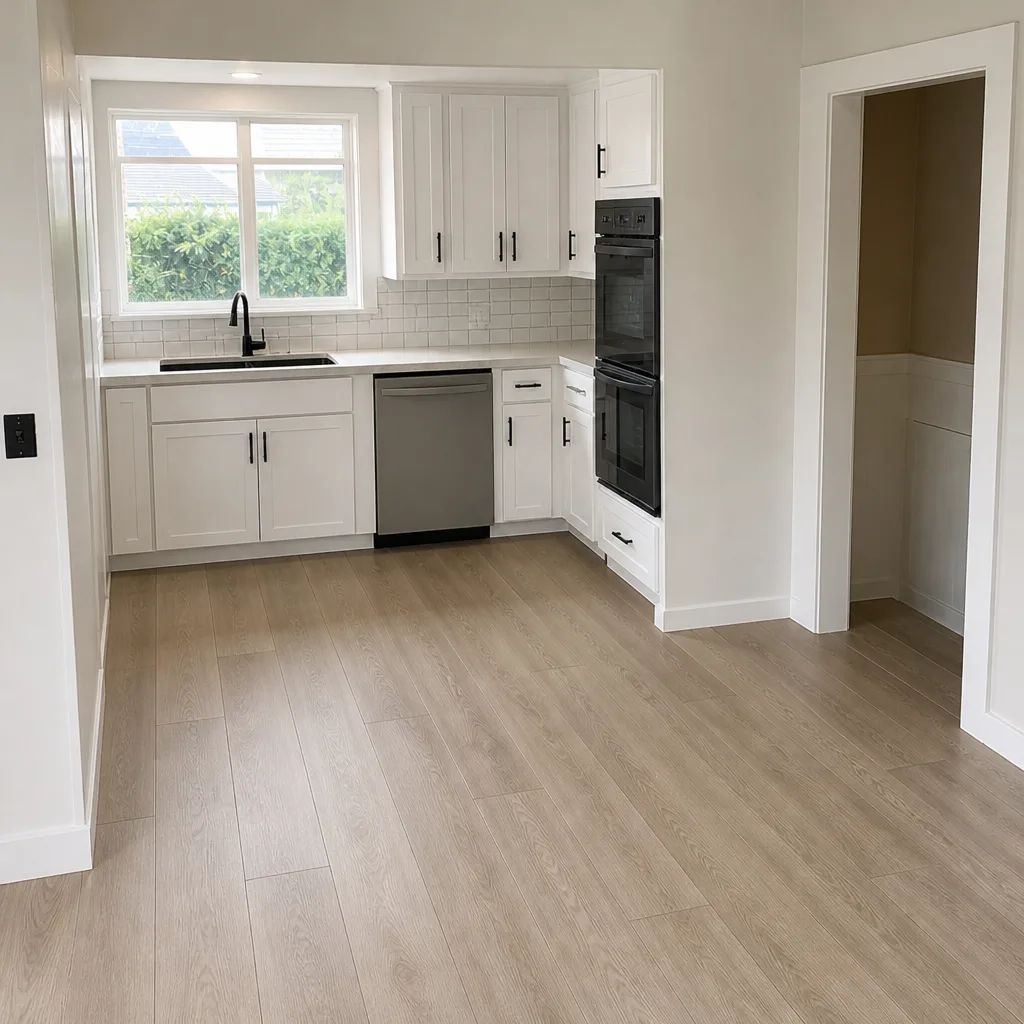
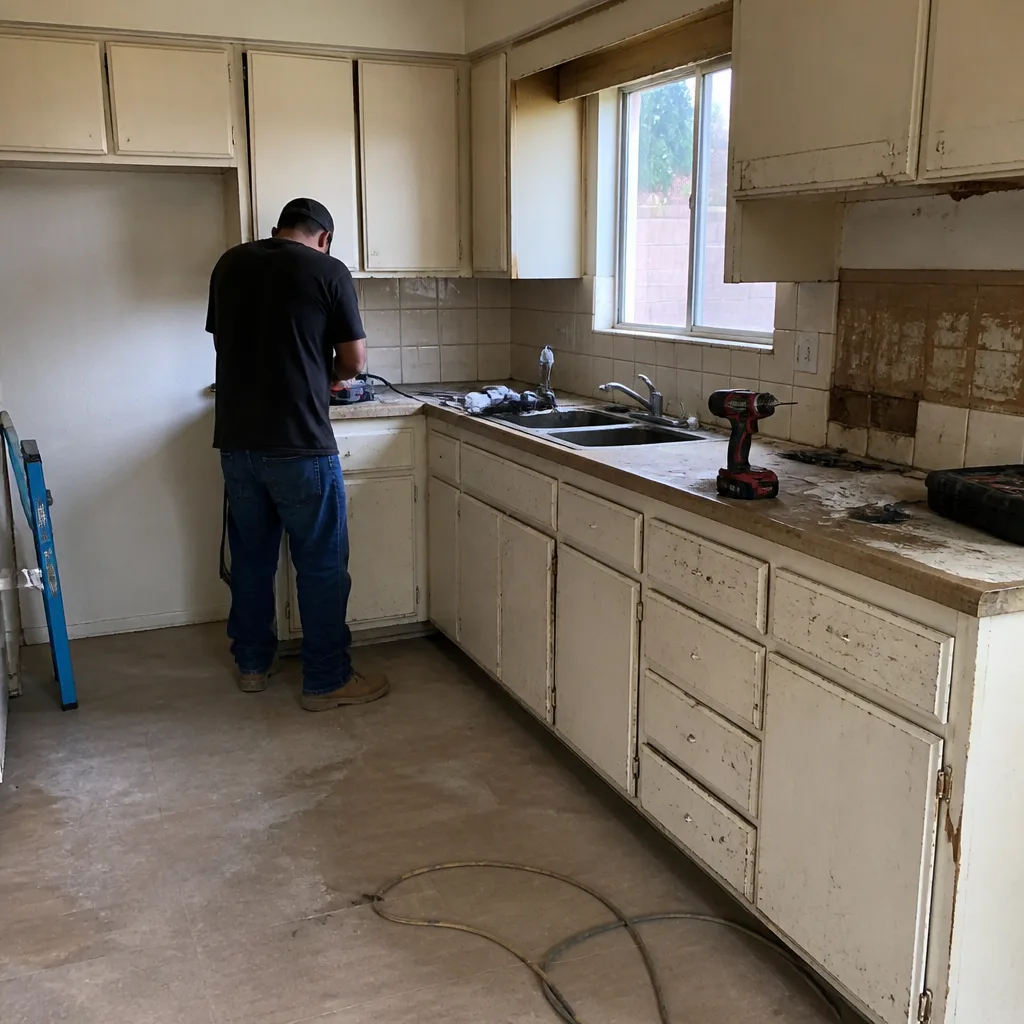
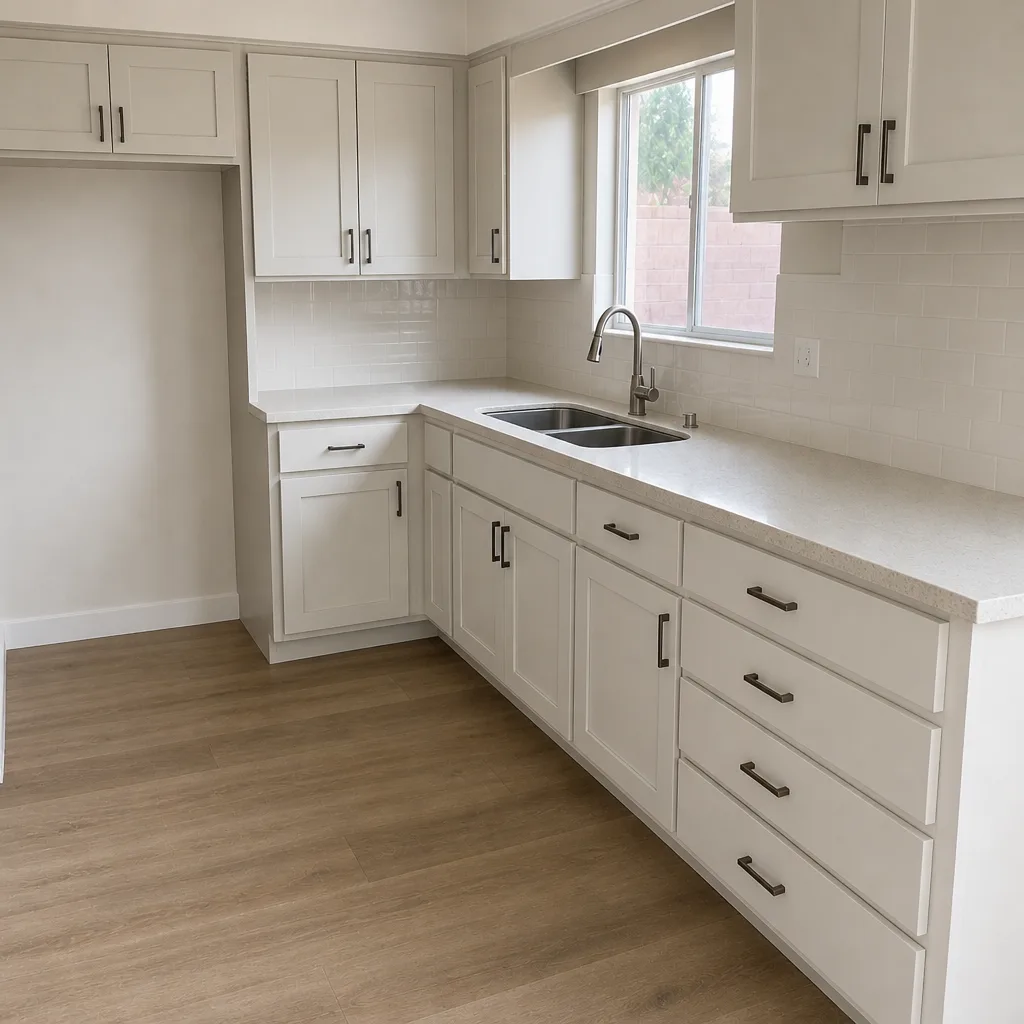
See the difference
 Before
 After
 Before
 After
 Before
 After
When to Call a Professional
Call a trained professional immediately if you’ve discovered an addition or ADU already in progress that has no posted permit, if framing looks undersized or posts aren’t bearing on footings, if your contractor is asking for more money before the last inspection, or if you’re being told the permit is “being handled” but you can’t find the record on the city portal. These are not homeowner-solvable problems, and every week of delay makes them more expensive. Structural work, electrical, gas, and anything attached to your home’s structural envelope has to be evaluated by someone insured and licensed to fix it. Barrett & Sons Construction Huntington Beach offers free estimates in Huntington Beach and works through the details with you in writing before anything gets signed. Call (844) 320-2945.
Frequently Asked Questions
Look it up on the city of Huntington Beach’s online permit portal using your property address. If a permit record doesn’t appear within a few business days of the contractor saying it was submitted, it probably wasn’t. Ask for the permit number in writing. A legitimate contractor will hand it to you without hesitation; if yours won’t, call (844) 320-2945 for a free second opinion on the situation.
Yes, on a clean lot with a pre-approved plan set and no coastal complications, twelve to fourteen months is a reasonable expectation from first sketch to certificate of occupancy. Plan check alone is typically six to ten weeks, and construction of a detached ADU usually runs four to seven months depending on size and finishes. Anyone quoting under 120 days is skipping steps you don’t want skipped.
Detached ADUs in Huntington Beach generally run in the $180,000 to $320,000 range for a code-compliant unit, with garage conversions landing closer to $90,000 to $160,000 and larger two-story additions often exceeding $400,000. Those ranges swing based on foundation conditions, utility runs, and finish level, which is why a line-item written estimate matters more than a phone-quoted ballpark. Call (844) 320-2945 for an exact quote on your address; estimates are free.
Only if scope changes, and only with a written change order signed before the work happens. A properly scoped addition estimate should hold unless you upgrade finishes, discover unexpected soil or structural conditions, or add items not in the original plan. Any contractor who tells you upfront to expect “surprise costs at the end” is telling you they didn’t scope their own job. We issue written change orders before any scope change touches the work.
Not automatically, but you lose leverage. An unpermitted addition typically can’t be counted in the appraisal, may not be financable through a standard mortgage, and can trigger a correction order from the city after a buyer’s inspection. Some buyers walk. Some pay fifty thousand less. Either way, an unpermitted ADU is a problem that shows up exactly when you don’t want it to.
Usually thirty to sixty minutes for a typical residential addition, and the property owner is allowed to attend. We tell every client to be there with the plans in hand and a phone camera ready, because once the sheathing goes on, that view is gone. If a contractor tells you owners aren’t allowed on site during inspection, ask the city inspector directly; they’ll tell you the truth.
The Bottom Line
Bad addition contractors don’t usually fail at the crescent-edged tile work. They fail at the undersized beam, the post that doesn’t land on a footing, the waterproofing that never went down, and the permit that was “handled” until it wasn’t. Every one of those failures is visible during construction and invisible after the drywall goes up, which is why the inspection record, the payment schedule, and the written contract matter so much more than the showroom finishes. Huntington Beach homeowners who demand written change orders, milestone-tied draws, and permits in their own name come out ahead of the ones who don’t, every single time. For other exterior and site work, see our pages on Driveway & Pavers in Huntington Beach and Fence Installation in Huntington Beach, and start from the Barrett & Sons Construction Huntington Beach home page for the full picture.
Ready to Talk Through Your Addition or ADU?
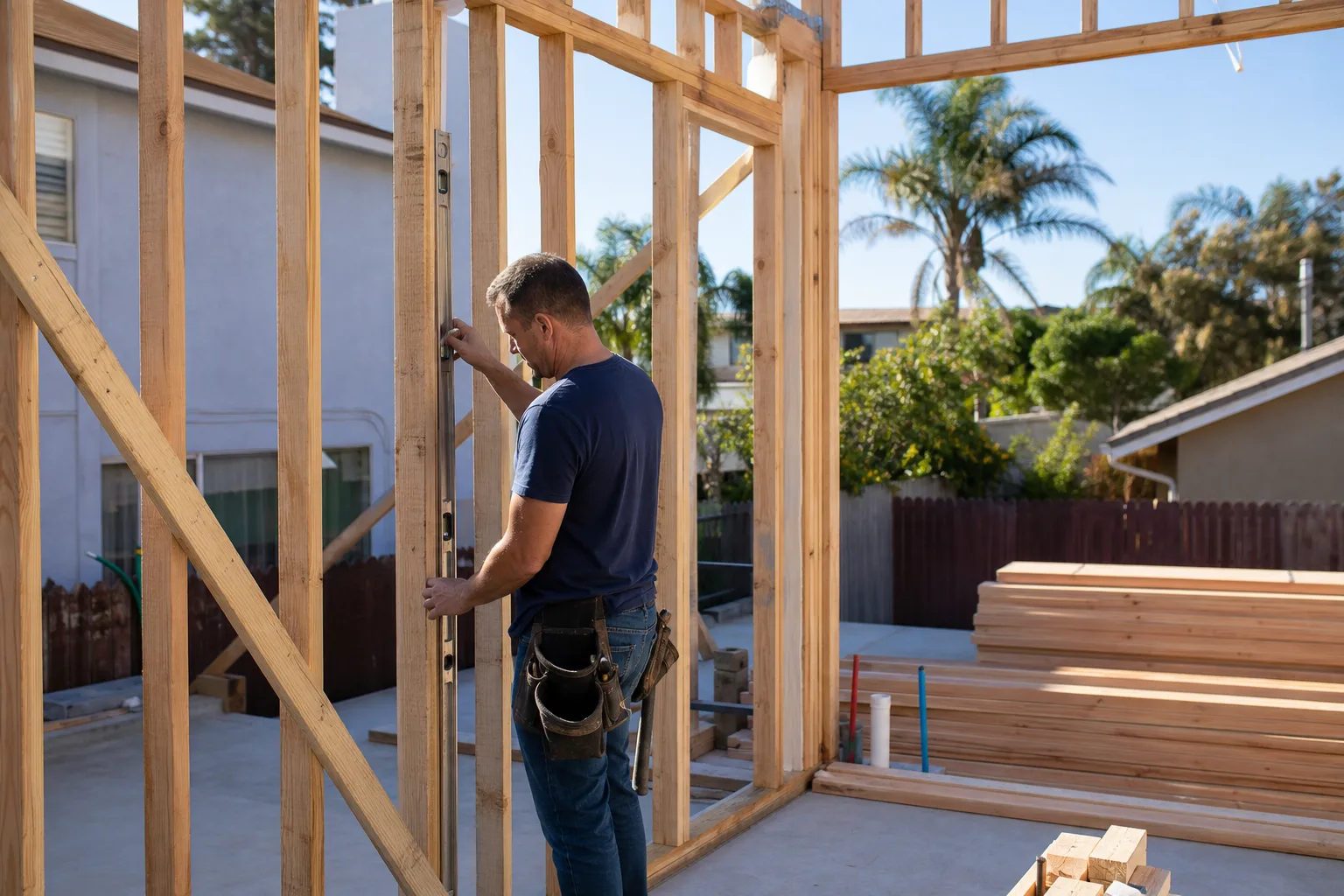
If you’re weighing an ADU or a home addition in Huntington Beach and want an honest read on scope, permits, and realistic timelines before you commit a dollar, we’ll sit down with you and put it in writing. Every price change arrives as a written change order before work happens. Every scope is on paper. Every eligible project includes permits pulled and inspections signed. Every completed job comes with the 90-Day Done Right Promise, and every call is answered by a live person. Call (844) 320-2945 for a free estimate, and we’ll help you spot the warning signs before they become the expensive kind.
Written by the team at Barrett & Sons Construction Huntington Beach.