Last updated November 17, 2026







Free written scope consultation - allowances, timeline, and change-order rules on paper before a single trade is scheduled
Construction Warning Signs: A Huntington Beach Homeowner’s Reference Guide
A hairline crack in stucco near a window corner isn’t cosmetic in a coastal climate. It’s a water infiltration point, and once sea-salt-laden moisture starts cycling through it, the sheathing behind it can rot within two rainy seasons without ever leaving a visible water stain inside the house. That’s the part that surprises people in Huntington Beach. The loud signs (a dripping ceiling, a cracked slab) get caught. The quiet signs get ignored until a small repair turns into a five-figure fix. This guide walks through the early-stage warning signs on stucco, flatwork, roofs, and interior finishes, which ones mean “call someone this week,” and which ones mean “put it on the seasonal checklist.”
Quick Answer
The most expensive construction warning signs for Huntington Beach homeowners are early-stage moisture and movement signals: hairline stucco cracks near window and door corners, efflorescence or blistering on stucco walls, widening cracks along driveway control joints, lifted or dented roof flashing at penetrations, and doors or windows that suddenly catch in their frames. These almost always show up 12 to 24 months before a visible failure. Photograph them with something for scale, note the date, and get a contractor’s eyes on them while the repair is still small.
Styles & brands we work with
- Kitchen remodeling
- Bathroom remodeling
- Home additions & ADU
- Roofing
- Windows & doors
- Driveway & pavers
- Fence
Table of Contents
- What Stucco Warning Signs Matter in a Coastal Climate?
- What Do Shifting Driveways and Flatwork Tell You?
- What Roof Warning Signs Can You See From the Ground?
- Which Interior Clues Point Back to Exterior Moisture?
- How Should You Photograph a Warning Sign for a Contractor?
- When Should You Call Someone Immediately vs. Schedule a Seasonal Check?
- What’s the Right Seasonal Inspection Schedule in Huntington Beach?
- Common Mistakes to Avoid
What Stucco Warning Signs Matter in a Coastal Climate?
Stucco is the dominant exterior finish across most of Huntington Beach built between the 1960s and the 2000s, and it’s designed to shed water. The problem is that it also hides what’s underneath. Once a crack opens a path, the paper weather barrier and the wood sheathing behind it take the hit, and the marine air offshore accelerates the damage. Sea salt pulls moisture into porous surfaces and keeps it cycling longer than inland air ever would. That’s why a stucco issue that would take five years to cause trouble in Riverside can become a real repair in two in Huntington Beach.
What to look for
- Crack location and orientation. Hairline cracks in the field of a wall are often stress relief. Cracks that radiate from window or door corners, run diagonally up from the corner of the opening, or follow a straight vertical line above or below an opening are the ones that matter. Those line up with framing and load paths.
- Efflorescence patterns. That white chalky bloom that shows up after a rain and disappears a few days later is salt and mineral migrating to the surface. In small patches, it’s normal. When it keeps returning in the same spot, or forms a vertical streak below a window, it’s telling you water is moving through and drying out through that path.
- Blistering and bubbling. Paint or stucco finish that bubbles up in a tight pattern is moisture trapped behind the surface, trying to push out. Blistering on the sun-facing south or west side of a wall usually points to a failed seal at a penetration, a bad patch, or a window flashing detail that was never done right.
- Mud-cracking at patches. A repair that looks like cracked riverbed within a year tells you the patched material is moving independently of the surrounding stucco. That’s active movement underneath.
If you’re already at the point where the stucco is coming off for a back-of-house addition, the plan should treat moisture management from the start rather than as a fix-later item. That’s part of how Home Additions & ADU in Huntington Beach gets planned on this coast.
What Do Shifting Driveways and Flatwork Tell You?
Every concrete slab in Huntington Beach sits on top of a sub-base that can move. Older neighborhoods from Sunset Beach to the edge of the Bolsa Chica wetlands have clay-heavy soils that swell with winter rain and shrink with summer dry-out. The slab itself usually isn’t the failing component. The soil underneath is. Knowing what failure looks like early saves you from replacing a driveway that could have lasted another decade with drainage corrections and crack sealing.
Signals that the sub-base is shifting
- Crack width and pattern. Hairline cracks at control joints are normal. Cracks that widen past a quarter inch, or that run diagonally across a slab rather than along joints, mean the slab is no longer supported evenly underneath. Multiple parallel cracks running the same direction point to a filled or excavated area that’s settling.
- Edge heaving. If the outer edge of a driveway or walk lifts up by more than a half-inch, or if the edge separates from the grass line, water is getting under there and freezing or expanding when the soil swells. That progression almost always leads to a trip hazard or a large crack.
- Drainage pooling. After a rain, look for puddles that sit for more than a few hours. In a climate that sees rain only five to six months a year, standing water sits for days before evaporation dries it out, and the soil under that spot softens and settles. The puddle location tells you where the sub-base is failing long before the crack shows up.
- Spalling and scaling. Surface flaking on a slab more than ten years old usually traces back to a poor finishing job or salt exposure from the coastal air. It matters less than structural cracks, but it’s the same signal to look at the driveway as a whole rather than patch-by-patch.
If you’re seeing any of these, a full look at the driveway is worth considering, not a spot repair. Driveway & Pavers in Huntington Beach is where the drainage and base prep get handled together.
What Roof Warning Signs Can You See From the Ground?
Most Huntington Beach roofs are asphalt shingle or low-slope membrane systems on the beachward side, and a professional roofer never needs to be up there to see the roof’s real condition. The best clue is often twenty feet away, on the ground. Huntington Beach’s light is flat and coastal, which makes it flattering to a roof but unforgiving when it comes to revealing the deformation and staining that indicate trouble. Here’s what to look for from the curb.
- Granule deposits in gutters and splash zones. Granule loss on asphalt shingles is normal wear, but granules accumulating in gutters within five years of a new install is a defect signal on the shingles themselves.
- Flashing lift at penetrations. Look at the flashing around chimneys, vent stacks, and skylights. If any of the metal sits up off the shingle surface, or the sealant bead around it is cracked or pulled away, that’s the entry point for a slow leak. Roofers see this pattern most often after a windy offshore event.
- Ridge line deflection. Stand at the corner of the house and sight down the ridge line. A dip or sag of an inch or more along the ridge means the roof structure is under-supported or a ridge board has failed. That’s not a roof-covering issue, it’s a structural one, and it needs a professional’s eyes before anything else happens.
- Staining and shadowing on shingle fields. Uniform dark stripes across the slope are algae and sun on asphalt. Dark blotches that cluster near the bottom edge or under valleys are a different clue. Those often align with ice-damming-style backups in wet winters or with a failed underlayment.
- Visibly lifted or missing shingles. Missing tabs after a storm, or shingles that lift and flutter at the corners in a breeze, mean the seal-down has failed. Every open tab is a future leak.
Roofing isn’t a task to “take a look at” yourself in Huntington Beach. Wind, height, and coastal slope angles combine for real risk, and a stumble on a rainy-day ladder can cost more than the roof itself. If you see any of the signals above, the value of getting an experienced roofer up there is worth far more than the risk of a homeowner inspection. If the roof is failing, the fix is planned, not rushed, and better done in the dry season.
Which Interior Clues Point Back to Exterior Moisture?
Interior symptoms are the ones homeowners notice and then discount, and they’re usually a follow-on to the exterior moisture pathway you’ve already walked past a hundred times. The interior is the diagnostic report from the exterior problem. Read them together.
- Doors and windows that suddenly stick or swing open on their own. When a door that used to latch cleanly starts catching at the top or bottom, the frame has moved. In a coastal climate, that’s often because the sheathing behind the stucco on that wall has absorbed moisture and swelled the framing just enough to shift the opening. Windows doing the same thing on an exterior wall is the same signal.
- Baseboard separation. A gap between the baseboard and the drywall, or between the baseboard and the floor, that wasn’t there last year is a small movement. On an interior wall, it’s usually framing shrink and dry-out. On an exterior wall, especially near a corner or below a window, it’s moisture behind the drywall.
- Paint bubbling with a pattern. Bubbled latex paint in a cluster, often horizontal, above a baseboard or below a window sill, is trapped moisture pushing the paint off the substrate. On a wallpaper or panel finish, look for the same pattern in the paper seams.
- Staining at the top corner of a window. The top corner of an interior window reveal is the first place an improperly flashed exterior window will show moisture inside. Look for a faint tea-colored ring or a darkened area of drywall.
- The smell test. A faint musty smell after rain that fades in a few days is a small moisture presence. Getting one that returns with every storm is the pattern to name when you call a contractor. You can’t see it, but you’ve documented it, and it counts.
How Should You Photograph a Warning Sign for a Contractor?
Most early-stage warning signs can be evaluated accurately from photos if the photos are shot with a few rules. A good photo set changes the call from “can you come out and see if this is a problem?” to “is this a repair or a replacement?” That’s a different, cheaper conversation, and it’s a huge time saver in Huntington Beach, where the number of contractors who can get out to the beachside streets in season is limited.
- Shoot from a fixed distance, then close up. One wide shot showing exactly where the issue is on the wall, roof, or slab, and one close-up of the issue. The wide shot is what lets someone orient the repair and estimate scope. Without it, the close-up is unsolvable.
- Include a scale reference. A tape measure, a coin, or the tip of a pen next to the crack or the lifted flashing. A “hairline” crack is 1/64 inch to one person and a quarter inch to another. A tape puts a number on it.
- Shoot in flat, indirect light. Direct sun hides cracks and shadows by washing out detail. Overcast light, early morning, or the shade side is the best light for documentation. This is why most coastal Huntington Beach mornings are a great time to do a photo walk.
- Note the date, which side of the house, and the compass direction. “North-facing wall, west of the front window, March 14.” That orientation is essential because, in a coastal setting, the sun-facing south and west elevations dry faster while the north and east elevations stay damp longer. The contractor can predict the moisture cycle from the compass direction alone.
- Keep a running log across seasons. One photo is a snapshot. Six photos of the same crack taken every three months tell a contractor whether it’s stable or actively moving. That’s the whole early-stage diagnosis.
When Should You Call Someone Immediately vs. Schedule a Seasonal Check?
Not every sign needs a same-week visit. Separating the urgent from the routine is what keeps a homeowner from over-reacting to a cosmetic flaw and under-reacting to a real one.
Call now
- Any water that’s visible inside the house during or after a rain, especially at a window reveal or below a baseboard.
- A crack in stucco or a slab that’s grown visibly in a short time, or that you can fit a coin into.
- Any ridge sag or deflection on the roof.
- Water that trickles or pools inside a garage or at the base of an exterior wall after a storm.
- A door that suddenly won’t close at all, or a wall section that feels soft or spongy when pressed.
Schedule a seasonal check
- Faint efflorescence on a stucco wall that appears after rain and fades.
- A single hairline crack in the field of a stucco wall, away from any window or door.
- Hairline cracks at driveway control joints.
- Granule accumulation in gutters on an older roof.
- Any paint film change that’s small and hasn’t spread in a full season.
And a note specific to Huntington Beach: after any strong storm that carries salt spray inland, plan to walk the exterior walls and take the same photo set you took in the spring. Sea salt residue is a frequent marker in the first week after a weather event. Your notes will tell you if the same crack got worse or stayed put. In a coastal climate, the photo log is a running insurance policy, and it’s the cheapest diagnostic tool a homeowner owns.
What’s the Right Seasonal Inspection Schedule in Huntington Beach?
The Huntington Beach rain year runs roughly from November to March, with the heaviest rain typically in December through February. That sets up a clean seasonal rhythm that matches the local climate instead of the generic “spring and fall” you see in national checklists.
- Late September / early October: Walk the roof edges from the ground, clear the gutters, photograph every penetration and flashing point, and check the driveway and walk edges for movement. Do any repair work now, before the first rain.
- December, mid-rain: Photograph the exterior walls on a rainy day for efflorescence and wet spots, and look at interior walls below windows for any staining. Record the rain date and which elevation got wet.
- March, after the last rain: Do the full exterior walk again. Compare the photos to October. This is when you’ll see the progression of any crack that’s moving.
- July, dry season: Look at the driveway and flatwork for shrinkage cracks, door frames for seasonal movement, and roof shingles for sun-damage patterns. Dry-season photos are the baseline for a coastal home.
If you’re doing a fence or a hardscape change as part of a broader exterior improvement, the timing of the sub-base work matters more than the surface material. That’s covered in Fence Installation in Huntington Beach for the same coastal reason.
Common Mistakes to Avoid
- Treating a hairline crack at a window corner as cosmetic. A crack that originates at a window or door corner is a known moisture path, not a finish flaw. Look at it as the start of a repair, not the end.
- Patching stucco without finding the water source. A patch over an active moisture path fails within a season or two. In Huntington Beach, the patch will look worse than the crack it covered, because the moisture has nowhere to go.
- Ignoring a driveway puddle. Standing water after every rain is the clearest sign that the sub-base is underperforming. Left alone, it softens the surface and opens up cracks you can’t seal.
- Walking the roof yourself. Roof inspections are genuinely risky. A trained roofer or a photo review from the ground covers the same diagnostic ground without the fall risk.
- Taking one photo and calling it documentation. A single image doesn’t show movement. Photograph the same spot on a fixed schedule so a contractor can compare, not guess.
- Assuming a newer residential construction type won’t have these signs. Modular and prefab construction, from builders like Cover, Dvele, or Boxabl, changes the assembly but not the physics. Water still finds a way if detailing is sloppy, and Huntington Beach’s marine air is still unforgiving.
- Waiting for a visible drip inside before calling. By the time the ceiling or wall shows water, the repair is usually four to ten times bigger than it would have been at the first warning sign.
See the difference
 Before
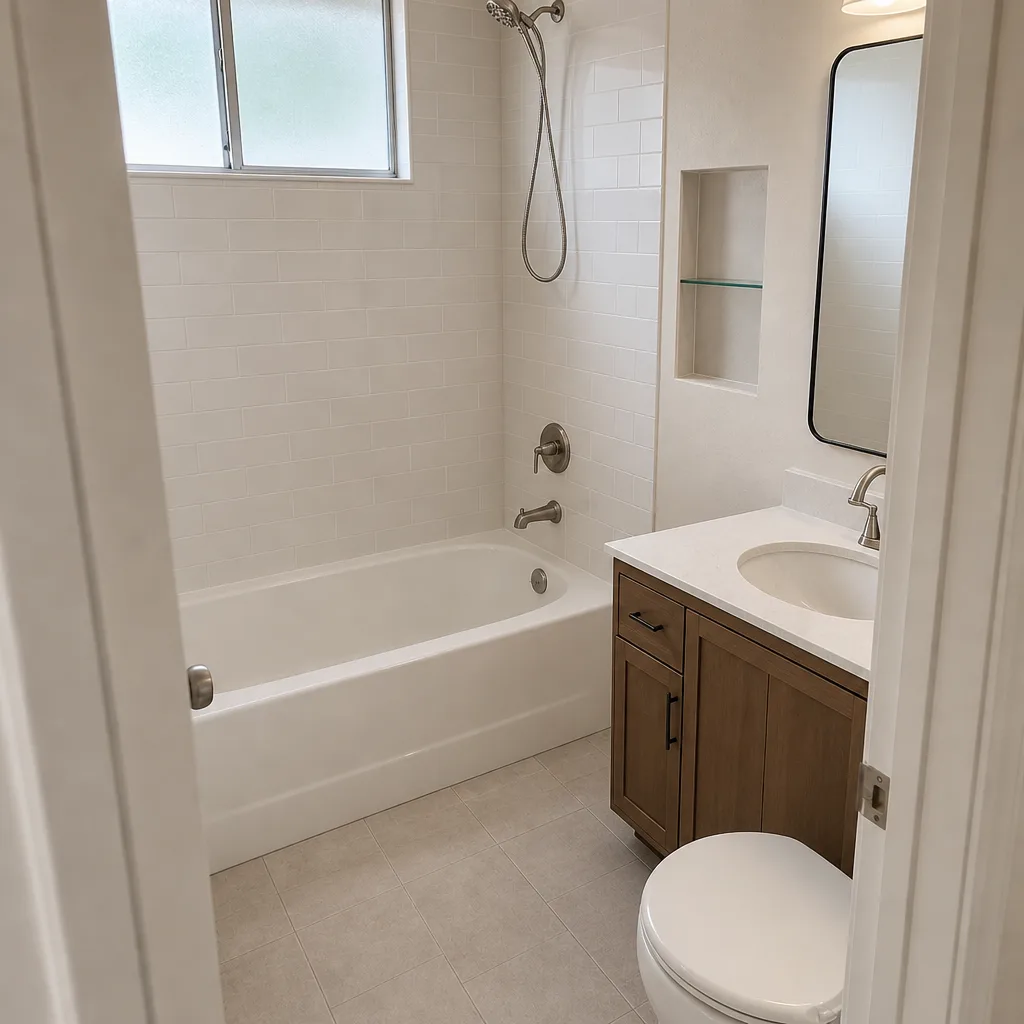 After
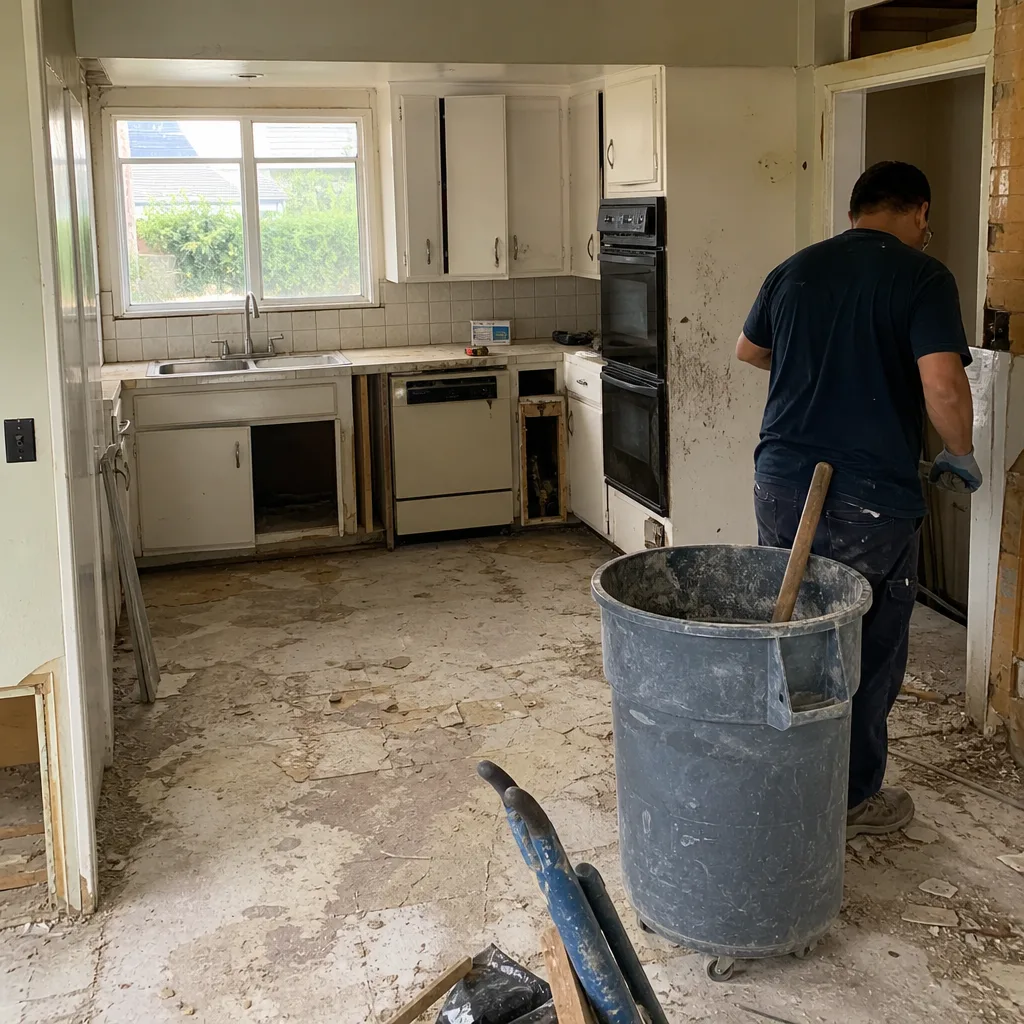 Before
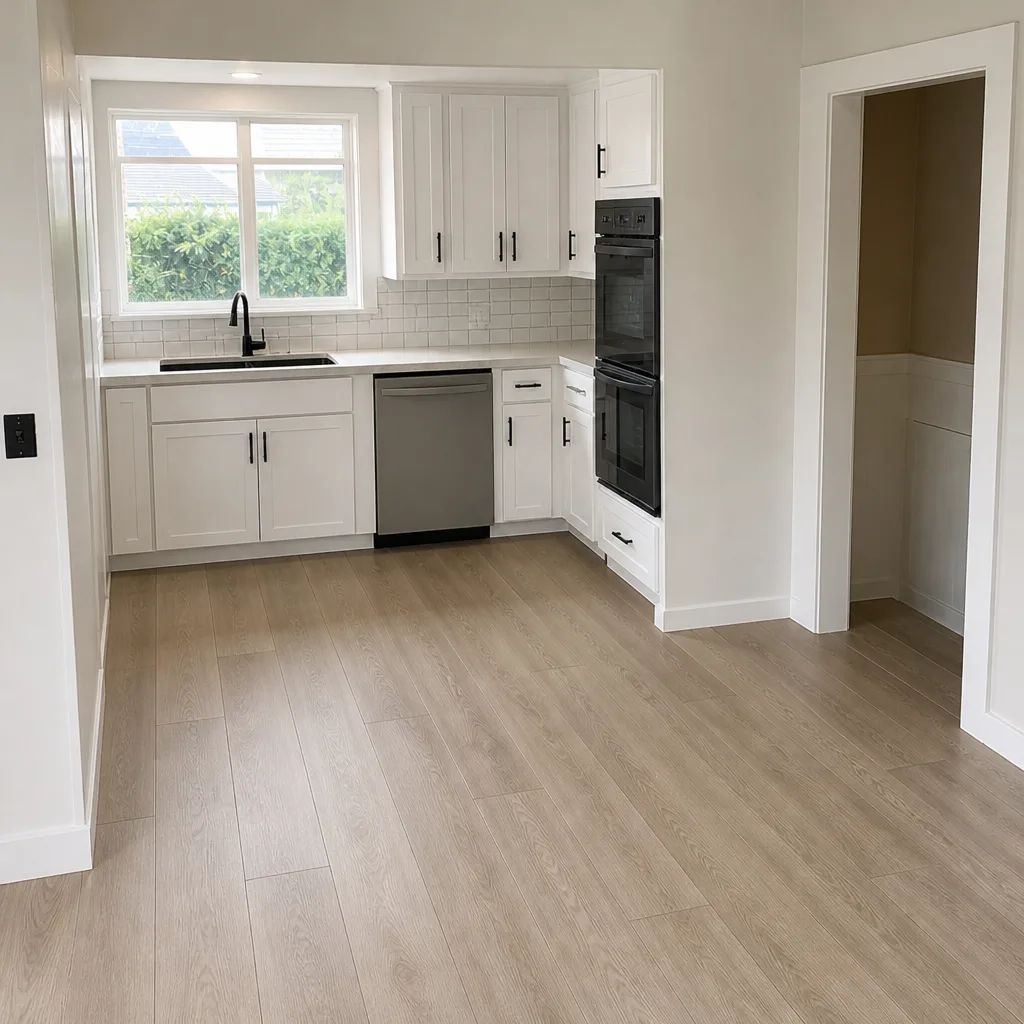 After
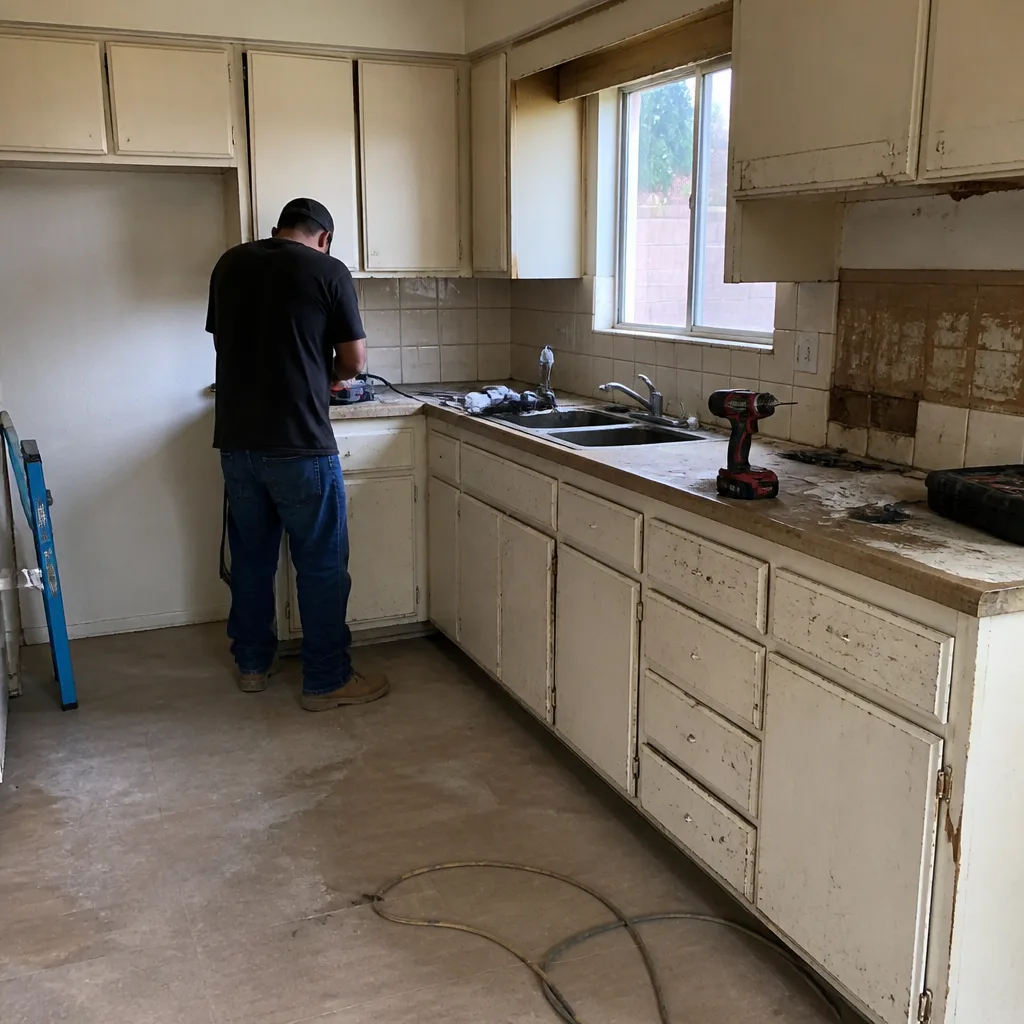 Before
 After
When to Call a Professional
Call a licensed contractor the moment any warning sign is growing, wet, or tied to a structural element. For everything else, call someone in the dry season to review your photo log and get a plan before the next rain. In our experience across Huntington Beach, most of the larger repairs we see could have been avoided with an honest conversation and a small correction eighteen months earlier. If you have a contractor you trust already, use them. If you don’t, the contractor should be willing to talk through a photo set for free, pull a permit if and when a repair needs one, and put every scope change in a written change order before any work starts. The last contractor most people used told them permits were optional; a good contractor should want the inspector to see the work. A free estimate on the small repair now is far cheaper than the structural fix later. Take the photos, keep the log, and if you’re in doubt, call.
Frequently Asked Questions
A hairline crack in the middle of a stucco wall is usually cosmetic, but a hairline crack that starts at a window or door corner is a real moisture risk in Huntington Beach. The corner is where the framing and the weather barrier meet, and a crack there lets sea-salt moisture into the sheathing behind the finish. Photograph it with a coin or tape measure for scale and have a contractor evaluate it within a few weeks. If it’s under a window with any stain inside, treat it as urgent.
Efflorescence is salt and mineral migration to the surface, and a small patch that appears after rain and fades is normal. What matters is the pattern: if the same spot blooms back, or a vertical line appears below a window, it’s telling you water is moving through the wall and drying out through that path. That’s the point where you want an experienced contractor to walk the wall with you. The good news is that catching it early almost always means a repair, not a rebuild.
Yes, a driveway usually gives two to five years of warning before a structural crack. Standing water after rain, edge heaving where the slab lifts away from the grass line, and a widening crack at a control joint are all sub-base signals, and they show up before the surface breaks. If you see all three, don’t spot-patch the crack. Pull the driveway into a proper repair before it fails, especially with Huntington Beach’s clay soils that swell with the winter rain.
A small cosmetic patch is fine on its own, but patching a moisture or movement sign without finding the cause usually fails within a season or two. In Huntington Beach’s coastal air, the patch often looks worse within months. A landscape-level fix on your own can save money, but the moment a sign is tied to water, framing, or structural movement, the diagnosis matters more than the patch.
Urgent means water is visible inside during or after rain, the crack is actively growing, or the roof ridge sags. Routine means the sign is faint, hasn’t changed in a full season, and doesn’t align with water entry. When in doubt, take a documented photo set and call. An honest contractor will tell you if a sign can wait until the dry season, and the peace of mind is worth the phone call.
A good free estimate should include a written, line-item scope, a written price for each line item, and a clear recommendation on what is the repair now vs. what can wait. It should also explain whether a permit is needed and what the inspection would cover. If a contractor gives you a single round number on the phone and won’t put the scope on paper, that’s a warning sign too, and it’s the one to walk away from before the job starts.
The Bottom Line

The warning signs that cost Huntington Beach homeowners the most are the quiet ones, not the loud ones: a hairline stucco crack at a window corner, a driveway puddle that never drains, a ridge line that dips, a baseboard that’s pulling away, a paint film that bubbles in a cluster. These show up a year or two before the visible failure, and they’re the cheapest to fix while they’re still small. Photograph them with scale and dates, walk the house on a seasonal schedule that matches the coastal rain year, and get a professional’s eyes on anything that’s growing, wet, or structural. The rest can be planned. If you’d like a second set of eyes on anything you’ve found, call (844) 320-2945 for a free estimate. You can also start from the Barrett & Sons Construction Huntington Beach home page to see the trades and the four published standing offers, and know that calls are answered by a live person who can walk your photo set with you.
Written by the team at Barrett & Sons Construction Huntington Beach.