Last updated November 17, 2026
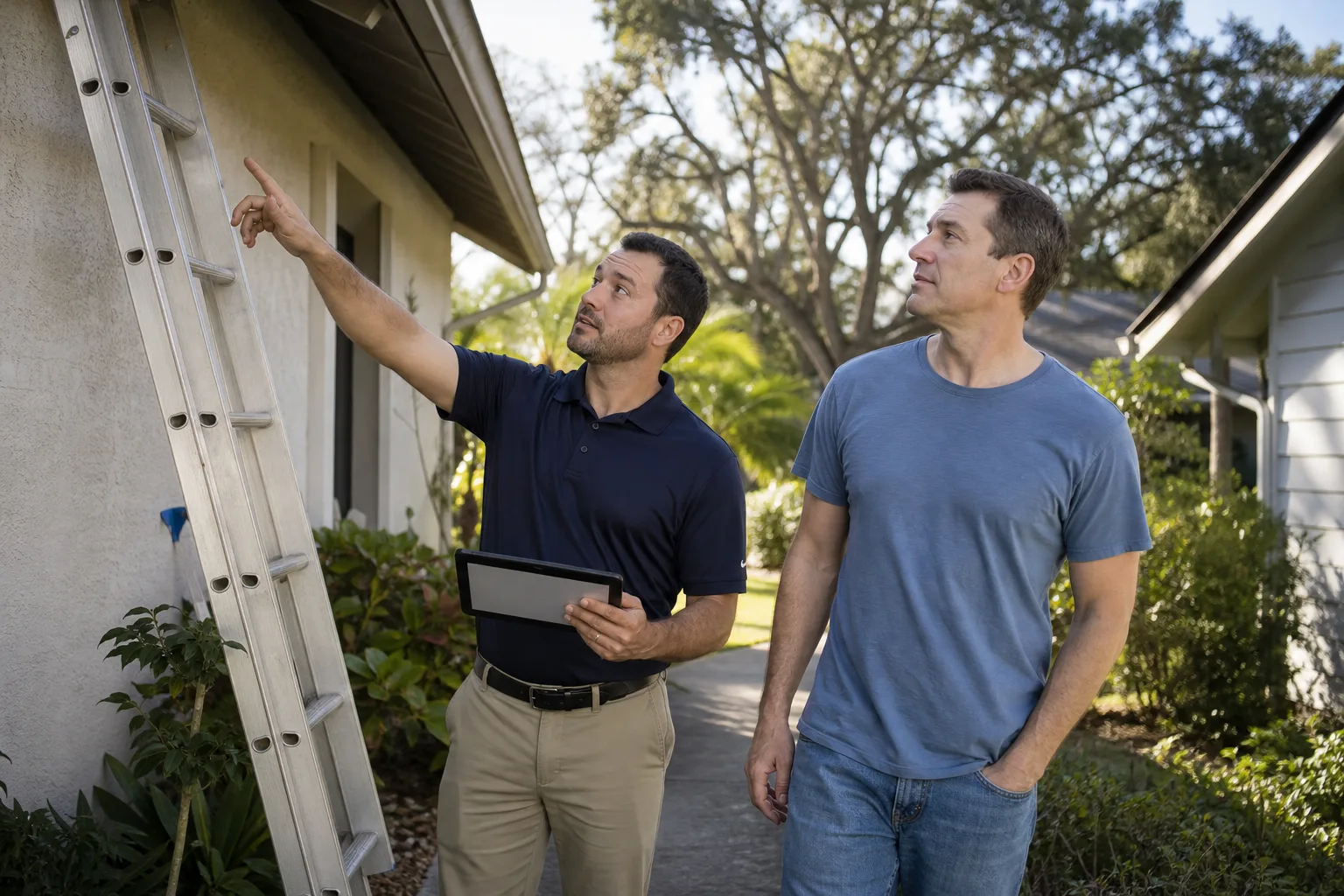
Free written scope consultation - allowances, timeline, and change-order rules on paper before a single trade is scheduled
The Complete Fence Installation Guide for Huntington Beach Homeowners
The cheapest fence quote in Huntington Beach almost always uses hardware that the salt air will rust through before the wood even shows wear, and by the time you notice the orange streaks running down your pickets, the contractor is long gone and the phone number doesn’t answer. We’ve walked up to fences in Surfside and along the edges of Huntington Harbour that were installed four or five years ago with the wrong fasteners, and the posts are already soft at the base. This guide covers what most quotes skip: the corrosion math near the ocean, the setback and height rules that change by zoning district, what California’s shared-fence law actually entitles you to, and what has to be in writing before anyone digs a hole.
Quick Answer
A fence in Huntington Beach typically runs $32 to $58 per linear foot for wood, $45 to $75 for vinyl, and $60 to $95 for aluminum, with most residential jobs landing between $4,000 and $12,000 depending on length, height, and how close you are to the water. The two things that decide whether that fence lasts 8 years or 25 in Huntington Beach are the hardware spec (hot-dipped galvanized, not electro-galvanized) and whether the posts are set below the depth the soil and wind load actually require. And before anything gets built, you need to know your property line, your HOA rules, and your neighbor’s legal stake in the fence.
Styles & brands we work with
- Kitchen remodeling
- Bathroom remodeling
- Home additions & ADU
- Roofing
- Windows & doors
- Driveway & pavers
- Fence
Table of Contents
- Why Coastal Corrosion Decides Your Fence’s Lifespan
- Huntington Beach Setback and Height Rules by Yard
- California’s Good Neighbor Fence Law, Explained Plainly
- Wood vs. Vinyl vs. Aluminum vs. Composite in a Salt-Air Climate
- What Fence Installation Costs in Huntington Beach
- HOA Rules That Vary Block by Block
- What Must Be in Writing Before Installation Begins
- The Installation Process, Step by Step
Why Coastal Corrosion Decides Your Fence’s Lifespan
Within about two miles of the ocean, the salt air attacks every metal fastener on a fence. That means nails, screws, joist hangers, post bases, gate hinges, and the galvanized coating on chain link. The difference between the right and wrong hardware is worth about $200 on a typical job and about ten years of life.
Here’s the distinction that matters. Standard zinc-coated or electro-galvanized screws have a coating measured in a few microns, and they begin to fail in coastal air within two to four years. Hot-dipped galvanized (HDG) hardware carries a zinc coating roughly five to ten times thicker, applied by dipping the finished fastener in molten zinc rather than plating it electrically. HDG fasteners are what you want for any fence within a mile or two of the water. Stainless steel is the step up from that and worth it for gate hardware and anywhere the wood stays wet.
We’ve seen the failure pattern repeatedly in Huntington Beach: the cedar looks fine, the paint or stain is holding, and then a picket pulls loose because the nail heads have rusted to nothing. By the time the fence feels wobbly, the fasteners are gone and the wood behind them has started to rot where water gets in.
- Electro-galvanized screws: cheapest, fails first in salt air, avoid near the coast.
- Hot-dipped galvanized: the practical standard for Huntington Beach fences, ten-plus years in coastal exposure.
- Stainless steel: best for gates, hinges, and lakefront or beachfront lots.
- Aluminum and vinyl fencing: no rust, which is why so many Huntington Beach homeowners in Huntington Harbour and along the Bolsa Chica edge lean that direction.
Salt air also speeds up the weathering of untreated wood and dulls the finish on composite. You can’t stop the ocean, but you can spec hardware that survives it. Our crews run into this constantly on fence installation in Huntington Beach, and it’s the single biggest reason one fence outlasts the one next door by a decade.
Huntington Beach Setback and Height Rules by Yard
Fence rules in Huntington Beach don’t come in one size. What you can build in the front yard is different from the side yard, which is different again from the rear, and corner lots get their own layer on top of that. The general framework under the city’s zoning code looks like this:
- Front yard: fences are typically limited to around 3 feet in height within the front setback, often measured from the property line, though a 6-foot fence is sometimes allowed if it sits behind the front building line. Check the specific district.
- Side yard: generally up to 6 feet, with tighter limits on the street-facing side of a corner lot.
- Rear yard: typically up to 6 feet, with some districts allowing 7 feet by right or through a permit.
- Corner lots: the visibility triangle is the rule people forget. Where two streets meet, you can’t put a tall solid fence inside the sight triangle, because drivers and pedestrians need to see each other. That triangle usually reaches 10 to 15 feet back from the corner along each street, and solid fences there get capped much lower.
Height is measured from the finished grade on your side, not from a neighbor’s raised planter. That matters in Huntington Beach because lots slope in places like the bluffs above the beach, and what looks like 6 feet from your yard might be 7 from theirs. If your fence sits on a retaining wall, that wall often counts toward the height.
Because the exact numbers shift by zoning district, and because some lots carry specific plan overlays or historic designations, the safe move is to pull your parcel up on the city’s zoning map or call the planning counter before you order materials. A fence built 12 inches over the limit on a corner lot can mean tearing it down and starting over. The permit inspector works for you on this, not against you, and a permit that gets pulled and inspected is the difference between a fence that’s legal at resale and a headache at closing.
California’s Good Neighbor Fence Law, Explained Plainly
California Civil Code Section 841 addresses shared boundary fences. In plain terms: when a fence sits on a property line shared by two lots, both owners are generally responsible for reasonable maintenance and replacement costs, in proportion to how much each uses or benefits from the fence. If your neighbor’s fence is falling down and it’s half on your line, you may owe half the cost of the replacement, and vice versa.
Here’s what most homeowners don’t realize:
- You can’t force a neighbor to build a fence. The law addresses cost-sharing for maintenance and repair of an existing boundary fence, not a mandate that one must exist.
- You must give written notice. If you want to replace a shared fence, the law expects you to notify your neighbor in writing with a reasonable cost estimate and a timeline. That’s the trigger for their obligation to contribute.
- You can build your own fence on your own side of the line and pay for all of it if you don’t want to deal with the neighbor. It sits inside your property, you own it outright, and their obligation doesn’t apply.
- Disputes happen. If your neighbor refuses to contribute, small claims court is the usual path, and documentation (the written notice, the estimate, photos of the existing condition) makes the difference.
We’ve watched plenty of Huntington Beach fences get built with an uneasy handshake and nothing on paper. That works fine until someone sells the house and the new neighbor doesn’t remember any agreement. Before a shared fence goes up in Huntington Beach, get the scope in writing, get the neighbor-facing finish in writing, and agree on who pays for which side. It’s boring, but it saves relationships.
Wood vs. Vinyl vs. Aluminum vs. Composite in a Salt-Air Climate
This is where we’ll skip the sales pitch and give you the honest math. Four materials, four different lifetimes in a coastal Huntington Beach climate.
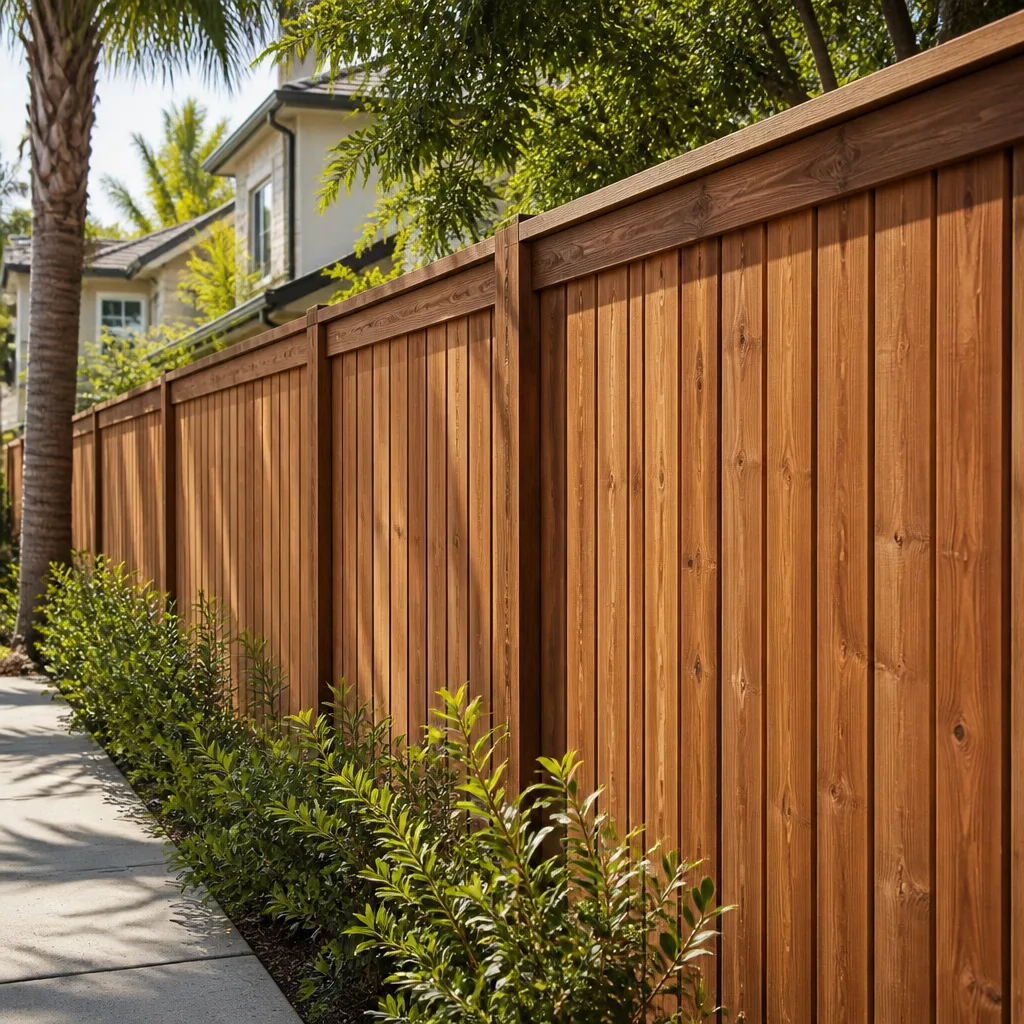
Wood (cedar, redwood, or pressure-treated pine): The most common fence in Huntington Beach, and the most affordable. Longevity is 10 to 15 years with proper sealing every 2 to 3 years. Without sealing and with standard hardware, five to eight years before the fasteners fail. Cost runs $32 to $58 per linear foot installed. Wood is easy to repair and neighbor-friendly because you can match the existing fence.
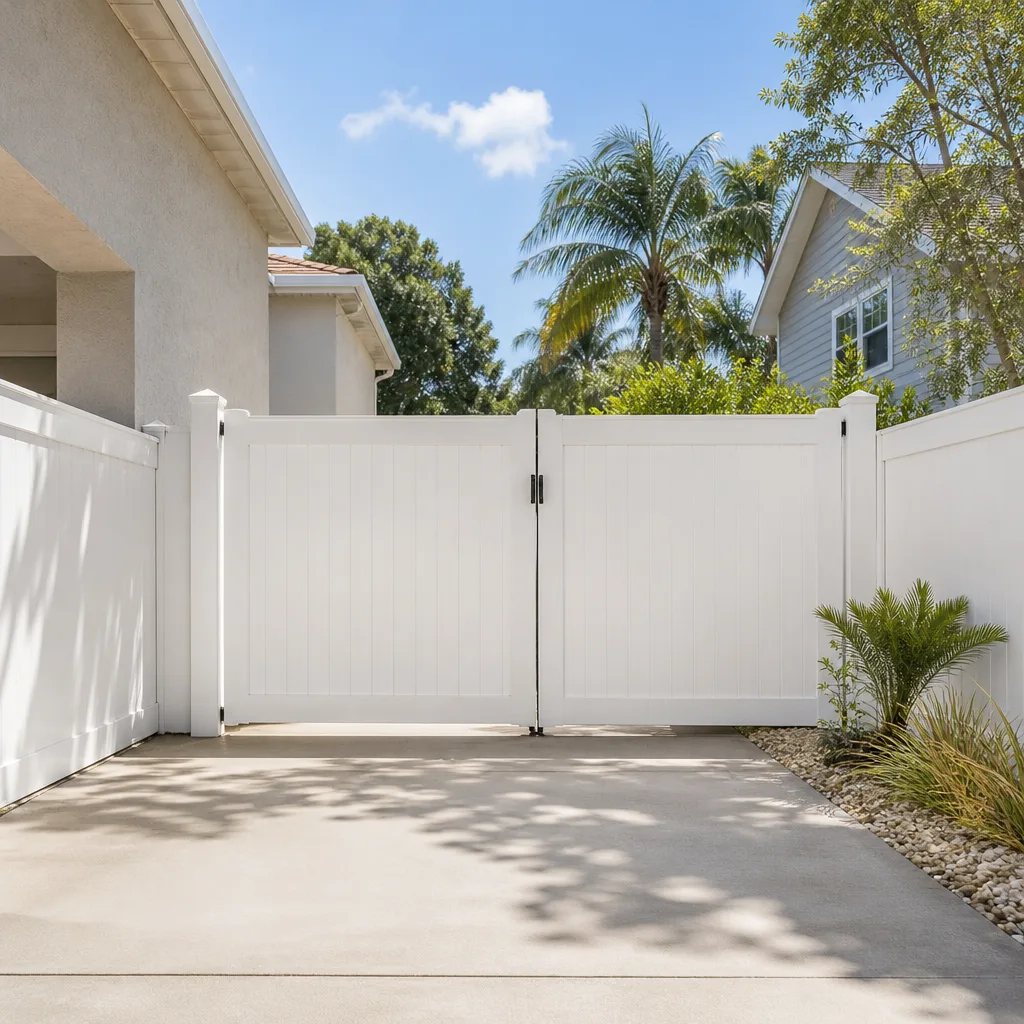
Vinyl: Zero rust, zero painting, and it handles salt air without breaking a sweat. Quality matters: cheap vinyl goes brittle in UV and cracks, while premium brands like Bufftech and ActiveYards use thicker profiles and UV inhibitors. Longevity runs 25 to 30 years. Cost is $45 to $75 per linear foot installed.
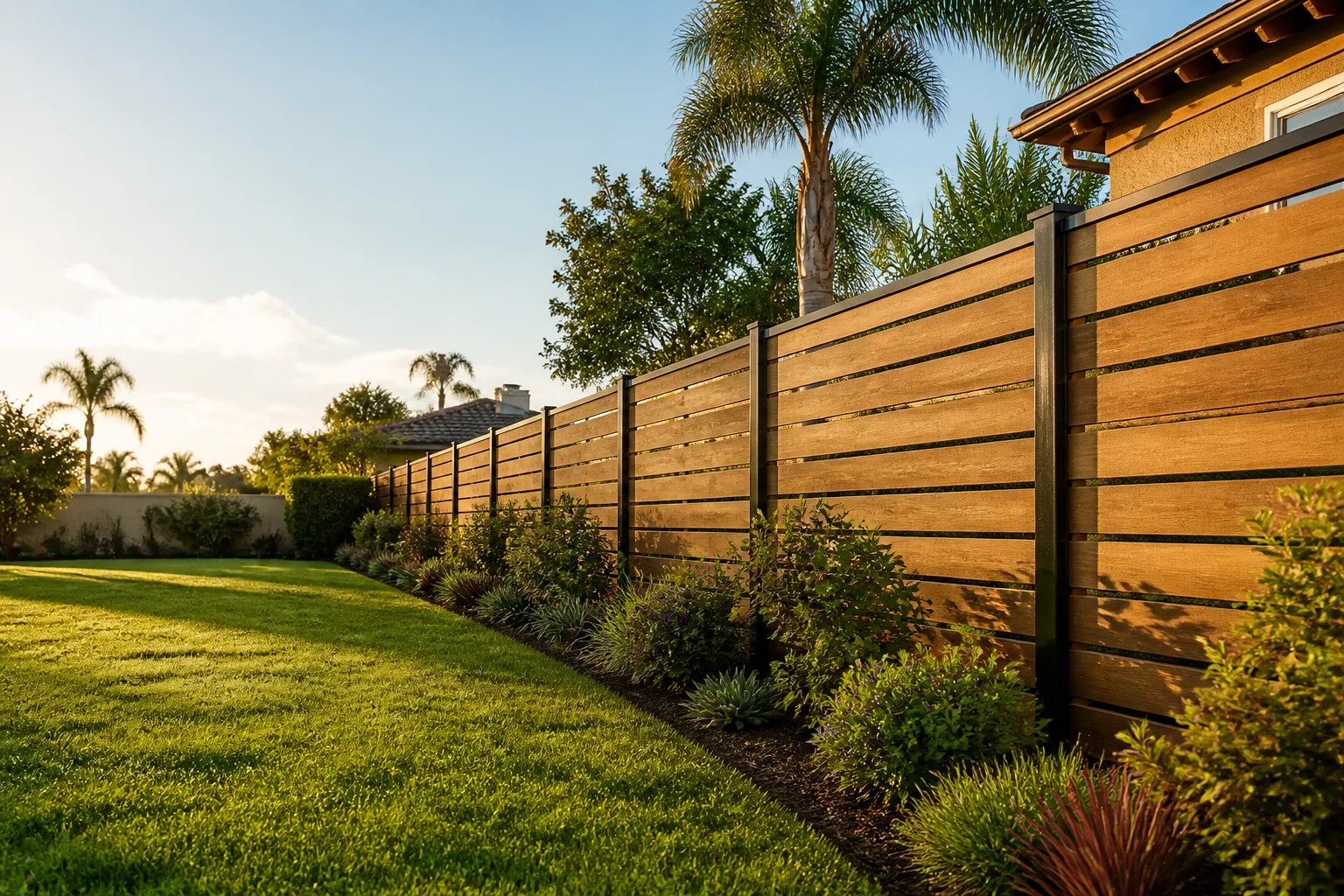
Aluminum: The rust-proof choice, ideal for gates and any ornamental fence. Powder-coated aluminum holds up in coastal air and looks clean in front yards where the city limits fence height. Cost is $60 to $95 per linear foot. Expect 25 to 40 years of life if the powder coat isn’t scratched through to bare metal.
Composite: The step up from wood for people who want the wood look without the maintenance. Composite fencing, including some ActiveYards profiles, combines wood-plastic blends into boards that don’t rot or need sealing. Longevity is 25 to 30 years. Cost runs $55 to $90 per linear foot.
Cost-per-year math
A 100-foot wood fence at $4,500 installed and lasting 12 years is about $375 per year. A 100-foot vinyl fence at $6,000 lasting 28 years is about $215 per year. Higher upfront, lower over time. Aluminum and composite land in between. That math changes if you plan to sell within five years, in which case wood’s lower entry cost usually wins.
What Fence Installation Costs in Huntington Beach
Fence pricing in Huntington Beach in 2026 tracks higher than inland Orange County because of material handling, permit costs, and the hardware upgrades coastal installations require. Here’s a line-item view of what we typically see:
| Line item | Typical range |
|---|---|
| Fence removal and haul-away | $4 – $9 per linear foot |
| Wood fence, 6-foot cedar | $32 – $58 per linear foot installed |
| Vinyl fence, 6-foot premium grade | $45 – $75 per linear foot installed |
| Aluminum ornamental fence | $60 – $95 per linear foot installed |
| Composite fence, 6-foot | $55 – $90 per linear foot installed |
| Chain link, 4-foot residential | $20 – $32 per linear foot installed |
| Gate installation (walk gate) | $400 – $1,200 |
| Driveway or vehicle gate | $1,200 – $3,800 |
| Permit and inspection fees | $150 – $600 typical |
The variables that move your quote the most: how close you are to the beach, how much of the old fence needs hauling off, whether the ground is hardpan or expansive clay, and whether the fence has to step up a grade. A simple 80-foot backyard replacement in a flat lot in northwest Huntington Beach might land around $3,500. A terraced 150-foot fence on a sloped lot near the bluffs can run $12,000 or more.
Watch out for allowances that don’t appear on the quote. An allowance that isn’t on paper is a surprise waiting for a date. If a contractor’s bid says “materials TBD” or leaves the hardware spec off entirely, that’s the line item that grows.
HOA Rules That Vary Block by Block
Huntington Beach has a lot of HOAs, and they’re not consistent from one community to the next. A 6-foot wood fence in Sunset Beach doesn’t get the same treatment as a rear fence in Seacliff or a side fence in a newer neighborhood off Newland. Some HOAs restrict fence material strictly to vinyl or composite, some limit height at 4 or 5 feet, and many require pre-approval before any work begins, including submitting plans, color swatches, and a material sample.
Breaking HOA rules is worse than breaking city code, because the HOA can force a rebuild even when the city has already signed off. Read your CC&Rs first, then call the HOA architectural committee. In our experience, an HOA approval takes about two to four weeks if you submit a complete package and it can take months if you don’t. Factor that timeline into the project before you order materials.
Neighbor-facing conventions often live in HOA rules too: which side shows the finished face (usually the neighbor’s side), and whether both sides must be finished.
What Must Be in Writing Before Installation Begins
This section is the one we wish more Huntington Beach homeowners demanded before signing. The written scope is what protects you when the crew shows up and someone has a different memory of the plan.
- Grade changes and how the fence steps with them. “Step fence at every 8-foot run” is a spec. “Adjust at grade” is not.
- Post depth. Huntington Beach soil varies from sandy near the beach to expansive clay in some inland pockets. Specify the post depth in writing (typically 24 to 36 inches for a 6-foot fence, deeper in soft or sandy soil) and the concrete used.
- Hardware spec. Hot-dipped galvanized or stainless. Nail type and gauge. Post base and cap. Gate hinges. If the quote doesn’t say, ask.
- Finish on the neighbor-facing side. “Good side out” or “both sides finished,” clearly stated.
- Material brand and grade. If you’re getting premium vinyl, name the manufacturer in the contract (Bufftech, ActiveYards, or whatever the bid specifies), not “premium vinyl.”
- Removal and disposal. Who hauls the old fence, and is that price included.
- Permit responsibility. Which party pulls it, and what happens if the city requires changes.
- Change order language. Every price change arrives in writing before work proceeds.
Our rule is simple: scope in writing, allowances in writing, change orders in writing. Every price change arrives as a written change order before a single nail moves. No surprise invoices at the end. If you’re comparing quotes, ask each contractor to put all of that into their written estimate, and see which ones do.
The Installation Process, Step by Step
Here’s what a properly run fence installation actually looks like from start to finish in Huntington Beach.
- Property line verification. Pull the plat map or have a surveyor confirm the line. Don’t guess from the old fence, which may be off by a foot.
- Permit check and HOA approval. Confirm height, setback, and visibility triangle with the city. Submit to the HOA architectural committee if applicable.
- Neighbor notification. If it’s a shared boundary fence, written notice under Civil Code 841. Agree on the finish side and cost split.
- Written scope and contract. All the specs from the previous section, signed, with a clear change order process.
- Removal of the old fence. Haul away on the same day.
- Layout and string line. Posts marked and verified before any digging.
- Post setting. Holes dug to spec depth, concrete set, posts checked plumb within tolerance. Curing takes 24 to 48 hours.
- Rails and pickets. Installed with the correct hardware, spacing verified, top and bottom rails aligned.
- Gate installation. Hinges set for the swing weight and material, latch installed, opening aligned.
- Final inspection. City inspector signs off if a permit was pulled. Walkthrough with you, punch list handled same day.
- Final finish. Sealing or staining on wood (typically after a few weeks of curing). Cleanup and haul-away.
If you’re coordinating a fence with other exterior work, like Driveway & Pavers in Huntington Beach or a backyard addition under Home Additions & ADU in Huntington Beach, put the fence last. You don’t want to build a fence, then have a paver crew bring equipment through it. We sequence this often in Huntington Beach and it saves both money and frustration.
Common Mistakes to Avoid
- Skipping the hardware spec. A quote that says “wood fence, 6-foot, cedar” without naming the fastener grade is a quote that will fail in the salt air within a few years. Insist on hot-dipped galvanized or stainless in writing.
- Ignoring the visibility triangle on a corner lot. A 6-foot fence built 8 feet back from the corner in Huntington Beach can be illegal and expensive to fix. It’s the most common code violation we see on corner properties.
- Not pulling a permit because “it’s just a fence.” Huntington Beach requires a permit for most fences over 3 feet in the front setback and many rear-yard fences. A fence without a permit is a fence you may have to remove at resale.
- Building a shared fence without written notice to the neighbor. Without the Civil Code 841 notice, you give up your leverage to collect their share of the replacement cost.
- Choosing vinyl without checking HOA rules. Some Huntington Beach HOAs require wood, others vinyl, and a few mandate composite. Confirm before you buy.
- Letting the neighbor-facing side be the unfinished one. Standard practice is good side out, and many HOAs require it. Specify it in the contract.
- Post holes too shallow in sandy soil. Beach-adjacent lots in Huntington Beach need deeper posts and more concrete. A 6-foot fence in loose sand with 18-inch posts will lean within two seasons.
See the difference
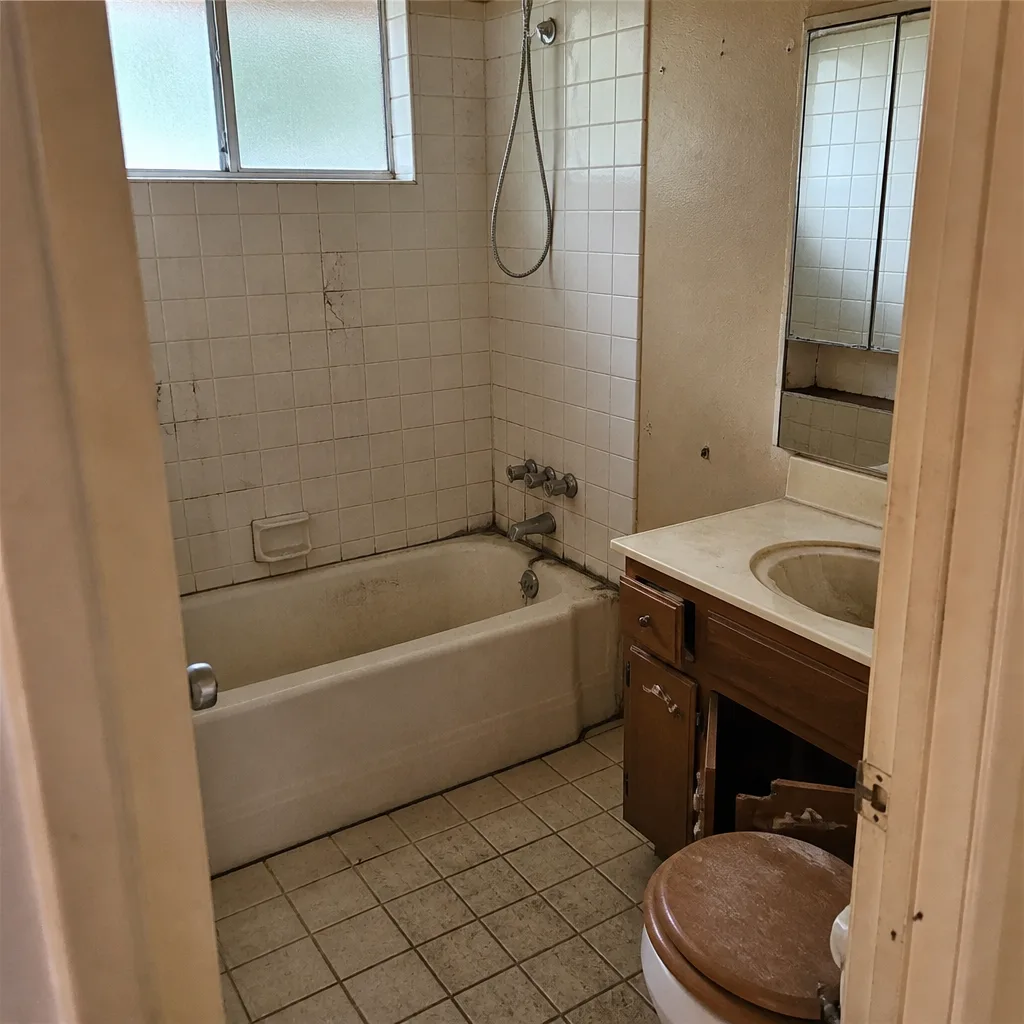 Before
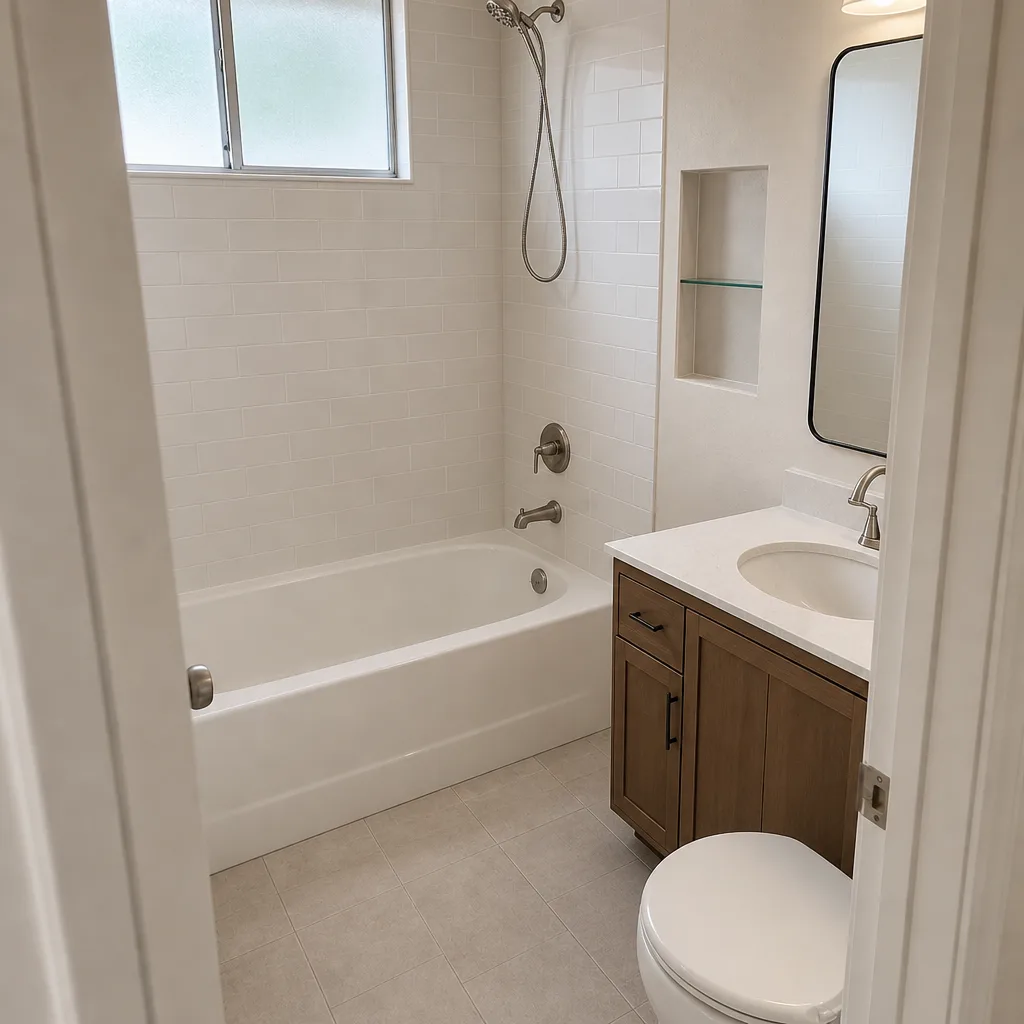 After
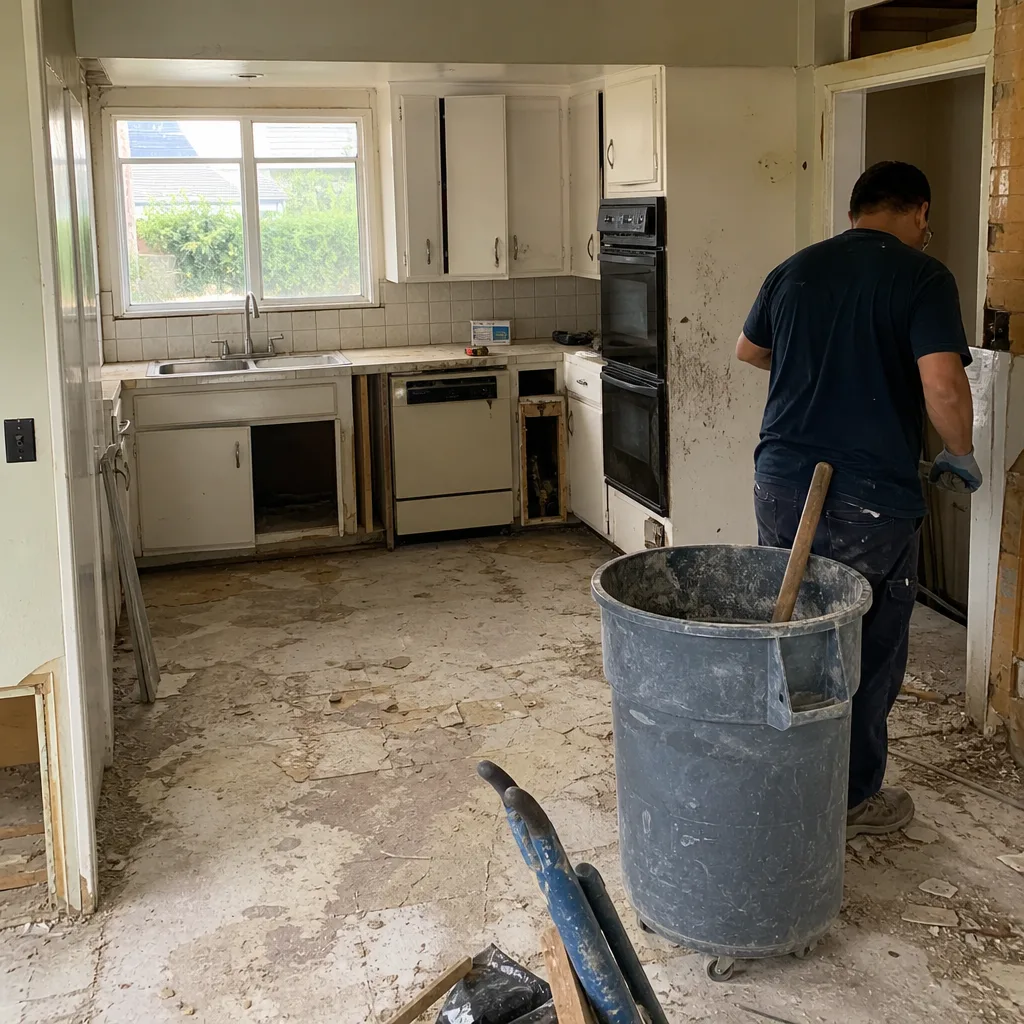 Before
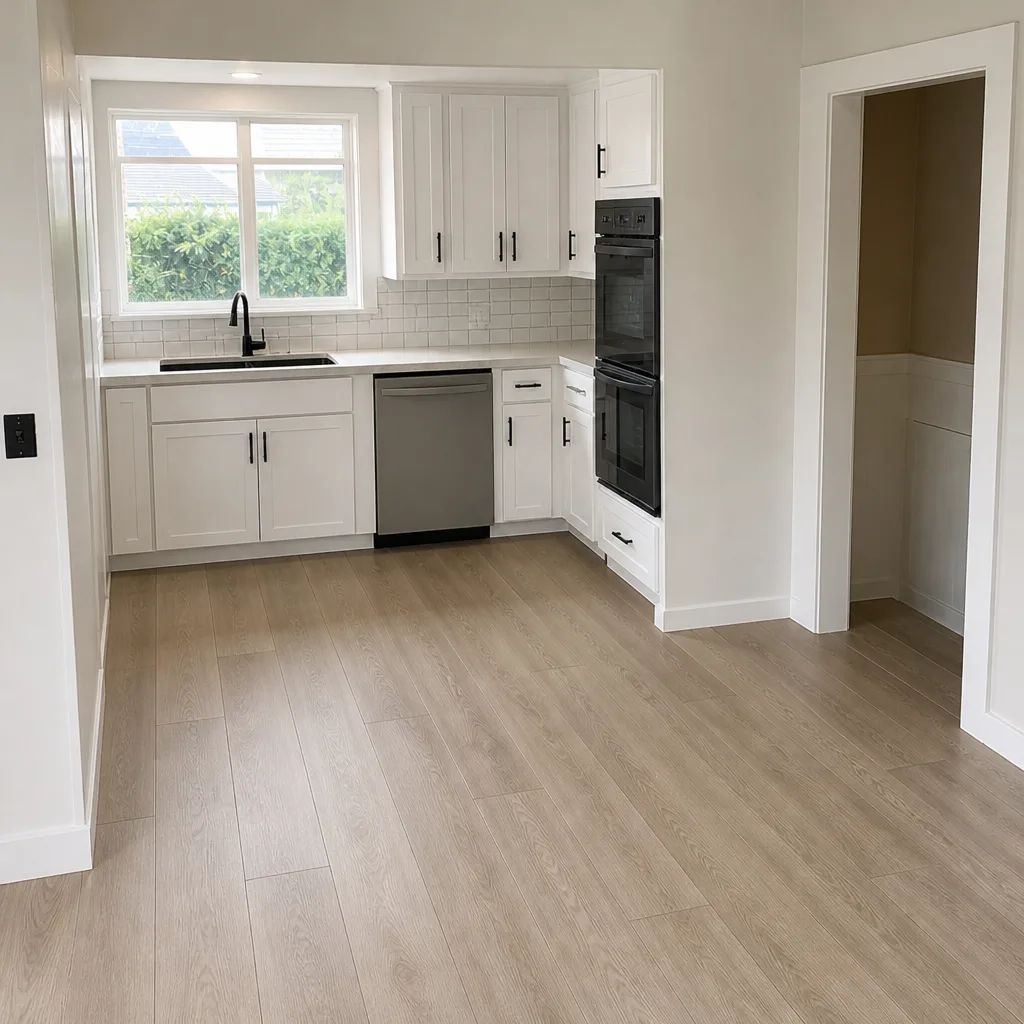 After
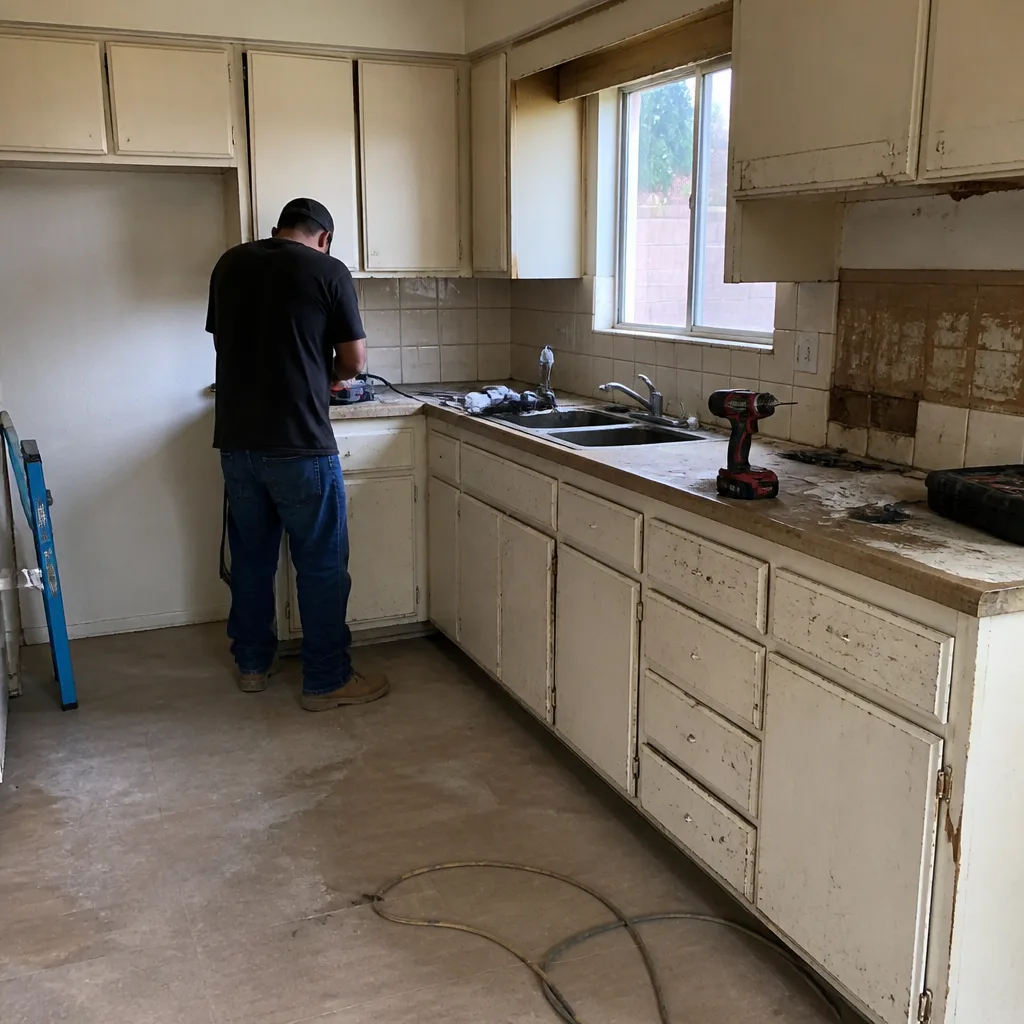 Before
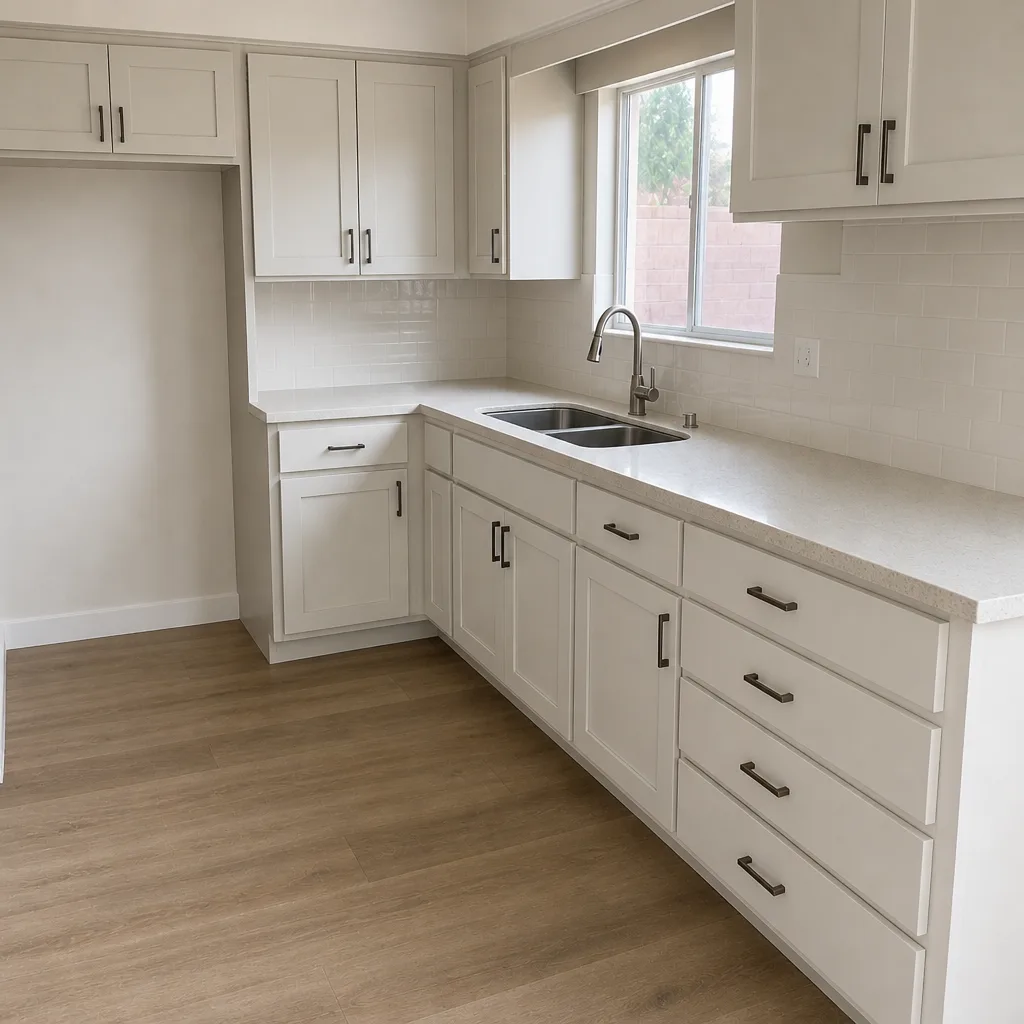 After
When to Call a Professional
You can install a basic fence yourself on flat ground with a lot of patience. Here’s when to bring in a crew: any fence over 6 feet, any fence on a slope or a shared boundary, any job that requires a permit or triggers the visibility triangle rule, and any fence within a mile of the water where hardware spec actually decides longevity. A leaning fence with soft posts has to come out entirely, and the diagnosis of whether it’s water, soil, or hardware is where an experienced eye saves money. Our crews have up to 28 years of experience with coastal fence lines, and we’re happy to point out what’s fixable versus what’s a rebuild. You can see the full range of home services we handle on our Barrett & Sons Construction Huntington Beach home page.
Barrett & Sons Construction Huntington Beach offers free estimates in Huntington Beach. Call (844) 320-2945 to schedule yours. We’re a live-person answer, not a voicemail box.
Frequently Asked Questions
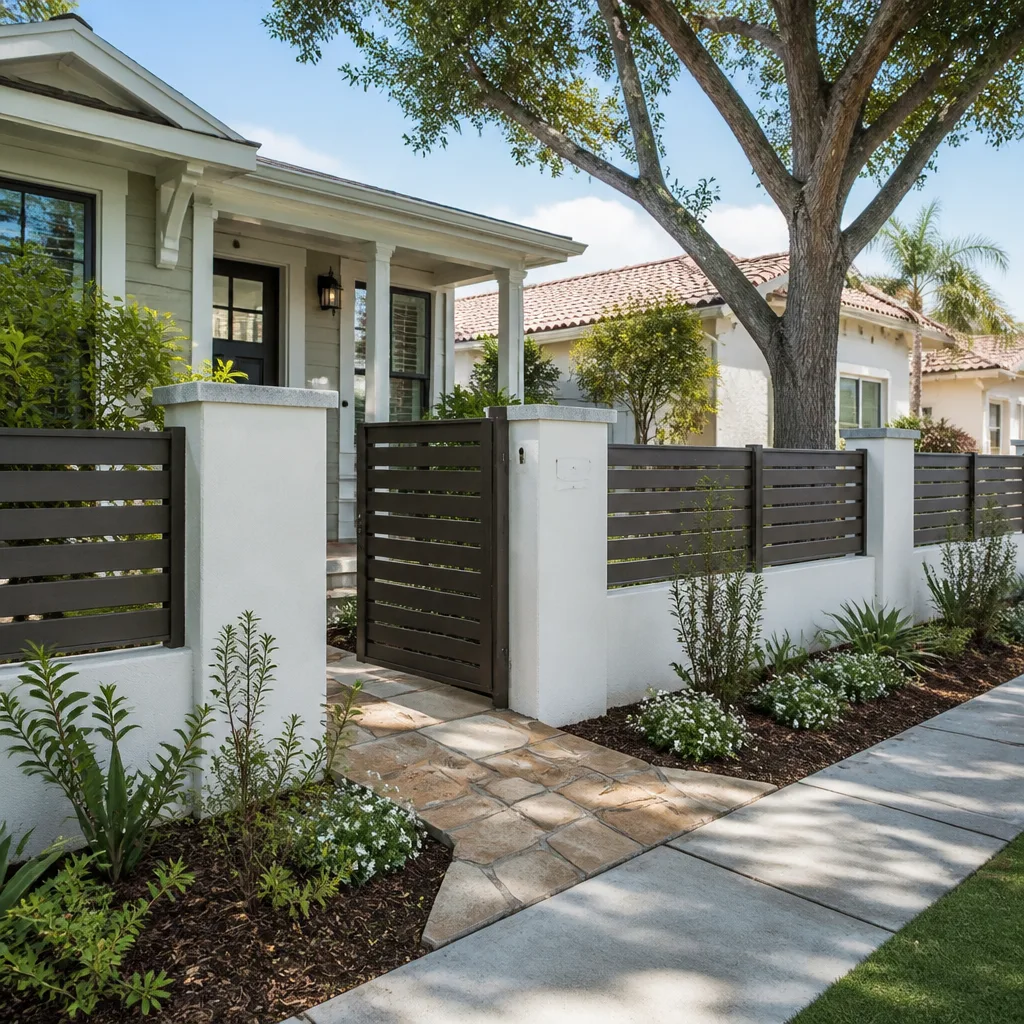
Most residential fence installations in Huntington Beach run $4,000 to $12,000 total, or $32 to $95 per linear foot installed depending on material. Wood is the lowest at $32 to $58 per linear foot; aluminum is the highest at $60 to $95. Permit fees add $150 to $600. Call (844) 320-2945 for an exact quote on your property; estimates are free.
Yes for most fences over 3 feet in the front setback and many rear-yard fences. The city measures height from grade and applies the visibility triangle on corner lots. Pull your parcel on the city’s zoning map or call the planning counter to confirm your specific district, then get the permit in writing before work begins. If a contractor tells you permits are optional, that’s your cue to call someone else. Call (844) 320-2945 for a free second opinion on any written estimate.
California Civil Code 841 makes both owners of a shared boundary fence responsible for reasonable maintenance and replacement costs, in proportion to the benefit each receives. To trigger your neighbor’s obligation, you need to give them written notice with a cost estimate and timeline. If they refuse, small claims court is the usual remedy. Call (844) 320-2945 to schedule a free estimate if you’re planning a shared-fence replacement in Huntington Beach.
Vinyl and aluminum handle salt air best because they don’t rust or rot. Quality vinyl such as Bufftech or ActiveYards runs 25 to 30 years; powder-coated aluminum runs 25 to 40 years. Wood is the most affordable and can last 10 to 15 years if you use hot-dipped galvanized fasteners and re-seal every 2 to 3 years. Composite is the middle ground for wood-look without the maintenance. Call (844) 320-2945 for a written quote that specifies the exact material grade.
It shouldn’t, if the scope is written properly. Every price change should arrive as a written change order before any work proceeds. On fence jobs, the surprises usually come from finding rock, an old concrete footing where a post needs to go, or a property line in a different place than expected. A written change order process handles all three. Call (844) 320-2945 for a free estimate and a full written scope before you commit.
A typical 100-foot residential fence takes two to four working days once materials are on site. Post curing adds 24 to 48 hours. HOA approval and permits can add two to four weeks before installation begins, so factor that in. Call (844) 320-2945 to schedule a free estimate and a realistic timeline.
The Bottom Line
In Huntington Beach, a fence that lasts decades is a series of small, correct decisions: hot-dipped galvanized hardware instead of the cheap stuff, posts set at the right depth for the soil, height and setback confirmed against your zoning district, HOA approval in hand before anyone digs, and the whole scope written down before work starts. Wood is fine if you spec it right. Vinyl and aluminum cut maintenance to near zero in salt air. The neighbor conversation is worth having early, in writing, and the permit is not optional. Get a written quote that names the material grade, the hardware, the post depth, and the finish side. Then call (844) 320-2945 for a free estimate from Barrett & Sons Construction Huntington Beach, and we’ll walk your property with you before we quote a single line.
Written by the team at Barrett & Sons Construction Huntington Beach.