Last updated November 17, 2026






Free written scope consultation - allowances, timeline, and change-order rules on paper before a single trade is scheduled
Windows & Doors Maintenance Schedule: What to Do and When
Weep holes on window frames need to be cleared once a year in coastal Southern California. Most homeowners have never heard of a weep hole, and that’s exactly how water finds its way into a wall cavity. Windows and doors are the most neglected maintained system in a house because they work silently until they fail. By the time you notice the sticking, the draft, or the soft drywall under the sill, a tube of sealant has turned into a framing repair. This guide gives you the actual service intervals, broken out by season and by window type, with the extra steps Huntington Beach homes need because of the salt air and the sun.
Quick Answer
Plan on a light inspection every six months, in spring and fall, and a deeper service once a year. Every spring: clear weep holes, rinse exterior hardware, and check seals. Every fall: inspect weatherstripping, test locks and rollers, and look for air leaks before the rainy season. In Huntington Beach, add a UV and salt-air check to both visits. That’s the whole schedule in three sentences – the sections below explain what each task actually looks like.
Styles & brands we work with
- Kitchen remodeling
- Bathroom remodeling
- Home additions & ADU
- Roofing
- Windows & doors
- Driveway & pavers
- Fence
Table of Contents
- Why Windows and Doors Fail Quietly
- The Seasonal Maintenance Checklist
- Intervals by Window and Door Type
- The Huntington Beach Additions to Any Standard Checklist
- How to Inspect Weatherstripping Properly
- What a “Working” Window Is Still Failing At
- Keeping Maintenance Records That Protect You
- When to Call a Professional
Why Windows and Doors Fail Quietly
A window doesn’t announce that its seal has failed. It still opens, still closes, still lets the light in. The failure is happening in the parts you can’t see: the weatherstripping that’s gone flat, the caulk joint that’s cracked behind the trim, the weep hole that’s packed with dust and pollen so the sill pan can’t drain. Water gets in a fraction of an inch at a time, wicks into the sheathing, and shows up years later as a soft spot or a bubble in the paint.
Doors fail the same way. A sliding patio door that still glides can be leaking air around the perimeter gasket for two or three years before the carpet near the threshold feels damp. By the time it’s visible, you’re not buying weatherstripping. You’re paying for sill repair.
The reason this matters more in Huntington Beach than in most places is the sun. We get strong UV year-round, and UV breaks down sealant and rubber faster than heat alone. A caulk joint on the south or west face of a house here can go from flexible to chalky in a single summer. The salt air doesn’t help either – it works on hinges, rollers, and any exposed ferrous metal. Barrett & Sons Construction has been pulling permits and signing inspections on local jobs since 1998, and the window and door calls we get most often are for damage that a twice-a-year walk-around would have caught.
This isn’t a piece about selling you new windows. It’s about getting another decade out of the ones you have. If you’re already planning a larger project, our Barrett & Sons Construction Huntington Beach home page lays out how we work, but for now the goal is simpler: a calendar and a flashlight.
The Seasonal Maintenance Checklist
Two visits a year covers almost everything if you do them at the right time. Spring is about clearing what winter left behind. Fall is about sealing up before the rain. Here’s how we break it down.
Spring Visit (March to May)
- Clear every weep hole on every window frame – the small slots on the outside bottom edge of the sill. Use a stiff brush or a piece of wire, not a nail.
- Rinse exterior hardware – handles, hinges, door closers – with fresh water and dry them. Salt residue from marine air eats plated finishes.
- Inspect all exterior caulk joints around frames and trim. Look for cracks, gaps, and any spot where the bead has pulled away from the siding.
- Test every window’s operation. Open and close each one fully. Note any that stick, drag, or need two hands.
- Check the screens for holes and the tracks for grit. Vacuum the tracks before they collect enough debris to bind the rollers.
- Look at the threshold on exterior doors. Confirm the door sweep still makes contact with the sill.
Fall Visit (September to November)
- Inspect weatherstripping on every operable window and exterior door. Run your hand along the seal and feel for gaps and flat spots.
- Do the dollar-bill test at each exterior door – close the bill in the door and tug. If it slides out with no resistance, the seal is gone.
- Check door locks, deadbolts, and strike plates. Tighten any loose hardware.
- Lubricate hinges, sliding door rollers, and casement crank mechanisms with a silicone lubricant, not oil.
- Clear gutters and downspouts so water isn’t dumping against the sills and thresholds you just inspected.
- Walk the interior side of every window and door. Look for staining, bubbling paint, or soft drywall at the corners and below the sill.
One evening in spring and one in fall is all this takes. Put both on your phone’s calendar now and you won’t have to remember.
Intervals by Window and Door Type
Different openings wear differently, and the schedule should reflect that. Here’s what we’ve learned servicing windows and doors around Huntington Beach.
Casement Windows
Casements have a crank mechanism and a hinge, and both are where they fail. Service the crank and hinge annually. Check the sill and the weep holes twice a year. Casements on the windward side of a house take more weather, so inspect those more carefully – any hardware that looks chalky or starts to seize is telling you something.
Sliding Windows
The rollers are the weak point. Clean the track every six months and lubricate the rollers once a year. If the sash starts to rock or drag, the roller needs attention before it wears flat. Sliding windows also have a perimeter seal that can lift, so run your hand around the frame during your fall visit.
Single-Hung Windows
The simplest of the bunch but the one most likely to have a blocked weep hole, because the sill has a bigger shelf to collect debris. Clear the weep holes every spring without exception. Check the balance mechanism – the spring or cord that holds the sash up – once a year. If a single-hung sash won’t stay up on its own, the balance is failing.
Entry Doors
Exterior entry doors get used more than anything else in the house. Check the weatherstripping twice a year, inspect the threshold annually, and look at the door sweep for wear every fall. A wood door on a south or west face in Huntington Beach will want a fresh coat of finish every two to three years to keep the UV from drying it out.
Sliding Patio Doors
The track is everything. Clean it every six months, clear debris from the drain slots in the bottom rail, and check the rollers annually. Sliding patio doors on the ocean side of a house need the rollers lubricated more often and the track inspected for pitting. If water pools in the track after a rain, the drain slots are clogged. That’s the whole failure chain.
The Huntington Beach Additions to Any Standard Checklist
If you live within a few miles of the water, the standard checklist isn’t quite enough. Three extra tasks belong on it.
Hardware rinse schedule. Rinse exterior hardware every spring with fresh water and dry it. Salt settles on hinges, handles, rollers, and closer arms, and it stays there until something removes it. Left alone, it pits the finish first and then the metal. A rinse is the whole fix.
UV sealant inspection. Walk the outside of the house twice a year with a flashlight and check every caulk joint at every window and door frame. Look for cracks, chalky texture, and any joint that’s pulled away from the surface. South- and west-facing joints go first. When in doubt, cut the old bead out and reapply.
Weep hole clearing. Do this every spring, and check them again in the fall. The sill pan behind an exterior window is designed to drain water out through the weep holes. Block the drain and the water has nowhere to go but back into the wall. This is the single cheapest maintenance task in the house and the one nobody remembers.
We’ve seen this pattern repeat all over the city, from Huntington Beach homes a block off the sand to ones inland near the wetlands. Keep the schedule and you’ll get decades out of good windows. Skip it and you’ll be patching drywall. Windows are only one part of a house that needs a calendar – if you’re planning broader work, our Home Additions & ADU in Huntington Beach page covers what it takes when a project goes beyond repair.
How to Inspect Weatherstripping Properly
Most people peek at the weatherstripping, see that it’s still there, and call it fine. The seal is failing long before it disappears. Here’s the right way to check.
Open the door or window. Run the back of your hand along the seal, both sides. You’re feeling for gaps and flat spots – your hand will find an air gap before your eyes do. Then close it and look for daylight around the frame. Look specifically at the corners. If you can see any light, the seal isn’t doing its job.
For a more serious test, tape a piece of paper in the door and close it. If the paper slides freely with no drag, the seal is compressed flat. Try the same test in two or three spots along the frame – the seal can pass at the top and fail at the bottom, which is typical for a door that’s settled on the hinge side.
Failure intervals depend on the material:
- Foam tape weatherstripping: two to four years. It compresses flat and crumbles.
- V-strip (metal or plastic): four to six years. Check for bent or broken fins.
- Door sweeps: three to five years. Check that the sweep makes contact with the sill all the way across.
- Threshold seals: five years. Look for cracks and any place the seal has lifted from the metal or wood.
- Magnetic seals on higher-quality doors: six to eight years. Check that the door “pulls” to a close when you get within an inch.
On a casement or single-hung window, check the sash seal where the sash meets the frame and the frame seal where the frame meets the siding. Different seals, different failure intervals, same test. If you’re going to replace failing seals, plan the work in the same visit as the door or window hardware work – which is part of why the professional service call below is worth putting on your list. Barrett & Sons Construction can source Andersen and Marvin parts and doesn’t hand you mystery brands off a van.
What a “Working” Window Is Still Failing At
A window that opens and closes can still be failing three ways at once. Thermal performance, air infiltration, and water management are separate jobs. Open means the sash moves. It doesn’t mean the window is doing any of its real work.
Thermal performance. The glass itself can be the failure. If you see fogging or condensation between the panes, the seal has failed and you’re looking at a sealed unit replacement – the glass assembly is what’s failed, not the frame. The window will still open and close. It’ll just be doing roughly half the insulation job it was designed for.
Air infiltration. Hold a lit candle (carefully, away from anything flammable) near the perimeter of a closed door or window on a windy day. If the flame flutters, air is coming through. Look at the weatherstripping and the sill. This is the one that shows up on your energy bill and the one most people never check.
Water management. This is the one that does real damage. Look at the sill outside – is water able to reach the weep holes? Look at the interior drywall below the sill – any softness, staining, or bubbling paint means water has already been getting in. Look at the trim at the bottom corners of the frame on the outside – any swelling or separation is water working in behind. The window opens fine and closes fine. The wall behind it is rotting.
If you’re seeing any of these signs, don’t wait for the next scheduled visit. Water damage in a wall cavity compounds fast, and a repair that starts with caulk can end as a framing repair if it goes unaddressed long enough. A free second opinion on any written estimate we’ve given you stands on this kind of service work – worthwhile if you’ve had a contractor tell you the damage is bigger than you think.
Keeping Maintenance Records That Protect You
Write the dates down. Not in your head, and not just in your phone’s notes. A physical folder with every maintenance visit, service call, and repair documented is worth more than you think at two different moments.
The first is a warranty claim. If a window you bought new in the last ten years has a seal failure and you’re calling the manufacturer for a claim, they’ll want proof of regular maintenance. They want to know the failure isn’t due to a neglect issue. A dated record of annual weep-hole clearing and biannual weatherstripping inspection is exactly the evidence that supports your claim.
The second is the sale of the house. Buyers ask about window and door condition, and the disclosures they sign ask specifically about water intrusion. A maintenance log showing the windows and doors have been serviced on schedule turns a negotiation point into a proven positive. It also gives your inspector confidence there are no hidden issues.
Keep it simple. A three-ring binder with a page for each season is enough:
- Date and who did the work (you or a contractor)
- Which windows and doors were serviced
- What was found and what was addressed
- Any products used (caulk, sealant, weatherstripping brand and type)
- Photos of the sills and thresholds at each service
The written records matter for the same reason we put change orders in writing on construction jobs: a paper trail is what protects everyone if something goes wrong. It works for windows and doors just as well as it works for a kitchen. If you’re documenting your maintenance and planning a larger project – like new pavers for the driveway that the sliding door opens onto – the Driveway & Pavers in Huntington Beach page has the scope written out. And if your property line is being redone at the same time, Fence Installation in Huntington Beach covers the fence next to the sliding door.
Common Mistakes to Avoid
- Confusing “opens and closes” with “is working.” We’ve seen dozens of Huntington Beach windows that operate perfectly on the inside while water has been getting into the wall behind them for two years. Check the sills and the weep holes, not just the handle.
- Patching cracked caulk instead of cutting it out. Putting new sealant over failing sealant traps moisture and looks fine for one season. Cut out the old bead, clean the joint, and apply new caulk.
- Using oil on window and door hardware. Oil attracts grit and gums up over time. Silicone lubricant is the right choice for rollers, hinges, and cranks.
- Skipping the spring weep-hole clearing. The single most expensive window related repair we see in Huntington Beach is water-damaged framing under a sill. That repair is avoidable in almost every case.
- Forgetting the south- and west-facing windows. UV exposure is far higher on those faces, so seals there will fail first. If you only check one side of the house, check those.
- Replacing weatherstripping without checking the door alignment first. If the door has settled and is out of square, new weatherstripping will crush within a season. Address the alignment first.
- Not writing anything down. Without a record, a warranty claim turns into a conversation. With one, it’s a form you hand over.
When to Call a Professional
Some of this you can do yourself. Clear your weep holes, rinse your hardware, feel your weatherstripping. But a few specific scenarios call for someone with tools and experience. Call a professional if you find soft drywall or a spongy sill inside any window or door – that’s water damage in the wall cavity. Call if a sliding door has stopped moving smoothly and the rollers look worn or the track is pitted. Call if you see fogging between the panes on a double-pane window – the sealed unit has failed. And call if a casement window’s crank mechanism starts to bind, because forcing it will crack the sash. Our crew members have up to 28 years of experience and can diagnose these issues. Barrett & Sons Construction Huntington Beach offers free estimates in Huntington Beach, call (844) 320-2945.
See the difference
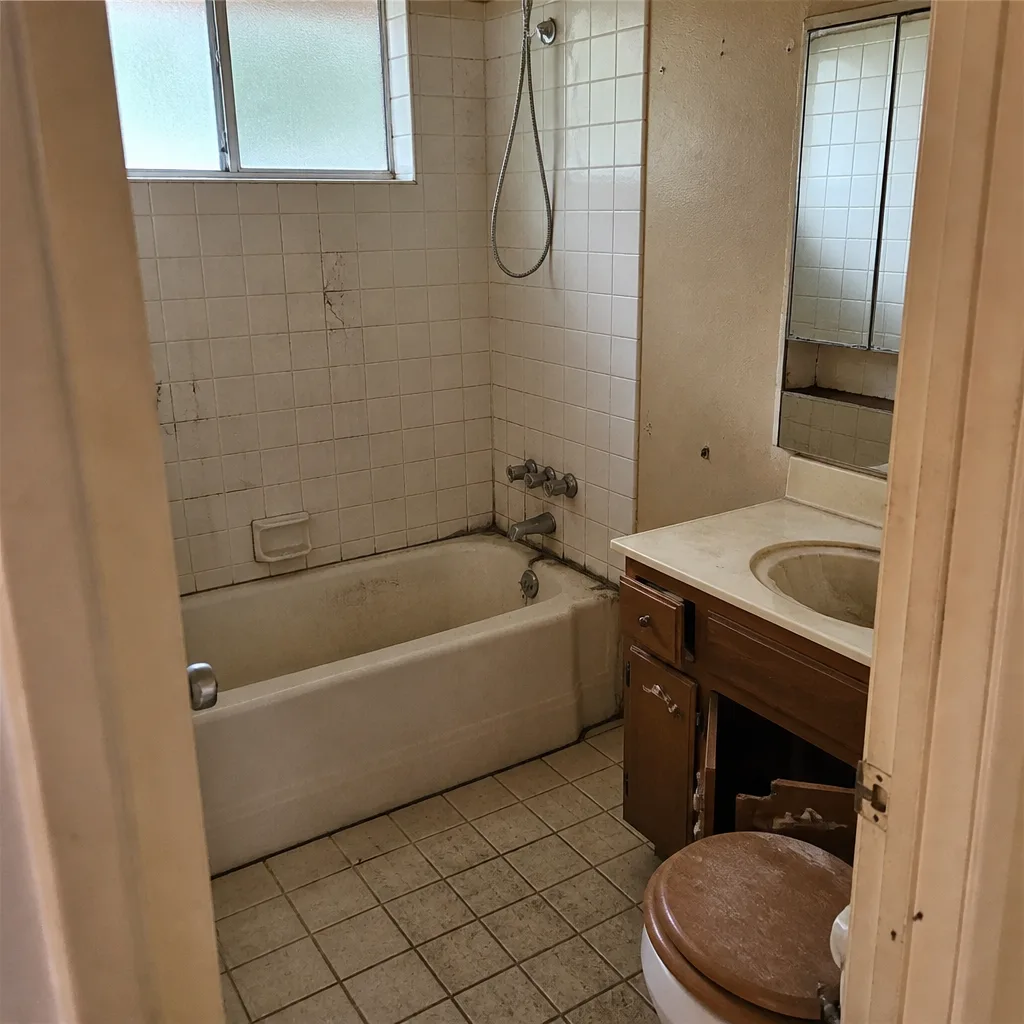 Before
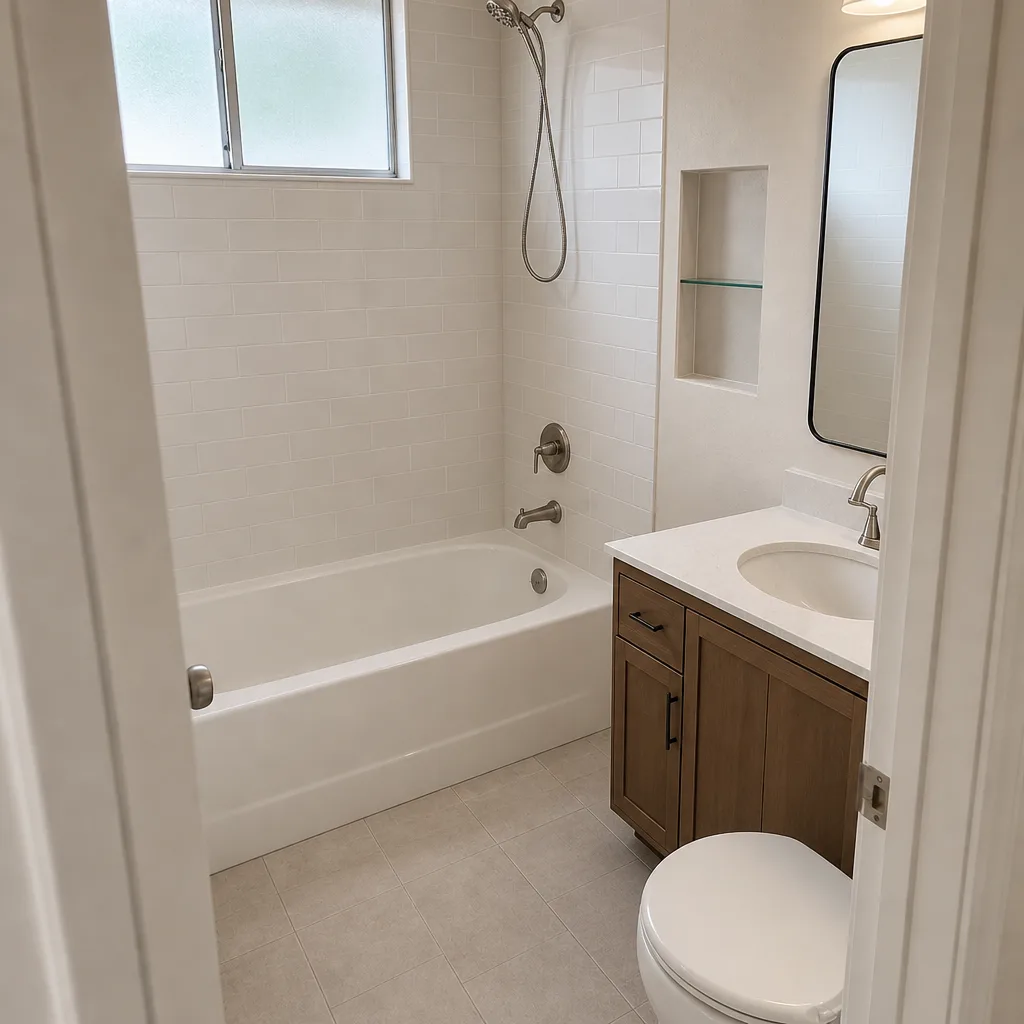 After
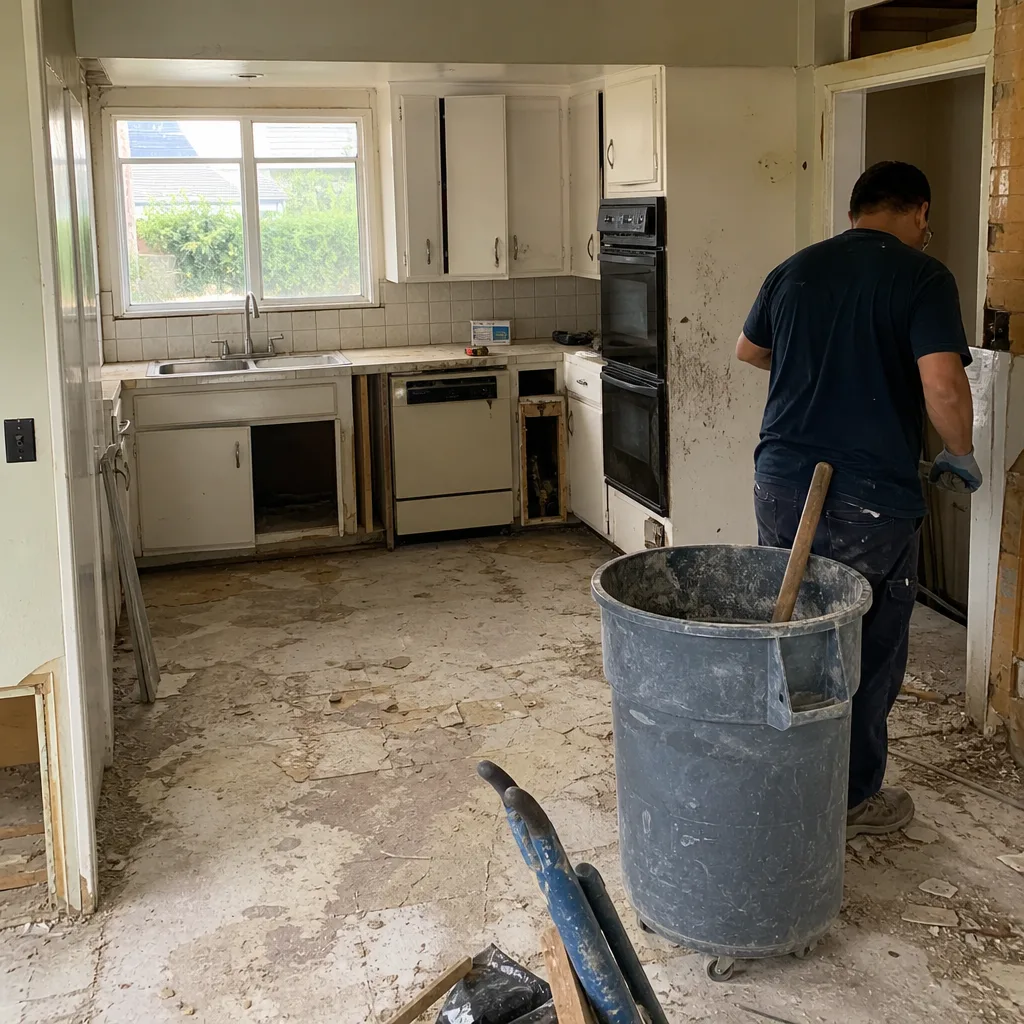 Before
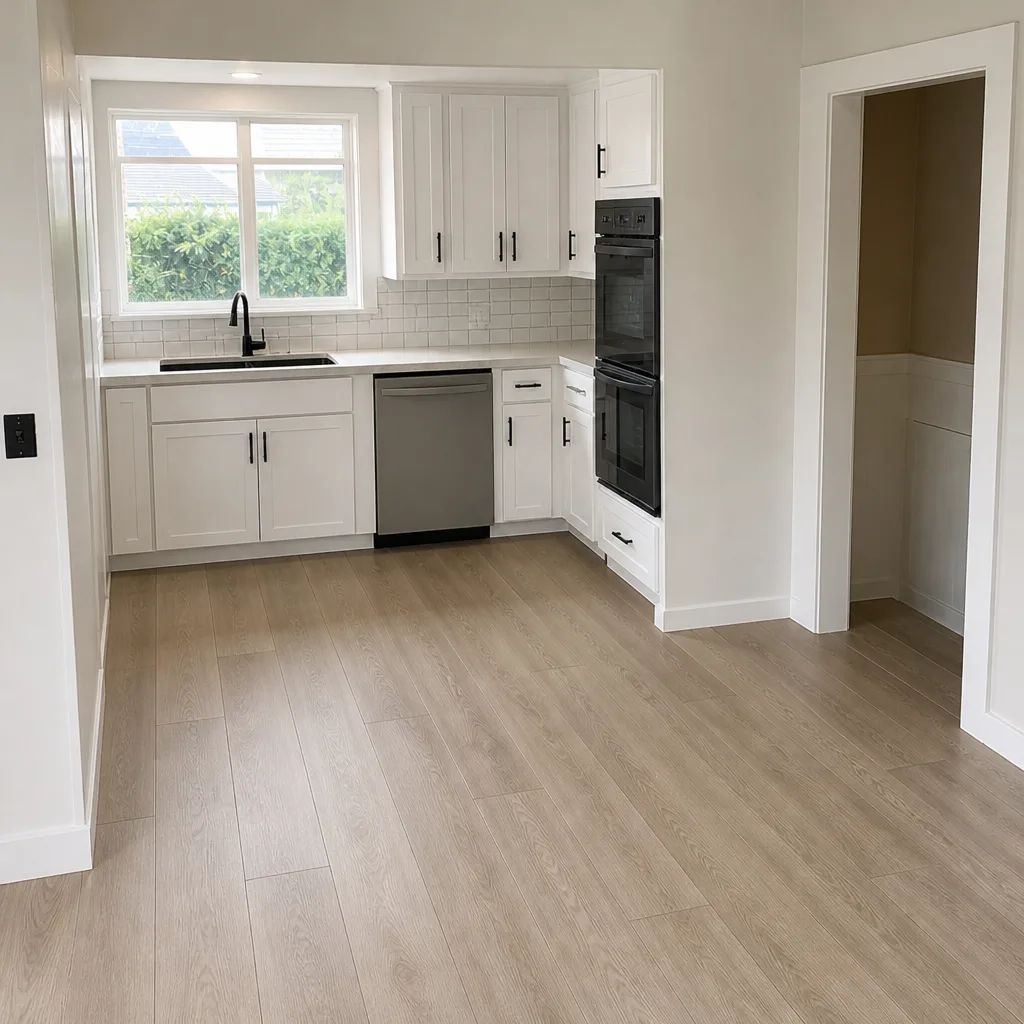 After
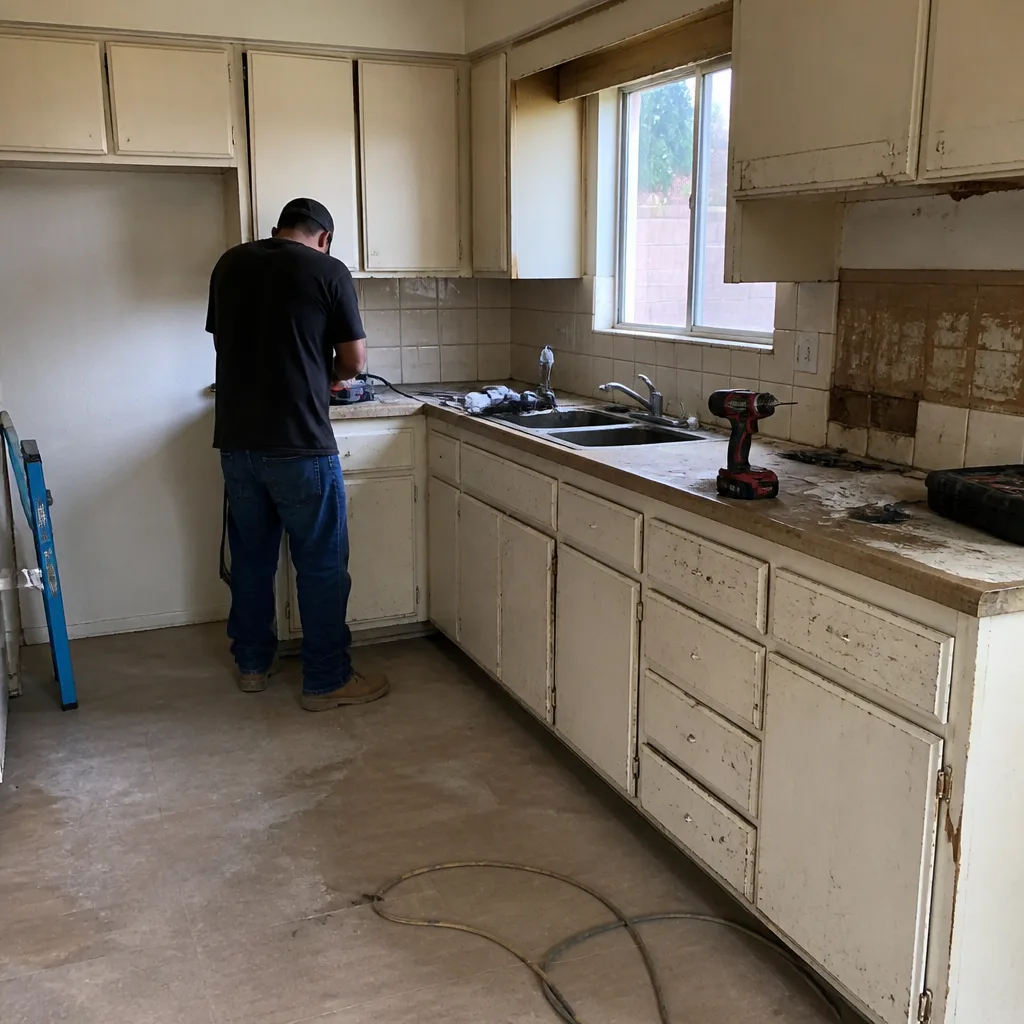 Before
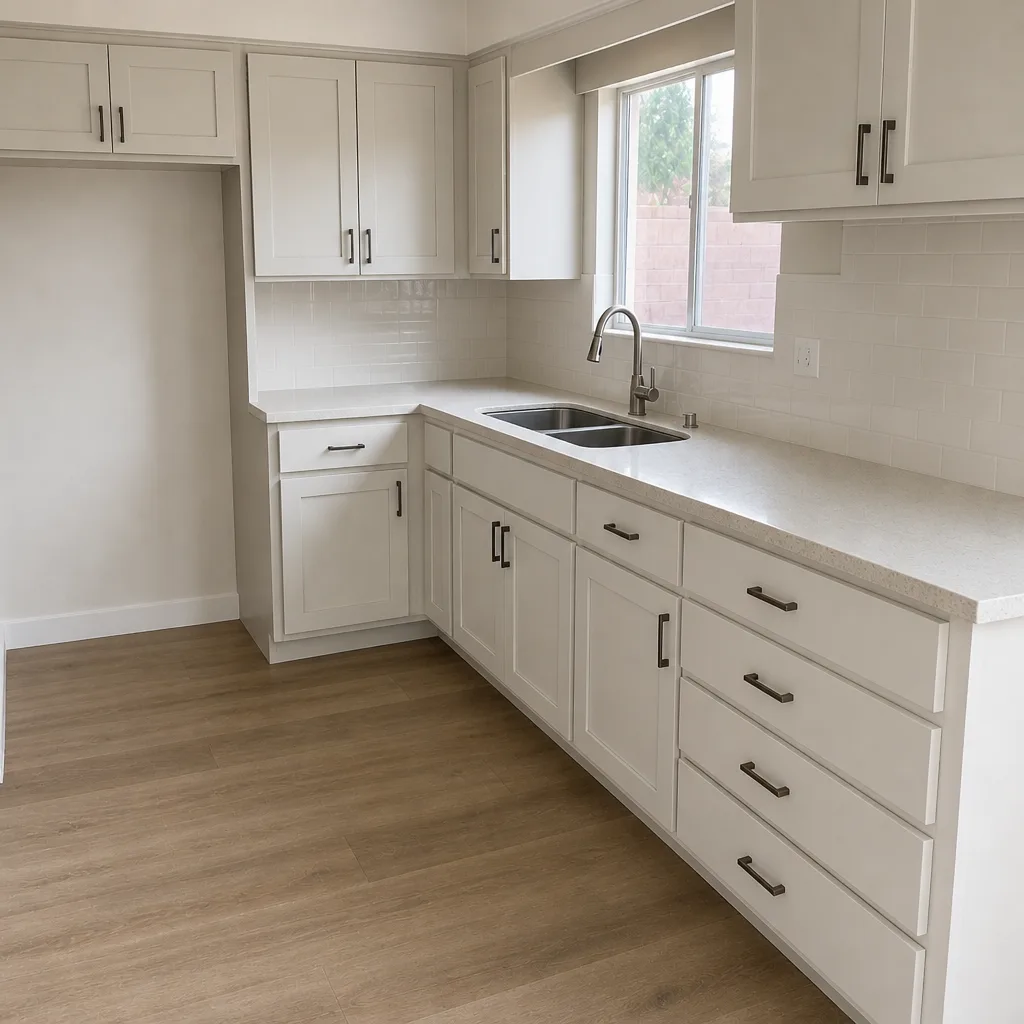 After
Frequently Asked Questions
Once a year at minimum, every spring. Weep holes are the small drain slots on the outside bottom edge of every window frame, and they’re what keeps water from pooling on the sill and working into the wall. In Huntington Beach, the salt air and pollen settle in them faster than in drier climates, so we recommend checking them in the fall too. Call (844) 320-2945 for a free estimate if you’re not sure whether the drain should be serviced.
It depends on the material. Foam tape lasts two to four years, V-strip four to six, door sweeps three to five, and threshold seals around five. Test it twice a year with the paper test or the dollar-bill test. If the paper slides through the door freely, replace it.
Look at three things: interior condensation or fogging between the panes (thermal failure), flame flutter on a windy day at the perimeter (air infiltration), and soft drywall or bubbling paint below the sill on the interior (water failure). Any of the three means the window isn’t doing its job, even if the sash moves.
Yes. Entry doors get used more than anything else in the house. Check the weatherstripping twice a year, inspect the threshold once a year, and check the door sweep every fall. A wood door on a south or west facing wall in Huntington Beach wants a fresh finish every two to three years.
Three additions to the standard schedule: hardware rinses every spring to remove salt, UV sealant inspections on all exterior caulk joints twice a year (south and west faces go first), and weep hole clearing every spring. Salt and UV do more damage here than heat alone.
Replacement windows and doors in the same opening typically don’t require a permit, but any change to the opening size or structure does. We pull permits and sign inspections on every eligible job, and we’ll tell you upfront whether your project is one that needs them. Call (844) 320-2945 to schedule a free estimate and we’ll walk you through it.
The Bottom Line
Windows and doors have a maintenance calendar. Two visits a year, spring and fall, with specific tasks for each visit. Clear the weep holes every spring, check the weatherstripping every fall, and add the three Huntington Beach steps: hardware rinses for salt, UV sealant inspection for sun, and weep hole clearing again in the fall for the rain. Write down what you did and when you did it. That paper trail protects your warranty claim and helps at resale. Skip the schedule and you’ll pay for the wall behind the window instead of the window itself.
Contact
If your windows or doors are past what a walk-around can fix, or you want a second opinion on what you’re seeing, Barrett & Sons Construction Huntington Beach can help. We offer a Free Second Opinion on Any Written Estimate, a permanent 10% Senior & Veteran discount, No Trip Charge Inside the County, and $40 Off Any Repair Over $200. Call (844) 320-2945 for a free estimate.
Written by the team at Barrett & Sons Construction Huntington Beach.