Last updated November 17, 2026



Free written scope consultation - allowances, timeline, and change-order rules on paper before a single trade is scheduled
Fence Installation Troubleshooting: Common Problems and How to Fix Them
A leaning fence post and a wobbly fence post feel identical when you push on them. One needs a repair. The other needs a replacement. The difference is entirely underground, and no amount of pushing above grade will tell you which is which. Push on enough fences and you learn to stop looking at the post and start looking at the soil. The post rot, the cracked concrete footing, and the corroded hardware that cause most fence failures each fail at their own pace, with their own warning signs, and they each want a different fix and a different urgency. This is a Huntington Beach guide to telling them apart.
Quick Answer
Most failing fence posts in Huntington Beach can be diagnosed with a single probe test: push a screwdriver or thin probe through the post a few inches above the concrete footing. If the wood is soft or the probe sinks in, the post has rotted inside an intact footing and needs replacement. If the wood is solid but the whole post moves, the footing has cracked and the fix ranges from a concrete collar to cutting out the footing entirely. Either way, the leaning is rarely caused by “settling” no matter what the last contractor told you.
Styles & brands we work with
- Kitchen remodeling
- Bathroom remodeling
- Home additions & ADU
- Roofing
- Windows & doors
- Driveway & pavers
- Fence
Table of Contents
- How to Diagnose a Leaning Fence Post
- The Probe Test: What Your Screwdriver Tells You About the Footing
- When Can You Fix a Section and When Does the Whole Line Come Out?
- Why Is My Gate Sagging? Three Mechanical Causes
- Rust Streaking and Bubbling Hardware: The Coastal Salt Problem
- Shared Fence Disputes in Huntington Beach: Steps Before It Gets Legal
- Common Mistakes to Avoid
- When to Call a Professional
How to Diagnose a Leaning Fence Post
The push test comes first because it tells you which group of causes you’re dealing with. Stand on the side of the fence that gets pushed less often (usually the interior side) and apply steady pressure at the top of the post. Watch three things: does the post flex, does the whole line move with it, and does the soil around the base crack open like a dry cookie?
If the post flexes but the soil doesn’t budge, the post itself is compromised. If the soil opens up and the entire post rotates in the ground, the footing is the problem. If both the post and several adjacent posts move together, you’re looking at a systemic failure – the concrete footings along that whole run were probably poured too shallow, too narrow, or in the wrong soil.
In Huntington Beach we see a specific pattern with older properties from the 1950s through the 1970s. Tracts built in that era used much smaller concrete footings than today’s code allows, often barely wider than the post itself. Those footings worked fine for 30 or 40 years. After a wet winter followed by a dry summer, the shrinking soil stresses the narrow concrete and it cracks. That’s the failure at the base of most “mysteriously leaning” fences on older streets in Huntington Beach.
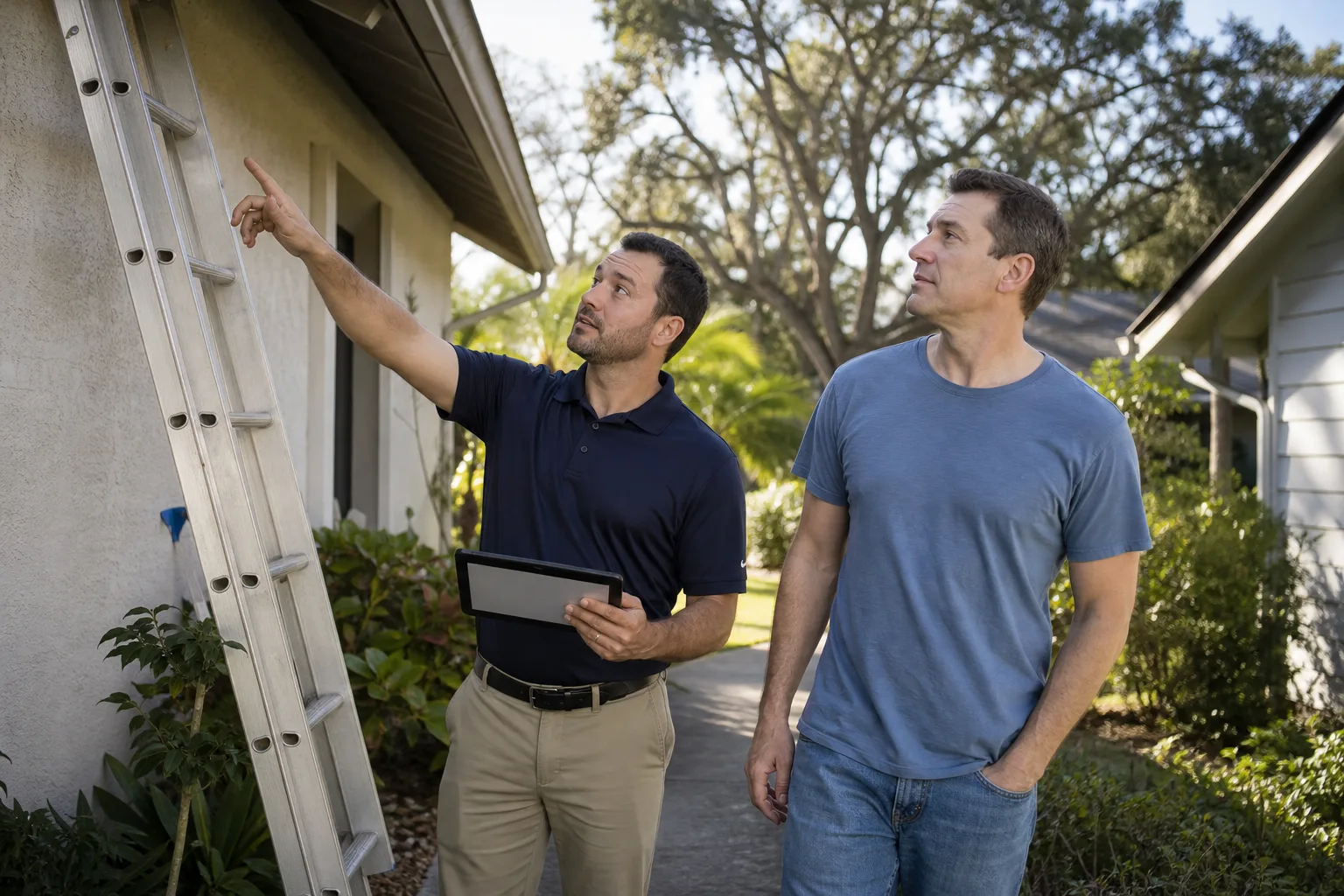
Soil composition matters too. The sandy inland areas and the clay-heavy pockets closer to the bluffs hold water differently and fail on different schedules. Our crews have seen posts pulled out where the footing had crumbled into loose gravel, and a post 30 feet away pulled out perfectly intact. That’s why we never quote a fence repair until we’ve actually probed the post.
The Probe Test: What Your Screwdriver Tells You About the Footing
- Find the top of the concrete. Most footings start a few inches below grade. Dig carefully until you see the concrete or hit it with a firm probe.
- Insert a thin screwdriver at the post face. Somewhere between 2 and 4 inches above the concrete is where rot hides first, because that’s the water line.
- Push with steady pressure. Resistance means the post is solid. Softness, mushiness, or the tool sinking in easily means rot.
- Tap the concrete with the screwdriver handle. A hollow, dull sound suggests the footing is crumbling. A sharp, solid sound means it’s still intact.
- Probe the opposite side. Rot rarely goes all the way around evenly. If one side is soft, the post is done regardless of what the other side looks like.
- Dig a shallow trench on the sunny side. A hollow or gap under the footing means the footing has rotated or settled. Water intrusion here is common on Huntington Beach properties that sit near old irrigation lines.
- Repeat on the next post. If you’re 2 out of 4 rotted, plan on replacing more than you thought.
The result tells you which fix you need. Rot at the top of the concrete means post replacement, which is a two-hour job per post with the right tools. Crumbling concrete means footing replacement, which is a much bigger job because you have to dig out the old footer without disturbing the fence on either side. Solid wood plus a rotated footing means the post is fine but the concrete has to be reset or replaced – don’t let anyone sell you a whole new post for that.
Don’t skip the probe. Every honest fence quote starts with it. Every “we’ll figure it out on site” quote starts without it.
When Can You Fix a Section and When Does the Whole Line Come Out?
Section repairs make sense when the failure is isolated – one post, one panel, one gate. Whole-line replacement makes sense when the failure is systemic. The distinction matters because replacing five posts on a line where the other twelve are 30 days behind them just means you’ll be back in the same spot next year.
Section repair is right when:
- Only one or two posts probe soft, and the concrete footings are still intact
- Panels are sound with no daylight visible between pickets and rails
- Hardware is still functioning and threads turn freely
- Adjacent posts are visibly straight and don’t move when pushed
Whole-line replacement is the honest answer when:
- Three or more adjacent posts move together when pushed
- The concrete footings are crumbling, shallow, or sinking
- Panels show rot along the bottom rail on multiple sections
- Hardware is seized or rust-welded into place across the fence
- The fence was installed in the same construction era and you’re seeing the same failure pattern repeating down the line
That last point is important on older Huntington Beach streets. If a tract was fenced in the early 1960s with the same materials, the same footing depth and the same wood species, the failures run in the same pattern. Fixing one post in that scenario just means the neighbor of that post fails next. On a full replacement the crew can drop proper footings – wider, deeper, with the right drainage – and the new fence outlasts the fix-it-patch-fix-it cycle.
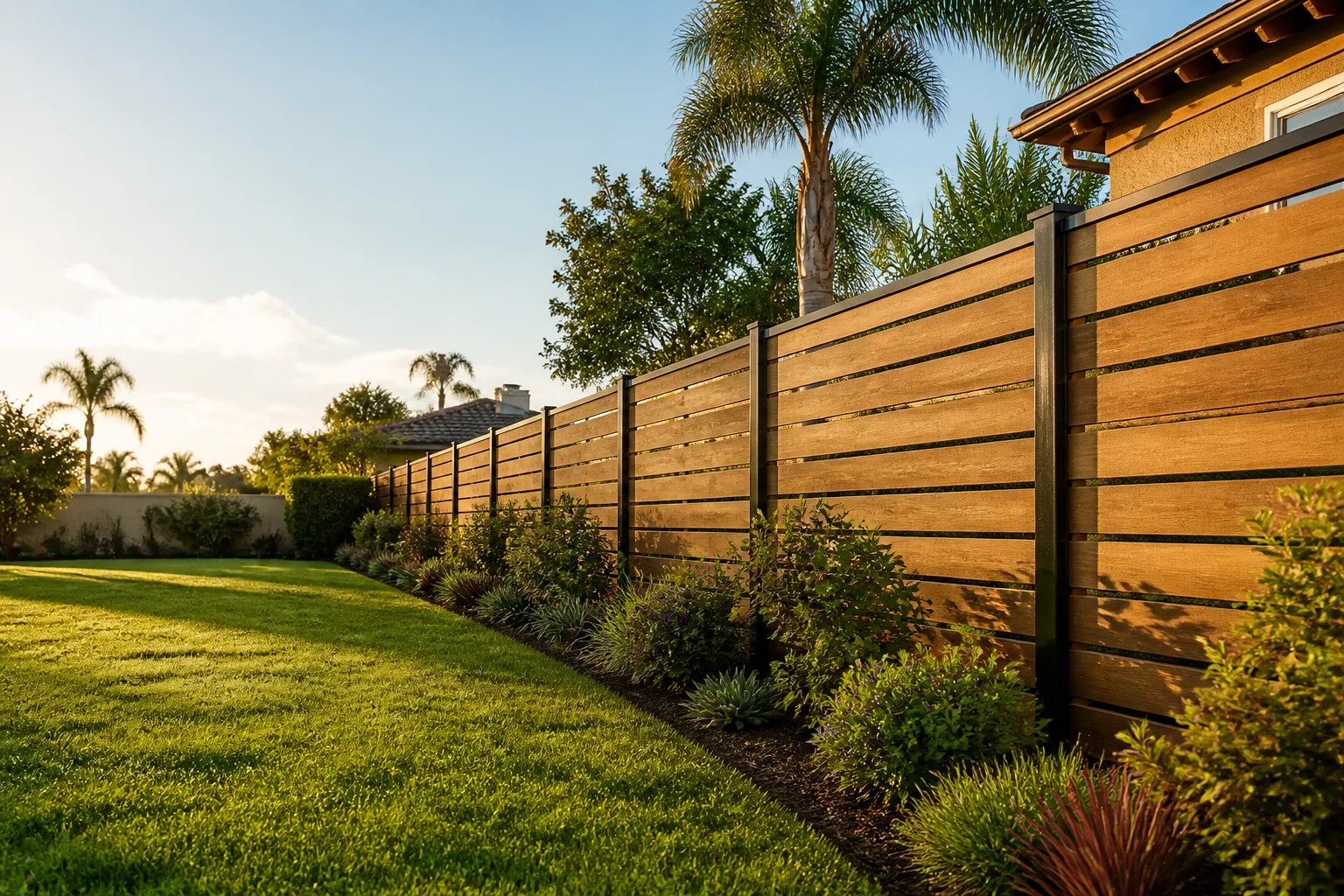
If you’re weighing repair against replacement, this is the moment to look at what a proper new fence installation involves before deciding.
Why Is My Gate Sagging? Three Mechanical Causes
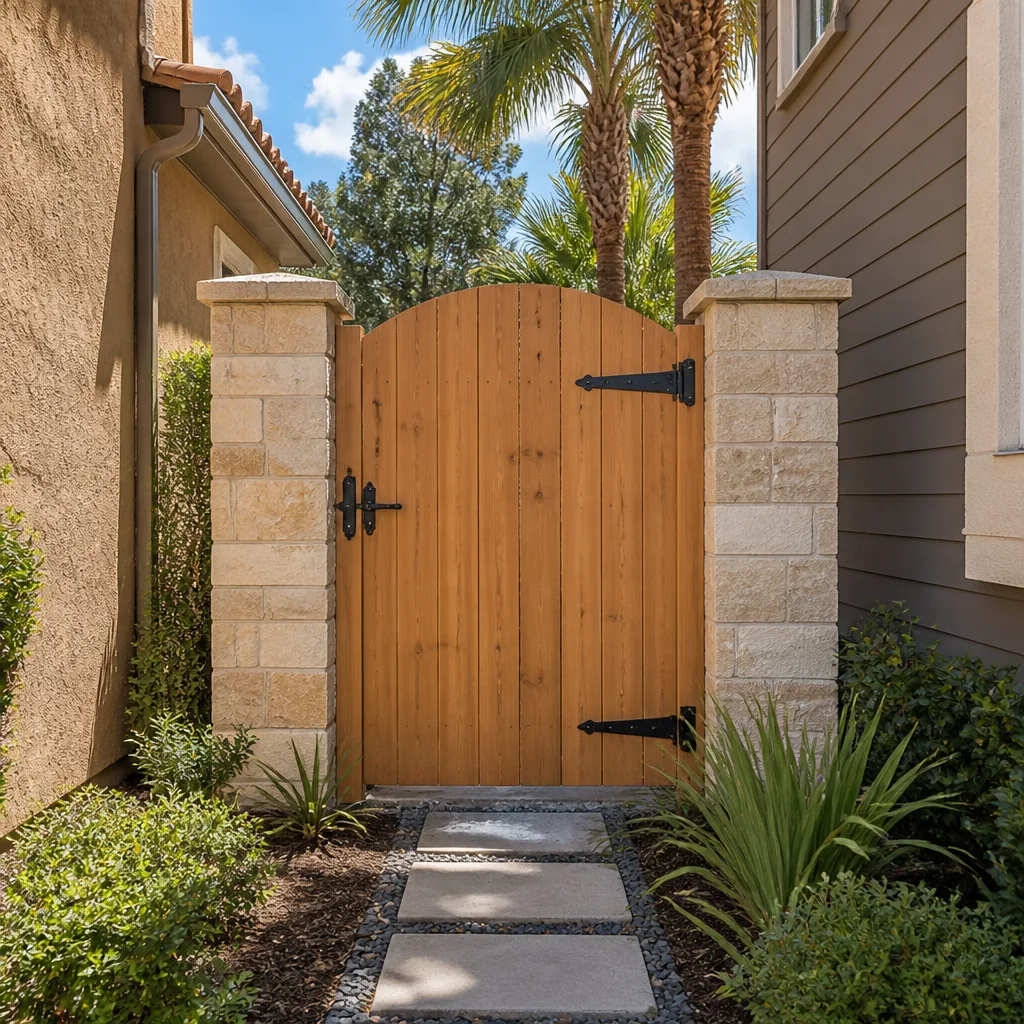
A sagging gate almost always has one of three causes, and the gate itself is often innocent. Here’s how to tell which one you have, and which one you can fix in an afternoon.
1. Loose or stripped hinge screws
The gate sags, but the post is straight and the gate frame is square. Grab the top hinge and lift the gate up and down – if you see movement at the screw holes, that’s your problem. You can fix this in an afternoon by replacing the screws with slightly longer, wider gauge screws or by filling the old holes with wooden dowels and re-drilling. This is a homeowner-level repair.
2. Racking (the gate frame is out of square)
The gate sags and the hinge side stays put, but the latch side has dropped. Hold a level against the gate frame from corner to corner – if the two diagonals measure differently, the frame has racked. A tension cable or diagonal brace can sometimes pull it back into square, but a gate that racked was probably built too lightly for its span in the first place.
3. Hinge post movement
The gate sag is really the hinge post leaning. Push the hinge post at the top. If it moves independently of the gate, the post has failed and no amount of gate adjustment will fix it. That’s a post replacement, full stop. This is the one homeowners try to solve with hinge shims and hinge spacers that only makes it worse.
In Huntington Beach we see a lot of coastal gate failures on properties where the hinge post was set in 18-inch footings and the ocean air has been working on the hardware for a decade. The post moves, the screws strip, and the gate falls out of alignment all at once. If you push the hinge post and it moves, you’re done adjusting – you’re replacing.
Rust Streaking and Bubbling Hardware: The Coastal Salt Problem
Salt air doesn’t rust hardware the way people imagine it does. It doesn’t happen overnight and it doesn’t happen evenly. It works its way through the finish and shows up as three distinct signals, each with a different urgency.
Rust streaking shows up as orange or brown lines running down the fence face below your hinges, latches, and bracket heads. This is cosmetic rust traveling on rainwater runoff. It’s ugly but not urgent. A wire brush and a coat of rust-inhibiting primer buys you a couple of seasons.
Bubbling paint or coating is the second stage. Rust is forming under the surface and pushing the paint up. If you can flake off a bubble with a fingernail and see brown or black underneath, the hardware is failing. This is a replace-the-hinge-or-bracket stage. Wait much longer and the fastener will seize inside the post.
Seized hardware is the third stage. Threads no longer turn, hinges no longer swing, and posts rusted inside their hardware. By the time you notice this, the fastener usually has to be cut out. That’s a repair that requires a saw and a drill – not a homeowner-with-a-screwdriver job.
Huntington Beach accelerates all three stages because of the onshore marine layer. Properties within a couple of miles of the water see hardware failure years faster than the same hardware would last in an inland market. Galvanized and stainless hardware hold up meaningfully longer than standard steel near the coast. That’s one of the details we specify up front on fence installation projects in Huntington Beach – the right hardware is cheap insurance against the salt.
Shared Fence Disputes in Huntington Beach: Steps Before It Gets Legal
Shared fence failures are common on Huntington Beach properties because most residential fences sit on property lines. When one side fails, you have a neighbor problem before you have a fence problem. Here’s a practical sequence that keeps it out of small claims court.
- Confirm the property line first. Pull your survey, or the county parcel map, or call a licensed surveyor. A surprising number of disputes evaporate once both parties look at the actual legal line.
- Document the condition. Photograph the posts, the panels, the footings, and the timeline. If the neighbor later claims the fence was already failing when you bought the house, you have dated evidence.
- Have a contractor inspect it in person. A written diagnosis – not a quote, a diagnosis – often does more than a phone call. It states plainly what failed and why, without either neighbor having to be the bad guy.
- Put the conversation in writing. Email or letter. State what you observed, what repairs are needed, and what you’re proposing to split. Keep it civil and keep a copy.
- Check your city requirements. Huntington Beach has specific height and setback rules for fences, especially near the coast. If the replacement needs a permit, that changes the conversation.
- Offer a written estimate before discussing money. Both sides see the same numbers. Nobody thinks the other is trying to pull something.
California has general provisions on shared boundary fences, but they’re rarely the fastest way to solve the problem. The neighbor who gets a diagnosis in writing and a specific proposal for splitting the work almost always agrees to something, because the alternative is worse for both of you.
If the neighbor’s fence becomes a repair on your side of the line, that’s another reason to know which side is legally yours. A licensed contractor can tell you from a look. This kind of front-end clarity is built into the way we handle construction projects in Huntington Beach generally – and it’s saved more neighbor relationships than any legal filing.
Common Mistakes to Avoid
- Assuming every lean is “settling.” Settling is rarely the cause. Rot, cracked footings, and corroded hardware cause almost every failure we see. Naming the actual failure is the first step to fixing it.
- Bracing a bad post instead of replacing it. A post brace treats the symptom and leaves the failure underground, where it gets worse. In Huntington Beach we’ve seen braced posts fail completely within 18 months while the brace was still holding.
- Replacing one post on a construction-era tract fence. If a neighboring post is failing on the same pattern, a single-post repair just reschedules the same problem for next spring.
- Mixing hardware metals. Galvanized screws in stainless brackets, or aluminum in steel – the two metals react with each other and rust faster than either would alone. Match hardware to the fence material and let the contractor verify.
- Ignoring salt air on the coast side. Standard steel hardware in a coastal Huntington Beach yard often fails years before galvanized or stainless hardware in the same location. Cheap hardware near the ocean is not a savings, it’s a repeat purchase.
- Patching the neighbor’s fence without a written agreement. If you repair a shared fence, note in writing what you did, when, and what it cost. Handshakes don’t survive resale.
- Skipping the permit on a replacement. Fence height and location rules are enforced by the city, and an unpermitted replacement can mean tearing the new fence down. Permits are one thing we insist on pulling on every eligible job.
When to Call a Professional
Call a professional when the probe test comes back soft, when the concrete footing is crumbling, when the hinge post on a gate moves independently of the gate, when the fence line has more than two failed posts on the same pattern, or when the failure involves a shared fence with a neighbor who hasn’t yet agreed on how to proceed. Also call us when you don’t want to probe the post yourself, when you want a written diagnosis to show a neighbor, or when the fix touches anything that stands taller than 6 feet or sits on a property line where the survey isn’t clear.
Barrett & Sons Construction Huntington Beach offers free estimates in Huntington Beach – call (844) 320-2945 to schedule one. We’ll look at the fence, run the probe test, and tell you plainly whether it’s a repair or a replacement. No pressure. No change orders after the fact. Everything in writing before a single nail moves. Our crew members have up to 28 years of experience, and every job we take on is backed by our written 90-Day Done Right Promise. The second opinion is free, and we offer $40 off any repair over $200. Inside the county, there’s no trip charge.
See the difference
 Before
 After
 Before
 After
 Before
 After
Frequently Asked Questions
No. Leaning posts are caused by rot inside an intact footing most often, followed by cracked or shallow concrete footings, and then by corroded hardware that lets the post rotate. “Settling” is a catch-all contractors throw around when they don’t want to explain what actually failed. In Huntington Beach the two most common causes we see are rotted post bases inside 1960s-era footings and shallow footings that cracked after a wet winter. Call (844) 320-2945 for a free diagnosis if you’re not sure which one you’re looking at.
Sometimes, if the footing is intact and the fence is under 6 feet, this is a manageable weekend project. You’ll need a post hole digger, fresh concrete, and a way to brace the new post while it sets. That said, if the post is load-bearing for a gate, if it’s on a shared property line, or if there’s any doubt about the footing, it’s worth an inspection before you dig. One wrong move on the footing often turns a two-hour job into a much bigger one.
Post replacement typically runs $180 – $350 per post when the footing is intact. A full section replacement (post plus panels) usually runs $300 – $650. Gate hinge adjustment or hardware replacement is generally $100 – $250. Full line replacement varies widely with material, height, and length. We write every quote as a line-item estimate with prices that don’t change after work starts, and our change orders are in writing before any scope change touches the job. Call (844) 320-2945 for an exact quote – estimates are free.
Rarely. Most Huntington Beach homeowner policies cover fences damaged by a specific event (windstorm, falling tree, vehicle impact) but not fences that failed from rot, age, or normal wear. If you’re filing a claim, document the failure now and note the date. If your adjuster asks for a cause-of-failure statement, a contractor inspection helps – we can provide a written diagnosis. Repairs that aren’t covered by insurance are still often deductible as a capital improvement, so save the receipts either way.
Section repairs and post replacements typically don’t need a permit if the fence stays in its existing footprint and height. Full replacement or height changes almost always need one, and the rules tighten near the coast where view ordinances also apply. The safest step is to check with the city before work starts – not after. We pull permits and pass inspections on every eligible job, and the permit inspector works for you, not for us. That’s why we like him.
Start by confirming the property line and putting the diagnosis in writing. Send your neighbor a copy of the contractor’s inspection and a proposed split. If that doesn’t move things, an attorney’s letter (a single letter, not a suit) resolves most of these. California boundary fence law has provisions on shared maintenance, but litigation is slow and expensive, and most Huntington Beach fence disputes don’t go there once both parties see a written diagnosis from a contractor rather than a demand from the neighbor. Call (844) 320-2945 – the inspection and the written diagnosis are free.
The Bottom Line
The three real fence failures are post rot, cracked concrete footings, and corroded hardware – not “settling.” Probe the post before you accept any quote. Repair sections when the failure is isolated and replace the line when the pattern repeats. Diagnose gate sag by pushing the hinge post, not adjusting the gate. Take salt corrosion seriously in Huntington Beach, where the marine layer ages hardware in years instead of decades. Document shared fence failures before the conversation with your neighbor gets difficult. The right diagnosis means the right repair the first time, and a fence that stands straight years after the repair is done.
For help diagnosing a fence in Huntington Beach, or to get a written estimate on a repair, replacement, or new line, one of our home addition and ADU projects clients recently put it well: they said the estimate was “the first one they could actually read.” That’s the goal. When a matching project touches pavers or driveways, we handle those through Driveway & Pavers in Huntington Beach, and it’s all one contractor from the estimate to the inspection sign-off.
Call Barrett & Sons Construction Huntington Beach at (844) 320-2945 for a free estimate. A live person answers the phone, day or night. We’ll walk the fence with you, run the probe test, and tell you plainly whether you’re looking at a repair or a replacement. Written diagnosis, written estimate, written change orders, no surprises. That’s the whole pitch.
Written by the team at Barrett & Sons Construction Huntington Beach.